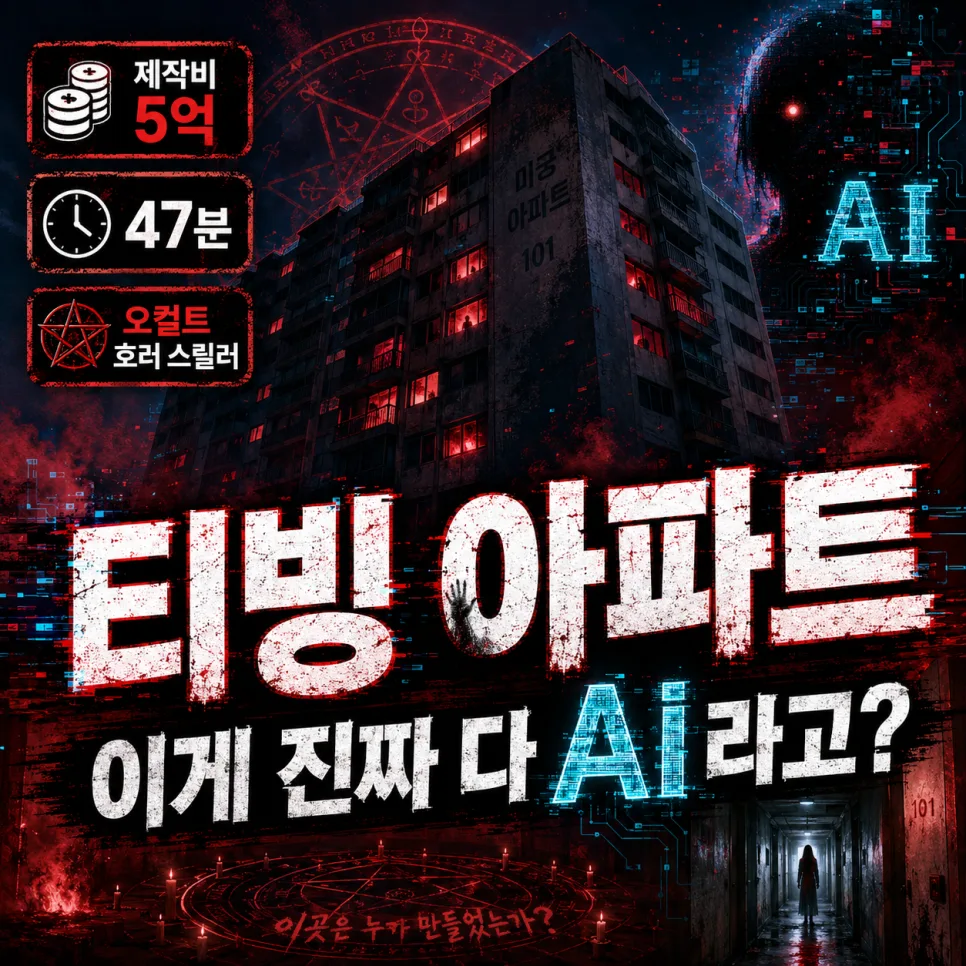
The TVING original film 'Apartment' is generating buzz for its innovative use of AI technology, creating a uniquely Korean occult horror experience. With a production budget of approximately $375,000 (₩500 million) and a runtime of just 47 minutes, the film leverages AI for nearly every element except the actors' performances, including backgrounds, props, and even creature design. This hybrid approach offers a glimpse into the future of filmmaking and a fresh take on the horror genre.
Is TVING's 'Apartment' a 100% AI-Generated Film?
TVING's original film 'Apartment' is best described as 'almost everything AI except the actors.' While the human performances were filmed in a studio, the eerie apartment complex setting, lighting, props, and the unsettling creatures were all brought to life using AI technology. This isn't a fully AI-generated movie but rather an experimental, hybrid approach combining live-action with artificial intelligence. The filmmakers opted for this method because they determined that AI still struggles to fully replicate the nuanced emotional expressions and subtle acting of human performers. This serves as a prime example of the current limitations of AI in perfectly replicating human acting, particularly in conveying deep emotion.
Why is a $375K Budget and 4-Day Shoot Turning Heads in Hollywood?
With a production budget of around $375,000 (₩500 million) and a shooting schedule of just four days, 'Apartment's' concise 47-minute runtime sends a clear message to the film industry. Creator Jung Chang-ik stated that a conventional production would have cost at least five times more. This isn't just a success story for low-budget filmmaking; it signals a potential revolution in how movies are made. By utilizing AI, the cost gap for various scenes, like cafe settings or monster sequences, can be significantly reduced. This opens doors for creators to explore their imaginations more freely, fostering an environment where diverse and experimental genre films can thrive. This production efficiency is expected to drive the creation of more innovative cinematic experiences.
How Effective is the Horror Direction in 'Apartment'?
The primary appeal of 'Apartment' lies less in how scary it is and more in how convincingly a world created with unfamiliar technology can draw viewers in. Early audience reactions suggest the AI-driven horror direction is quite effective, with some viewers reportedly covering their eyes during particularly frightening scenes, even those not typically drawn to occult thrillers. The film follows Yu-mi, a protagonist who falls victim to a real estate scam and moves into a dilapidated, unsettling apartment. The narrative weaves together the typical creepiness of an old building, rumors of past disappearances, and uncooperative residents, adding layers of mystery and supernatural dread. The transformation of an ordinary living space into a nightmarish realm is depicted with chilling effectiveness.
What Are the Limitations of AI and the Film's Unique Charm?
TVING's 'Apartment' clearly showcases both the advantages and the current limitations of AI technology. Some viewers noted a certain artificiality and awkwardness in the depiction of food and objects, typical of AI-generated content. However, despite these technical constraints, the film offers more than just a story; it provides an experience that feels like witnessing the future of the film industry in real-time. The narrative is raw yet compelling, and while not perfectly polished, it leaves you eager to see what happens next, making it an experimental work that offers a glimpse into the potential of AI in cinema.
For more details, check the original source below.