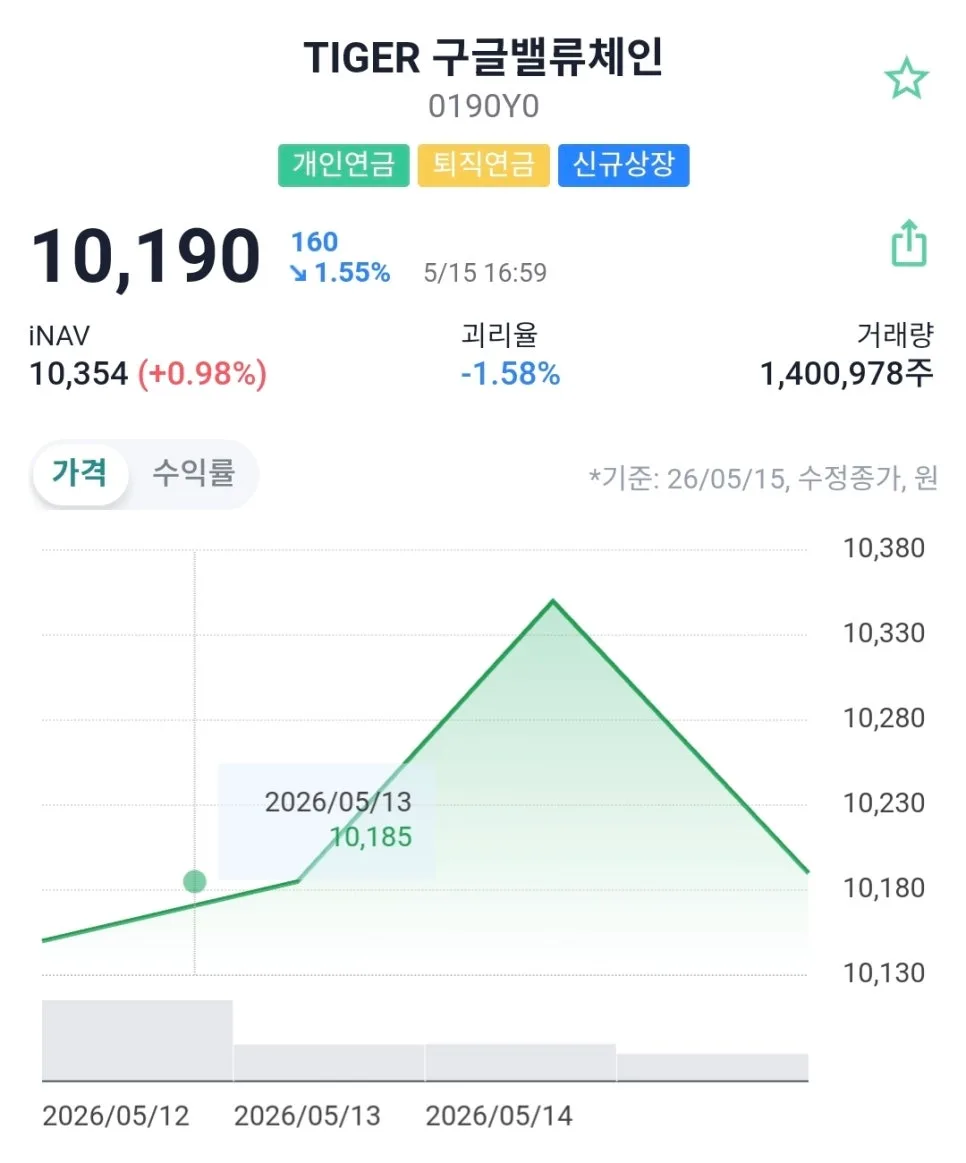
The TIGER Google Value Chain ETF (0190Y0) offers a unique opportunity for US investors to tap into the growth of Google's expansive ecosystem. With a currency-unhedged strategy, it aims to benefit from potential US dollar strength, making it an attractive option for those looking to invest in AI-driven innovation. Launched in May 2026, this ETF provides exposure to key companies powering Google's services and the broader AI revolution.
What Does the TIGER Google Value Chain ETF Hold? (ETF Overview)
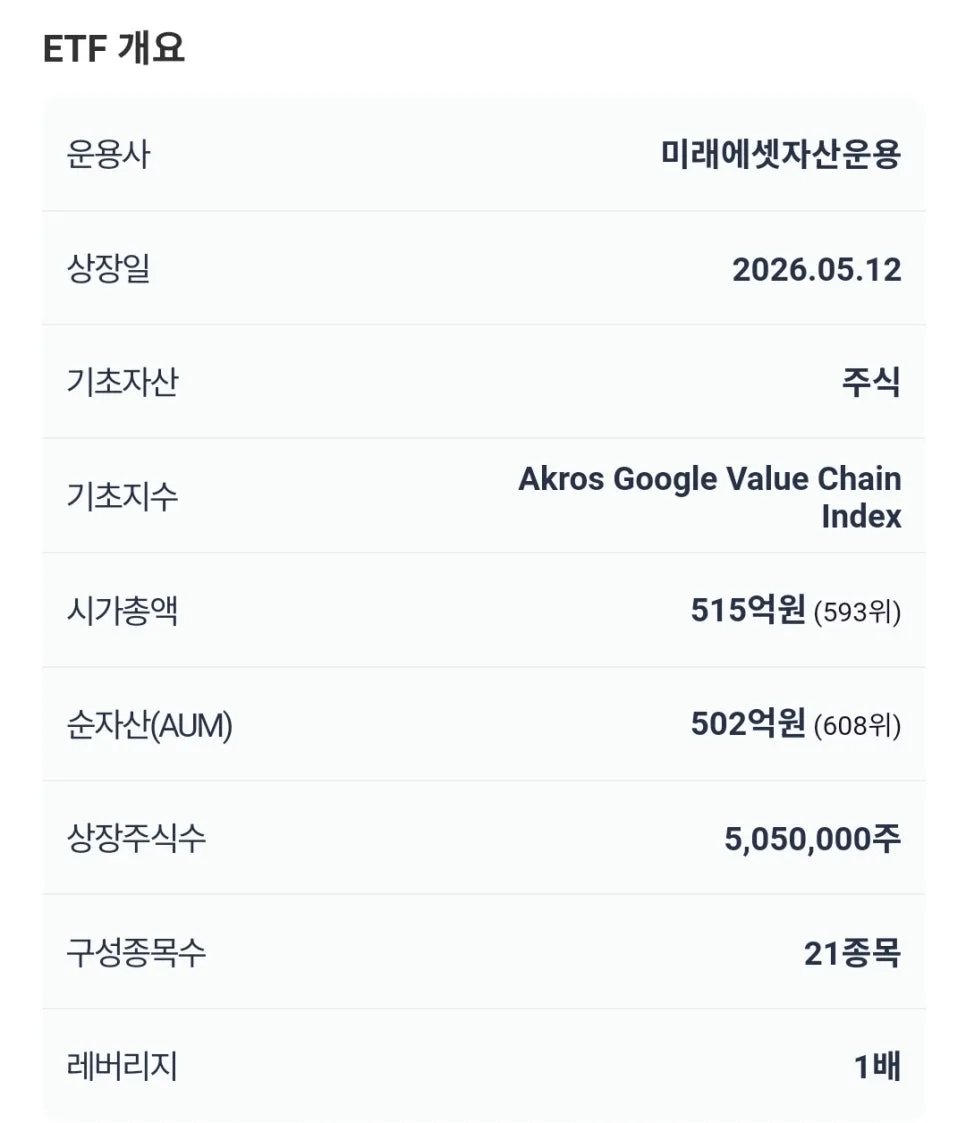
The TIGER Google Value Chain ETF (0190Y0) tracks the 'Akros Google Value Chain' index, investing in 21 companies closely tied to Google's operations. Upon its launch on May 12, 2026, the ETF had a market capitalization of approximately $38 million USD (51.5 billion KRW), ensuring sufficient liquidity for individual investors. This ETF is a 1x leveraged product, aiming to mirror the index's performance directly. It's advisable to monitor the difference between the ETF's stock price and its Net Asset Value (iNAV) during its initial trading period, as a price below iNAV might indicate an undervalued opportunity.
Who Are the Hidden Players in Google's Ecosystem? (Component Analysis)
This ETF's primary holding, at approximately 23.8%, is Alphabet (GOOGL), the parent company of Google, which operates core services like search and YouTube, and is heavily invested in AI like Gemini. Broadcom (AVGO), a key designer of custom chips essential for Google's AI development, represents about 18.4% of the ETF. Beyond these giants, the ETF also includes manufacturers like Samsung Electronics and TSMC, which produce Google's AI chips, as well as companies supplying essential infrastructure such as fiber optics and power components, like Corning Incorporated (GLW) and Lumentum Holdings (LITE). The investment thesis is that Google's AI advancements directly translate to the growth of these supporting companies, offering diversified exposure across Google's AI value chain.
What's the Investment Strategy Leveraging Currency Fluctuations? (Investment Strategy)
A key feature of the TIGER Google Value Chain ETF is its 'currency-unhedged' strategy, meaning it is exposed to foreign exchange rate fluctuations. This offers a potential advantage: if the US dollar strengthens against the Korean Won, investors could see additional gains from currency appreciation on top of their investment returns. Conversely, a weakening dollar could negatively impact returns. However, in periods of anticipated dollar strength, holding dollar-denominated assets like this ETF can be a strategically sound move for asset allocation. Furthermore, investing through tax-advantaged accounts like IRAs or 401(k)s can provide significant tax benefits, making it a compelling option for retirement planning.
What Are the Fees and Taxes for the TIGER Google Value Chain ETF?
The TIGER Google Value Chain ETF has a total expense ratio of 0.45% per year. This translates to approximately $45 USD in fees for every $10,000 invested annually, which is a reasonable cost considering the convenience of managed exposure to a specialized sector. Gains from ETF trading are typically subject to a 15.4% capital gains tax. However, by investing through an Individual Retirement Account (IRA) or a 401(k) plan, investors can defer or potentially reduce these taxes, maximizing the benefits of long-term investment growth. These tax advantages are particularly significant for long-term investment horizons.
How Should You Approach Investing in the TIGER Google Value Chain ETF? (Long-Term Strategy)
For investors considering the TIGER Google Value Chain ETF, a dollar-cost averaging strategy is recommended, especially during the ETF's early stages. This involves investing a fixed amount at regular intervals, which can help mitigate the risks associated with market timing and volatility. Given the long-term growth potential of the AI sector and Google's ecosystem, holding the ETF for at least two to three years is advisable to fully realize its potential. This approach aligns with the strategy of investing in companies poised for sustained growth in the rapidly evolving AI landscape.
For more details, check the original source below.





