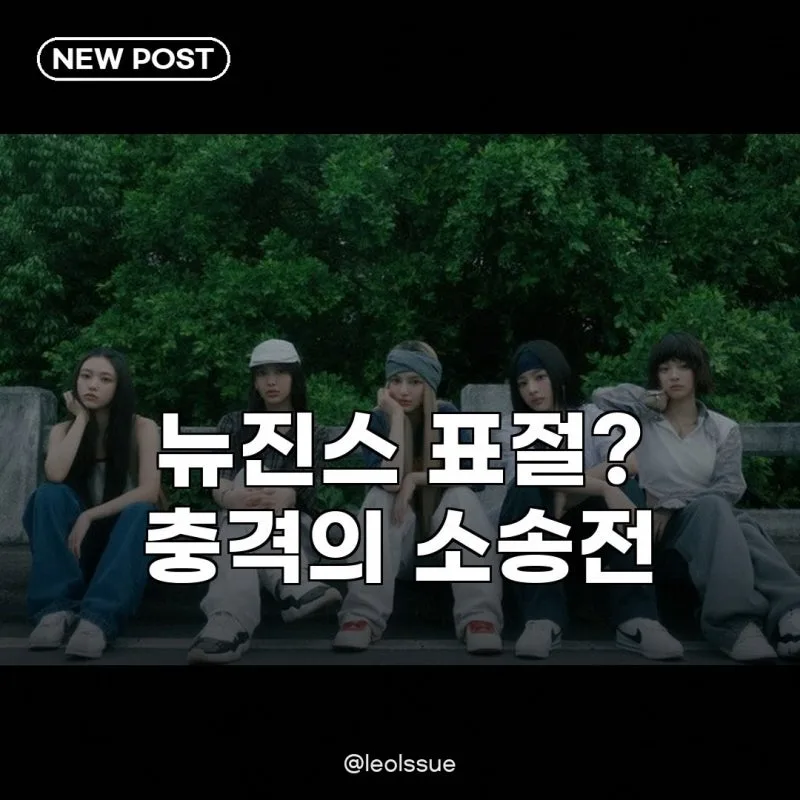
A copyright infringement lawsuit has been filed against NewJeans' hit song 'How Sweet,' with their agency ADOR strongly denying the plagiarism allegations and vowing legal action. This article breaks down the case and examines potential issues within K-pop production systems as of 2026.
NewJeans 'How Sweet' Lawsuit: What Sparked the Controversy?
News of a copyright infringement lawsuit targeting NewJeans' globally popular track 'How Sweet' has sent ripples through the K-pop scene, with reports surfacing in outlets like Billboard. The lawsuit was initiated by Audrey N. Amaost, an international songwriter who participated in the demo production of 'How Sweet.' Amaost alleges that the introductory section of the song's first verse bears a strong resemblance to her demo track. She claims that parts of her work were used without a proper licensing agreement or formal permission, and is seeking a share of the profits. This situation highlights the complex rights disputes that can arise within the increasingly globalized K-pop production ecosystem.
ADOR's Response: 'No Plagiarism,' Strong Rebuttal
NewJeans' agency, ADOR, has issued an immediate and firm denial of all plagiarism allegations. ADOR stated that they have thoroughly confirmed with BANA (Beasts And Natives Alike), the production team responsible for the song's composition and production, who have unequivocally confirmed that there was no plagiarism. Based on this confirmation, ADOR and NewJeans intend to actively defend themselves in this lawsuit. This swift response signals the agency's strong commitment to protecting its artists' creative rights. In the context of the diverse interests involved in K-pop production, ADOR's prompt action is crucial for maintaining trust with fans and the public.
Why Are Copyright Disputes Rising in K-pop Production?
The globalization of the K-pop market has led to significant shifts in how music is produced. It's now common for a single track to involve collaboration among songwriters, producers, and lyricists from various countries worldwide. This system, where specialists contribute to different parts like beat production, melody composition (topline), and lyric writing, fosters creative output but can also complicate the attribution of creative contributions and the clarification of rights. Disputes can arise, especially when demo tracks used in the early stages share similarities with the final product. Therefore, establishing clear contracts and transparent profit-sharing systems is becoming increasingly vital for the K-pop industry.
NewJeans 'How Sweet' Copyright Lawsuit: Future Outlook
The current lawsuit involving NewJeans' 'How Sweet' serves as a stark reminder of the importance of copyright and intellectual property protection within the K-pop industry. With Audrey N. Amaost's claims and ADOR's strong rebuttal creating a clear divide, the outcome of the legal proceedings is highly anticipated. If Amaost's claims are partially upheld by the court, it could significantly impact future K-pop production systems and collaboration methods with international songwriters. Conversely, if ADOR's position is strongly affirmed, it would further bolster confidence in the transparency and fairness of K-pop production processes. Given the current standoff, the industry hopes for a resolution that clarifies the facts and satisfies all parties involved.
For more details, check the original source below.