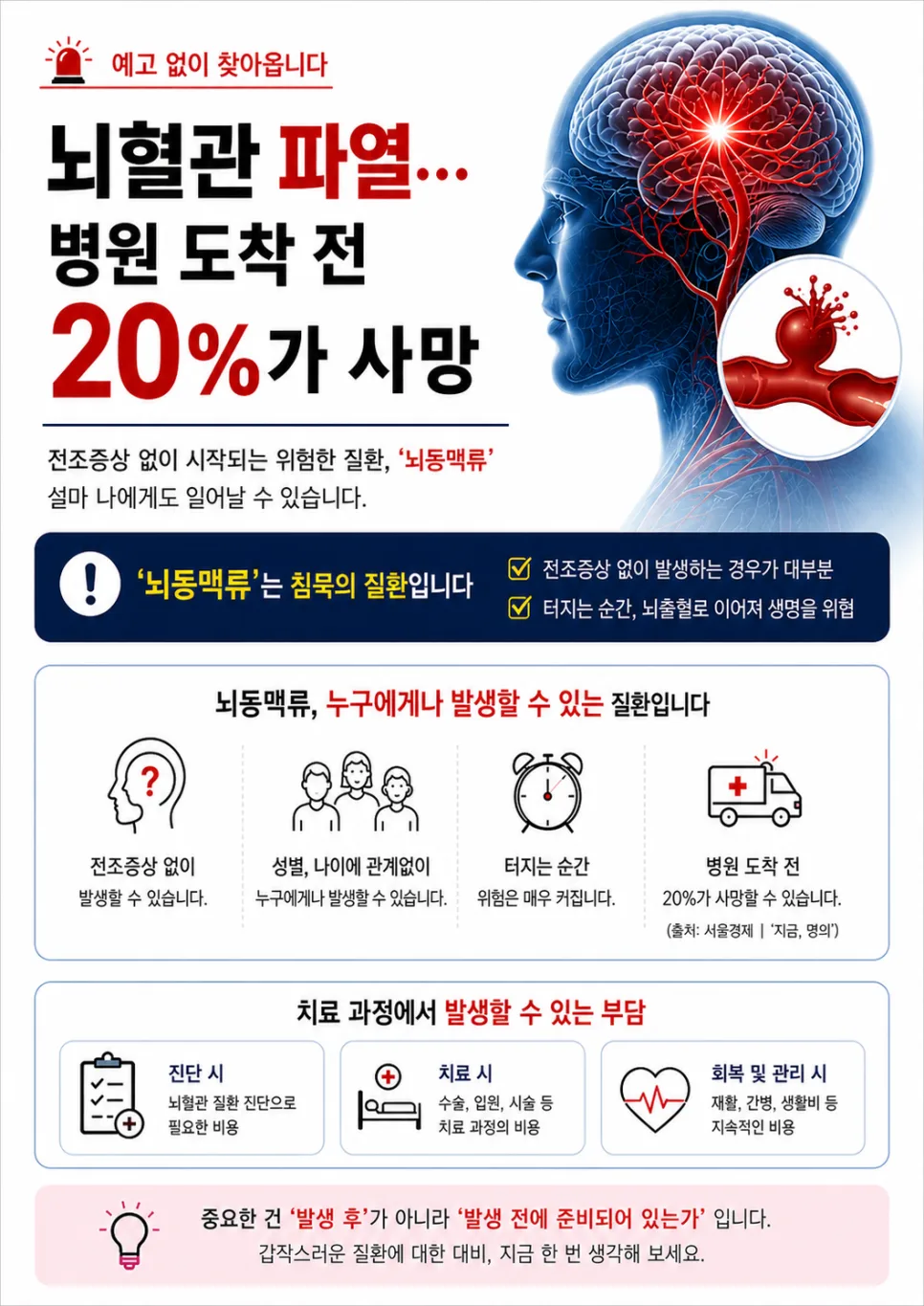
Brain aneurysms are often called 'silent killers' because they can rupture without warning, leading to a pre-hospital fatality rate of 20%. Understanding the risks and preparing for this dangerous cerebrovascular condition remains crucial in 2026.
What is a Brain Aneurysm and Why is it Called a 'Silent Disease'?
A brain aneurysm occurs when a weak spot in a brain artery balloons out, forming a bulge. Most aneurysms don't cause symptoms until they rupture, earning them the nickname 'silent disease.' Because they develop internally, small aneurysms are often undetectable and may not interfere with daily life. However, once a rupture occurs, it triggers sudden, severe symptoms like intense headaches and loss of consciousness, necessitating immediate emergency medical intervention. This asymptomatic nature makes early detection and prevention extremely challenging.
What Does a 20% Pre-Hospital Fatality Rate for Ruptured Aneurysms Mean?
The statistic that approximately 20% of patients die before reaching the hospital after a brain aneurysm rupture underscores the severity of this condition. This high mortality rate is due to the sudden onset of subarachnoid hemorrhage, which rapidly deteriorates the patient's condition. Essentially, a ruptured brain aneurysm creates an emergency situation where securing the 'golden hour' for treatment is incredibly difficult, meaning immediate medical care is vital to avoid a high risk of death. The unpredictability of rupture adds another layer of danger.
Why is Preparing for Cerebrovascular Diseases Like Aneurysms Important Now?
As we age, hearing about the health of family and friends often shifts our perspective, making us realize that serious illnesses are no longer distant concerns. For critical conditions like brain aneurysms, diagnosis is just the beginning. The subsequent diagnostic tests, treatments, surgeries, hospital stays, recovery, and ongoing management require significant time and financial resources. Therefore, it's essential to prepare not just for diagnostic costs but also for the continuous expenses that may arise during treatment. Ultimately, the key isn't just whether you're diagnosed, but how well you can navigate the journey afterward.
What Should You Watch Out For Regarding Aneurysm Prevention and Management?
While brain aneurysms are notoriously difficult to prevent due to their lack of symptoms, managing risk factors is key. Lifestyle choices such as controlling high blood pressure, quitting smoking, and moderating alcohol intake can significantly impact cerebrovascular health. It's also advisable not to ignore persistent headaches, even if they seem intermittent, as they could increase the chances of early detection through a thorough medical examination. If diagnosed with a brain aneurysm, it's crucial to have a detailed discussion with your medical team to establish the best treatment plan and carefully review insurance policies to mitigate potential financial burdens during treatment. Consulting with a healthcare professional based on your personal health status and family history is highly recommended.
For more detailed information on brain aneurysms, please refer to the original source.