
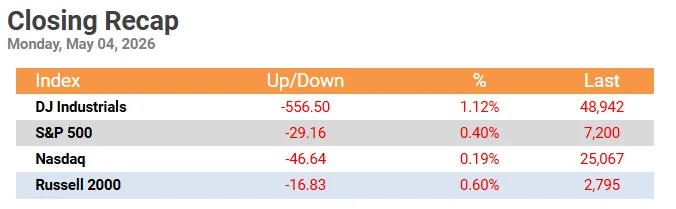
On May 4, 2026, the US stock market experienced a significant downturn, primarily driven by escalating geopolitical tensions in the Middle East and a surge in oil prices. This decline followed a week where major indices had reached record highs, leading to increased investor anxiety.
What Fueled the Oil Price Surge and Middle East Tensions?
News of a missile attack from Iran on the United Arab Emirates (UAE) heightened instability in the region, challenging the fragile ceasefire. The US Central Command reported engaging Iranian vessels and intercepting drones in the Strait of Hormuz, while Iran warned of forceful responses against vessels violating its maritime regulations. This geopolitical instability directly impacted global oil markets, pushing Brent crude to $114.44 per barrel (up 5.8%) and West Texas Intermediate (WTI) to $106.42 per barrel (up 4.39%). The sharp rise in oil prices negatively affected overall market sentiment.
Amazon's Logistics Network Expansion and Its Impact on Transportation Stocks
Amazon's announcement to open its global supply chain network to all businesses sent shockwaves through the logistics and transportation sectors. Major players like UPS, FedEx (FDX), GXO, and ODFL saw their stock prices decline significantly following the news. The Dow Jones Transportation Average plummeted by approximately 1,000 points (4.75%), leading the market's decline. Amazon's strategic move into the third-party logistics (3PL) market is expected to increase its market share, signaling a substantial shift in the competitive landscape for existing logistics providers and raising concerns about potential impacts on their profitability.
Performance of Companies During Earnings Season
As of May 4, 2026, 63% of S&P 500 companies (316 firms) had reported their earnings. These companies demonstrated robust performance, with revenue increasing by 11% and net income by 28%, surpassing initial expectations. Notably, 81% of these reporting companies exceeded market forecasts, indicating broad strength in corporate earnings. Economic indicators also showed positive signs, with March factory orders rising 1.5% month-over-month, exceeding the projected 0.5% increase. However, the US Treasury's announcement of borrowing plans totaling $189 billion for the second quarter and $671 billion for the third quarter raised concerns about market liquidity.
Key Sector News and Investment Strategies
In the consumer goods sector, ADT's stock fell following news of a major shareholder's stake sale, and Vital Farms (VITL) saw its rating downgraded due to concerns over egg supply gluts. Conversely, Tyson Foods (TSN) reported a strong second-quarter earnings surprise, driven by higher beef prices, and raised its 2026 guidance. In housing and retail, Airbnb (ABNB) received an upgraded rating, fueled by expectations for growth in new ventures like hotels and AI-powered search. Ford (F) reported a dip in US sales for April, while Chinese electric vehicle makers NIO and XPEV showed solid delivery figures. The energy sector saw OPEC+ agree to increase production by 188,000 barrels per day in June to counter supply disruptions from Middle East conflicts. In finance, Prudential (PRU) faced a rating downgrade due to an extended suspension of its Japanese unit's sales, impacting expected net income. The cryptocurrency market experienced high volatility, with Bitcoin briefly surpassing $80,000 for the first time since January.
Frequently Asked Questions (FAQ)
Q1: What were the main reasons for the US stock market decline on May 4, 2026?
A1: The primary drivers were escalating geopolitical tensions in the Middle East leading to a surge in oil prices, and Amazon's announcement to open its logistics network. This occurred shortly after major indices had reached record highs, dampening investor sentiment.
Q2: How did Amazon's logistics network opening impact transportation stocks?
A2: Amazon's announcement significantly impacted logistics and freight companies like UPS and FedEx, causing their stock prices to fall. The Dow Jones Transportation Average dropped 4.75%, reflecting concerns about increased competition and potential erosion of profitability for established players.
Q3: What was the overall performance of companies during the May 4, 2026 earnings season?
A3: A majority of S&P 500 companies (63%) that reported earnings exceeded expectations, with revenue up 11% and net income up 28%. This indicates a strong overall performance trend among reporting corporations.
For more detailed market analysis, check the original source below.





