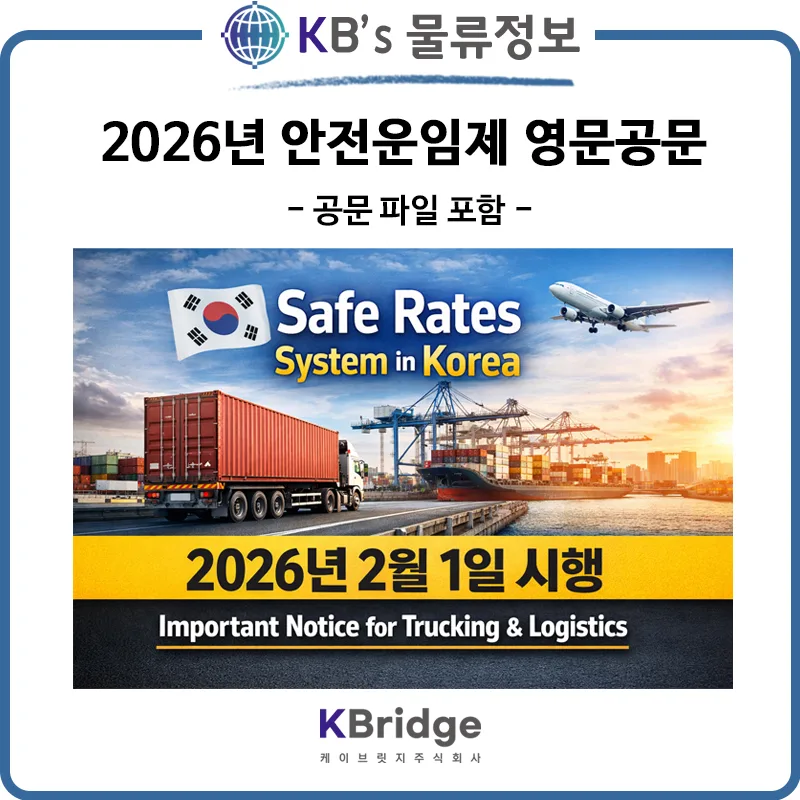
The Safe Rates System, set to launch on February 1, 2026, mandates minimum freight rates for certain domestic transport in Korea. This system aims to improve working conditions and ensure safer operations for truck drivers by establishing a baseline for freight charges, particularly for container and cement transport. Understanding its implications is crucial for international partners involved in Korean logistics.
Why Was the Safe Rates System Introduced in 2026? (Background)
The Safe Rates System was introduced to enhance the working conditions and safety of freight transport workers. Following an amendment to the Trucking Transport Business Act in August 2025, the 'Safe Rates System' was established as a mandatory minimum freight rate system. It will initially be applied to domestic container and cement transport. Persistent safety issues, such as driver fatigue and overwork due to low freight rates, have been a significant concern. This system is expected to contribute to the financial stability of transport companies and improve the welfare of drivers, fostering healthier development in the transport market.
When and How Will the Safe Rates System Be Applied? (Announcement and Effective Date)
The Safe Rates System will be implemented following specific procedures. The Ministry of Land, Infrastructure and Transport plans to announce the detailed provisions related to the safe rates by January 2026, with the system officially taking effect on February 1, 2026. This means that all freight charges paid on or after February 1, 2026, must meet or exceed the announced safe rates. This is a critical factor that must be considered in transport contracts, and all related industries need to prepare for the new regulations. Familiarizing yourself with this information in advance is important to minimize confusion around the implementation date.
What are the Precautions for Existing and New Contracts? (Payment Rate Standards)
Freight charges paid on or after the Safe Rates System's effective date of February 1, 2026, must be equal to or greater than the announced safe rates. If the freight rate of an existing contract, signed before February 1, 2026, is lower than the safe rate, you must request an adjustment to meet or exceed the safe rate upon contract renewal. This is a legal obligation, and parties to the contract need to negotiate a reasonable adjustment. Existing contracts that do not comply with the new standards may lead to legal disputes, so it is essential to verify the details and take necessary actions.
What Happens if the Safe Rates System is Not Complied With? (Potential Penalties)

The Safe Rates System carries legal binding force, and non-compliance can result in administrative penalties. If it is confirmed that freight charges below the safe rate have been paid, administrative actions, such as fines, may be imposed according to relevant laws. Therefore, all stakeholders, including shippers, forwarders, and transport companies, must clearly understand and adhere to the announced safe rate standards. This measure is in place to establish fair order in the transport market and protect the rights and interests of freight transport workers, requiring active cooperation from all parties.
Frequently Asked Questions About the Safe Rates System (FAQ)
We have compiled answers to your questions about the Safe Rates System in a Q&A format. This information will be helpful for smooth communication with international partners.
How Should the Safe Rates System Be Explained in English?
The Safe Rates System can be explained in English as the 'Safe Rates System' or 'Mandatory Freight Rate System.' Key details include: 1. Background: Introduced in August 2025 through an amendment to the Trucking Transport Business Act. 2. Scope: Domestic container and cement transport. 3. Effective Date: Starting February 1, 2026. 4. Core Principle: Freight payments must meet or exceed the announced safe rates. 5. Penalties: Non-compliance can lead to administrative penalties, including fines. This information can be clearly communicated to international partners.
Who is Subject to the Safe Rates System?
The Safe Rates System primarily applies to domestic container and cement transport operations. This is based on the Trucking Transport Business Act, and it covers all businesses and shippers who provide or use these transport services. Even for goods shipped from overseas, if the domestic inland transport segment is involved, the freight rates for that segment will be subject to the Safe Rates System. Therefore, overseas forwarders and shipping lines involved in import/export logistics should also be aware of this system.
What Should Be Done if an Existing Contract's Rate is Lower Than the Safe Rate?
Even for contracts signed before February 1, 2026, if the freight rate is lower than the announced safe rate, the rate must be adjusted to meet or exceed the safe rate upon contract renewal. This is a legal obligation, requiring active negotiation between the contracting parties. If negotiations are not smooth, it is advisable to consult relevant laws or guidelines to find a reasonable solution. Compliance with the Safe Rates System is essential to avoid legal penalties and maintain a stable transport environment.
For detailed information on the Safe Rates System, check the original source below.