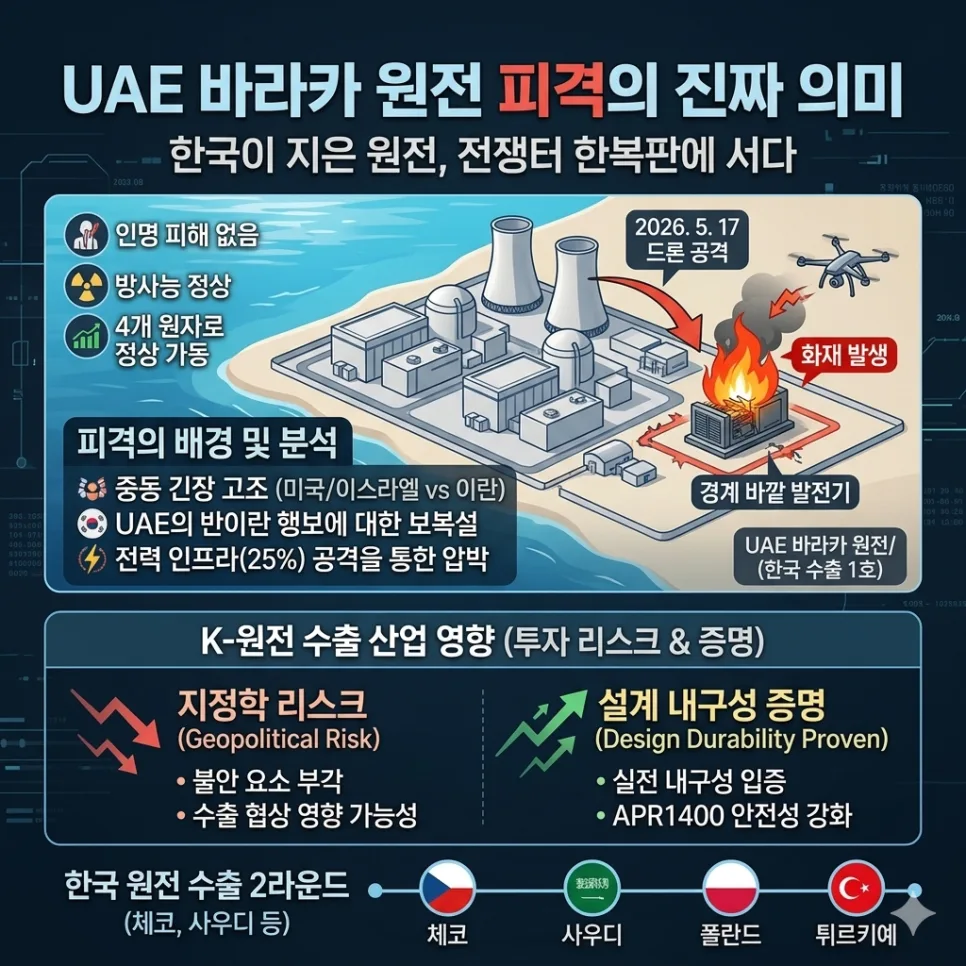
The 2026 UAE Barakah nuclear plant attack highlights both the advanced technology and the geopolitical risks associated with South Korea's nuclear power exports. When a drone strike targeted the plant in May 2026, it impacted a generator but did not halt reactor operations, underscoring the robustness of the Korean-designed APR1400 reactors. This event serves as a critical case study for the future of K-nuclear power on the global stage.
What Happened During the Barakah Nuclear Plant Attack in 2026?
In the early morning of May 17, 2026, a drone attack struck the Barakah Nuclear Power Plant, located outside Abu Dhabi in the United Arab Emirates, causing a fire. The strike specifically targeted a generator outside the main reactor containment building. Fortunately, all 380 Korean workers on-site during maintenance were safely evacuated, and crucially, no casualties or radioactive leaks were reported. The four APR1400 reactors continued to operate normally. While the perpetrator was not officially confirmed, the attack occurred amidst heightened regional tensions and was widely suspected to be linked to Iran, following earlier retaliatory actions against the UAE's participation in an anti-Iran coalition.
Why Was the Barakah Nuclear Plant a Target?
The Barakah Nuclear Power Plant holds immense strategic and symbolic importance as South Korea's first export of commercial nuclear reactors. The $15 billion contract, secured by Korea Electric Power Corporation (KEPCO) in 2009, represented a landmark achievement for the Korean nuclear industry. The plant houses four APR1400 reactors, South Korea's indigenous advanced reactor design, with a combined output of 5.6 GW. Since the full commercial operation of all four units in April 2024, Barakah has become a vital energy source, supplying approximately 25% of the UAE's total electricity demand. This makes it not only the first commercial nuclear power plant in the Arab world but also a living testament to Korean nuclear technology. For Iran, targeting Barakah could serve multiple purposes: retaliating against the UAE's alignment with anti-Iran efforts, disrupting a critical energy infrastructure, and projecting power in the region.
What Were Iran's Motivations and the Geopolitical Risks?
Tensions between Iran and the UAE escalated significantly following a preemptive strike by the US and Israel on Iran in late February 2026. In response, Iran reportedly targeted nations within the anti-Iran coalition, including the UAE, which had allegedly collaborated on strikes against Iranian oil facilities. Despite the UAE's public stance of neutrality, its substantial involvement with the anti-Iran bloc made it a prime target. Iran's objective in attacking the Barakah plant likely involved a combination of creating energy supply instability, instilling fear of a nuclear incident, and sending a clear warning of further retaliation. Some analyses suggest the decision to target only the generator, rather than the reactor core, might indicate Iran's capability limitations or a deliberate choice to avoid a full-scale nuclear disaster while still demonstrating its reach.
How Does the Barakah Attack Impact South Korea's Nuclear Exports?
The attack on the Barakah plant introduces a significant variable for South Korea's second wave of nuclear exports. With South Korea vying for the Dukovany nuclear plant contract in the Czech Republic and engaged in ongoing negotiations with Saudi Arabia and other nations, this incident could amplify concerns about the safety and security of K-nuclear technology in volatile regions. However, the fact that the APR1400 reactors remained operational and contained any potential fallout also serves as a powerful demonstration of their resilience and advanced safety features. The ultimate impact on future export deals will likely depend on the evolving geopolitical landscape, the specific security assurances South Korea can provide, and how international clients weigh the demonstrated technological prowess against the inherent risks of operating critical infrastructure in conflict zones. This is not financial advice. Consult a licensed financial advisor.