If you're looking for AI investment insights post-resignation, check out these key takeaways based on 9 months of experience and contemplation. We'll analyze the expected surge in data center demand due to AI advancements in 2025 and the future outlook for robot AI.
What New Demand Will AI Bring to the Semiconductor Industry?
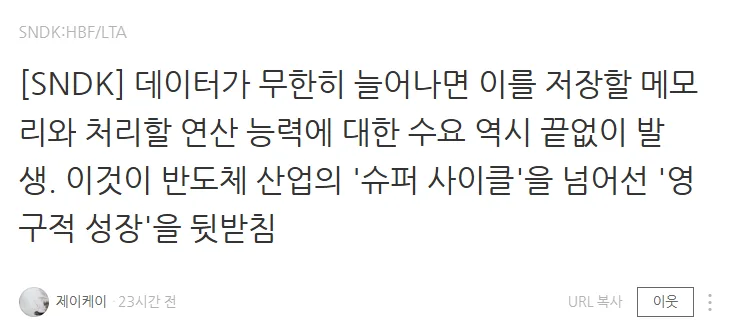
Traditionally, the semiconductor industry has been classified as cyclical, with a perceived ceiling on demand. However, starting in 2025, AI technology advancements are projected to create massive new demand from sectors like data centers and robotics. It's not advisable to reduce your exposure to this sector by overlooking these shifts before AI infrastructure is fully established. The productivity gains and innovation driven by AI will continuously fuel corporate capital expenditures (CapEx), making the ultimate endpoint difficult to predict.
Following the COVID-19 pandemic, interest in AI technology surged, bringing attention to GPU innovators like NVIDIA. As AI technologies such as GPT and Gemini have become more integrated into our lives, the importance of the computing power and semiconductors needed to run them has come to the forefront. The current steep rise of the top three semiconductor companies is part of this AI ecosystem's construction process. From the 'brain' (GPUs) that powers AI to the supporting 'infrastructure' (semiconductors, wiring, etc.), the market is currently driven by the interplay of all these elements. Ultimately, the final stage will involve AI technology being applied to real-world robots, or 'physical AI,' in our daily lives.
When Can We Expect to Feel the Peak of the AI Tech Innovation Cycle?
The peak of these technological innovation cycles is likely to occur when the average person can tangibly experience the innovations of AI. However, the stock market thrives on anticipation, meaning the major bull run could conclude 6 months to 2 years *before* this widespread public adoption. We saw a similar pattern during the dot-com bubble of the early 2000s, where a massive bull market crashed years before the internet became mainstream. Therefore, observing how people around you perceive and discuss AI technology is crucial. For instance, recently hearing my mother talk about the convenience of Gemini offered a glimpse into the potential for wider tech adoption.
Beyond PER and PBR, What Are Key Indicators in Today's Stock Market?
The stock market always seeks a justification for its price movements. Whether it's Price-to-Earnings Ratio (PER) or Price-to-Book Ratio (PBR), these are merely tools to explain current valuations. Just as the Nasdaq rose 100% in early 2023 amidst inflation concerns, the market is driven by expectations. When stock prices are already high, even small news items can cause larger reactions. In past interest rate hike cycles, there was significant panic due to base effects and unprecedented phenomena, but this current cycle might see the market react less sensitively or recover more quickly. Consequently, supply and demand factors may play a more significant role than traditional metrics like PER and PBR at this time.
What Are the Most Important Principles for Investment Study?
Ultimately, all investment study aims for profitability, but the outcomes vary depending on what aspects are studied and prioritized. Whether you're an optimist or a pessimist, focus on technical analysis or fundamental analysis—your perspective matters. The process of internalizing knowledge through actual experience is crucial, going beyond mere information acquisition. Maintaining flexible thinking, adhering to your own principles, and consistently studying based on data are key to generating healthy, repeatable returns.
For more details, check the original source below.





