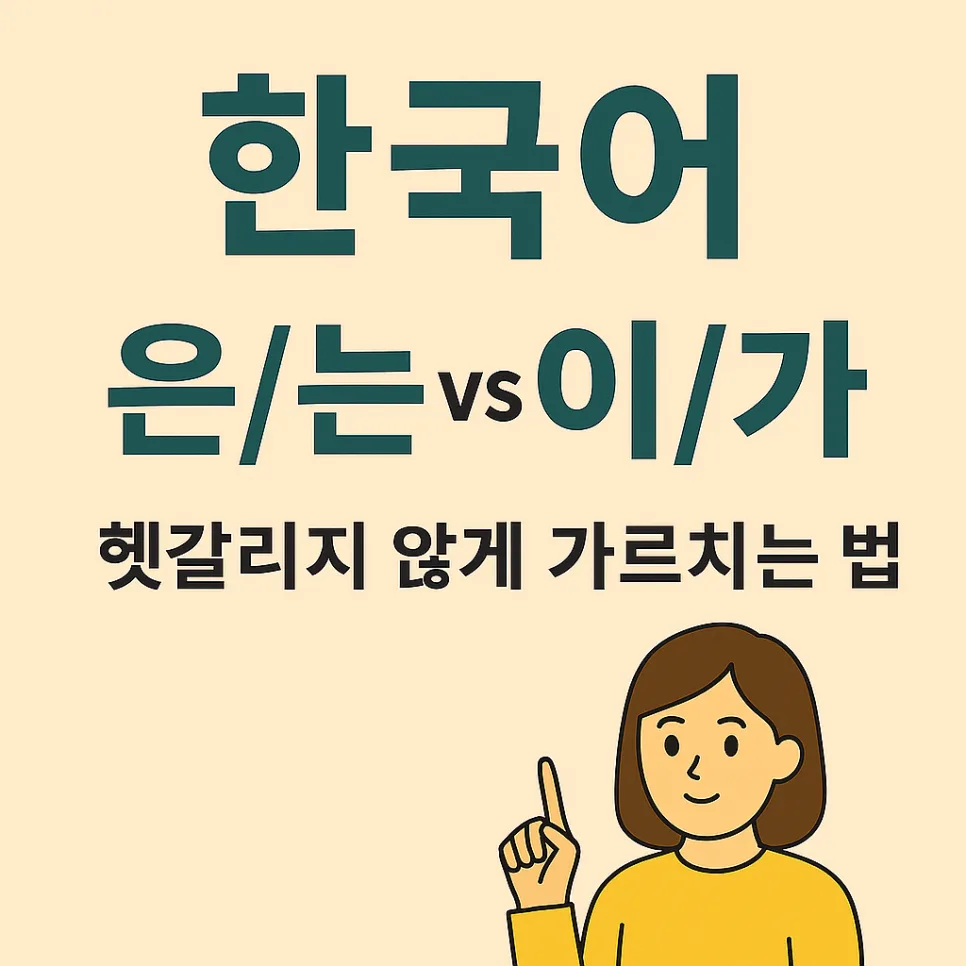
Korean particles 'eun/neun/i/ga' are crucial for clarifying sentence subjects and topics, adding specific nuances. 'Eun/neun' typically mark the topic or contrast, while 'i/ga' emphasize the subject or introduce new information. Mastering these particles is key to natural Korean expression.
What Are Korean Particles 'Eun/Neun/I/Ga'?
In Korean grammar, particles are small words attached to nouns or pronouns to indicate their grammatical function and add meaning. The particles 'eun/neun/i/ga' are particularly vital as they mark the subject or topic of a sentence. If you're familiar with Japanese grammar, the concept of particles might feel more intuitive. 'Eun/neun' are generally used to set the topic of a sentence or to create a contrast, while 'i/ga' are used to emphasize the subject or introduce new information. For instance, in the sentence '저는 학생이에요' (Jeoneun haksaengieyo), 'neun' indicates that 'I' am the topic being discussed. Conversely, '제가 학생이에요' (Jega haksaengieyo) places more emphasis on the fact that *I* am the student. These particles enrich Korean sentences, making them more nuanced and clear.
What Are the Specific Functions of 'Eun/Neun' and 'I/Ga'?

'Eun/neun' serve to establish the topic of a sentence, highlight contrasts, state general truths, or provide background information. 'Eun' is used when the preceding word has a final consonant (batchim), and 'neun' is used when it does not. For example, '책은 재미있어요' (Chaegeun jaemiisseoyo - The book is interesting) uses 'eun' because '책' (chaek - book) has a batchim. '바나나는 노랗습니다' (Bananeoneun noratsseumnida - Bananas are yellow) uses 'neun' because '바나나' (banana) does not have a batchim. When unsure which particle to use, 'eun/neun' are often the safest choice. They are particularly useful for highlighting a specific topic in a conversation or emphasizing a difference from previous information.
'I/ga' are used to clearly identify the subject of a sentence, present new information, or provide a direct answer to questions like 'Who?' or 'What?'. For example, '비가 와요' (Biga wayo - It's raining) introduces '비' (bi - rain) as new information. '제가 학생이에요' (Jega haksaengieyo - *I* am the student) emphasizes that *I* am the student. 'I/ga' are also used to highlight a specific subject when comparing it to others. Similar to 'eun/neun', the choice between 'i' and 'ga' depends on whether the preceding word has a batchim: 'i' is used after a batchim, and 'ga' is used without one. For instance, '책이' (chaegi) and '바나나가' (bananaga).
What Are Practical Ways to Differentiate 'Eun/Neun/I/Ga'?
The most fundamental way to distinguish between 'eun/neun' and 'i/ga' is to check for a batchim (final consonant) in the last syllable of the preceding word. If there's a batchim, you'll use 'eun' or 'i'. If there isn't, you'll use 'neun' or 'ga'. For example, '학생' (haksaeng - student) has a batchim, so it becomes '학생은' (haksaeng-eun) or '학생이' (haksaeng-i). '아빠' (appa - dad) does not have a batchim, resulting in '아빠는' (appa-neun) or '아빠가' (appa-ga). Generally, 'eun/neun' are used to continue with known information or general facts, while 'i/ga' are used to highlight a specific subject, often as an answer to a question. In a conversation, if someone asks '누가 도서관에 갔어요?' (Nuga doseogwan-e gasseoyo? - Who went to the library?), replying '제가 갔어요' (Jega gasseoyo - *I* went) emphasizes the subject 'I'. Conversely, '도서관에는 책이 있어요' (Doseogwan-eneun chaegi isseoyo - There are books in the library) provides information about the location.
What Are Common Mistakes When Using 'Eun/Neun/I/Ga'?
A frequent error for Korean learners is overlooking the subtle nuances between these particles, leading to confusion. For example, indiscriminately mixing 'eun/neun' and 'i/ga' can obscure the intended meaning. While 'eun/neun' focus on setting the topic, 'i/ga' are more about emphasizing a specific subject. Another common mistake is creating awkward sentences by using the wrong particle for the context. This might involve using 'eun/neun' (for known information) when introducing new information, or using 'i/ga' (for emphasis) when stating a general fact. To minimize these errors, it's crucial to study various example sentences and practice consciously differentiating their usage in real conversations and writing. For many foreign learners, mastering these particles is one of the biggest hurdles in achieving fluency.
Accurate understanding and application of these particles will make your Korean expression significantly more natural. Consistent practice with diverse examples is essential. Leave your email in the comments for additional resources.
For more details, check the original source below.





