
Struggling with participle clauses in your TOEIC prep? These grammatical structures are essential for understanding complex sentences and boosting your English writing skills. Mastering the core principles of participle clauses, which remain relevant through 2026, will make English sentences much clearer and help you excel on the TOEIC.
Why Are Participle Clauses Necessary and How Do You Form Them?
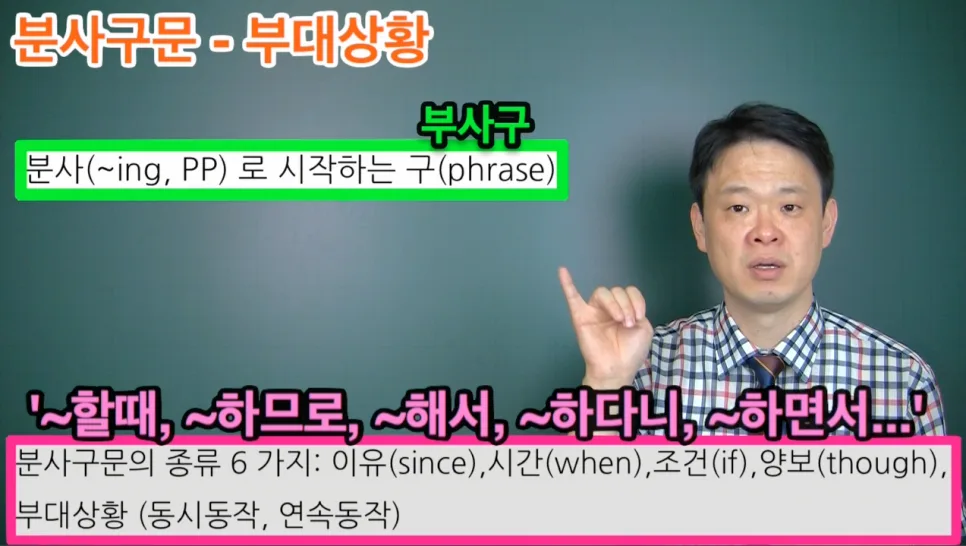
Participle clauses simplify complex adverbial clauses, making sentences flow more naturally and helping you grasp the main point quickly. For example, the sentence 'Because I had read the book before, I didn’t read it again' can be condensed to 'Having read the book before, I didn’t read it again.' The process of forming a participle clause typically involves three steps: First, omit the conjunction (though sometimes it's kept for clarity). Second, if the subject of the main clause and the subordinate clause are the same, omit the subject of the subordinate clause. Third, change the verb into its participle form: present participle (-ing), past participle (-ed/p.p.), perfect participle (having p.p.), or perfect passive participle (having been p.p.). It's crucial to accurately identify whether the subject is performing the action (active) or receiving it (passive), and to consider the tense of the action. A solid grasp of these fundamentals is key to understanding and applying participle clauses correctly.
Why Is It Crucial to Accurately Grasp the Relationship Between the Subject and the Action in Participle Clauses?
One of the most common errors with participle clauses is misinterpreting the relationship between the subject and the participle. For instance, a sentence like 'Wearing a sparkling red dress, the dog was led out for a walk by the little girl' is grammatically incorrect. This phrasing implies the dog was wearing the dress. The correct version would be 'Wearing a sparkling red dress, the little girl led the dog out for a walk,' where 'Wearing a sparkling red dress' clearly modifies 'the little girl.' Therefore, it's essential to identify the noun that the participle clause modifies and clearly distinguish whether that noun is the doer or the receiver of the action. Practicing this identification will help prevent such errors and ensure your sentences are understood as intended.
Let's Practice Writing Participle Clauses: Correcting Errors in Sentences
Practicing writing with participle clauses can significantly improve your actual English writing skills. For example, the sentence 'Having finished dinner, it was time to go to the movies' is awkward because the subject is unclear. It should be corrected to 'Having finished dinner, we thought it was time to go to the movies' by explicitly stating the subject. Similarly, 'Being left alone, it was very scary for me in a big house' should be revised to 'Being left alone, I felt it was very scary in a big house.' When using participle clauses, always verify that the implied subject of the participle clause matches the subject of the main sentence. If they differ, you must include the conjunction and the subject. This practice will enhance your overall English writing proficiency, not just your TOEIC preparation.
What Are the Key Considerations When Using Participle Clauses?
Participle clauses can express various meanings, including reason, time, condition, and concession. For example, 'Since I had read the book before, I didn’t read it again' (expressing reason) can be transformed into the participle clause 'Having read the book before, I didn’t read it again.' While participle clauses make sentences more concise, they can also lead to ambiguity or confusion if used incorrectly. Crucially, if the implied subject of the participle clause differs from the subject of the main clause, you must retain the conjunction and the subject. Additionally, be mindful of the tense when using perfect participle forms (having p.p.), as they indicate an action that occurred before the main clause's action. Consistent practice and a thorough understanding of fundamental grammar principles are vital for mastering participle clauses. Developing a structured learning plan tailored to your individual English proficiency and goals will be most effective.
For more details on mastering participle clauses, check the original source below.





