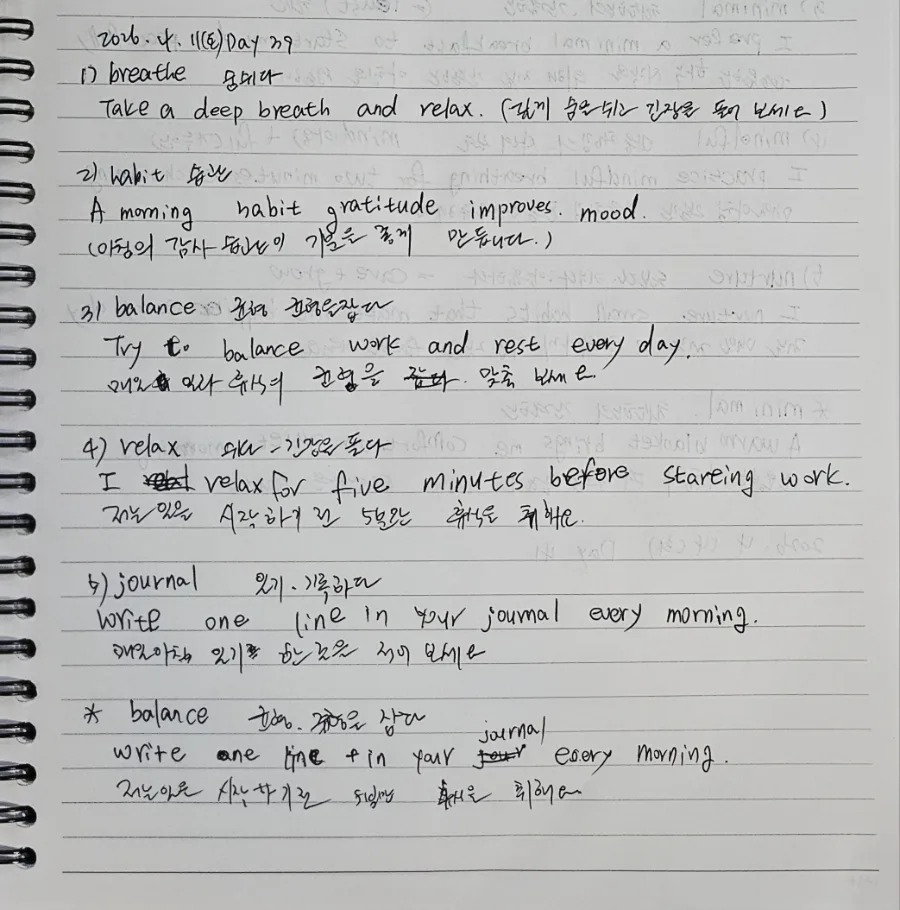

Want to master 5 essential Korean words and build a consistent learning habit for 2026? This guide provides actionable strategies, including a 5-minute daily review routine, to boost your Korean vocabulary and fluency. Learn key terms like 'breathe', 'habit', 'balance', 'relax', and 'journal' with practical examples.
How to Master 5 Korean Words Daily in Just 5 Minutes?
Consistency is the cornerstone of effective language learning. Dedicating just a few minutes each day to learning and reviewing new vocabulary can yield significant long-term results. Studies show that learners who commit to a 5-minute daily review routine experience noticeable vocabulary improvements within three months. Today, we'll focus on five crucial Korean words: 'breathe' (숨 쉬다 - sum swida), 'habit' (습관 - seupgwan), 'balance' (균형 - gyunhyeong), 'relax' (쉬다 - swida), and 'journal' (일기 - ilgi). To truly make these words stick, we'll explore specific memorization techniques and example sentences. Engaging multiple senses, such as speaking aloud and connecting words to actions or imagery, greatly enhances recall.
For instance, when learning 'breathe' (숨 쉬다), try physically taking a deep breath while saying the word. To remember 'habit' (습관), associate it with the idea that small, daily actions accumulate to create significant change. For 'balance' (균형), think about maintaining equilibrium in your daily life, perhaps like balancing your work and personal time. When learning 'relax' (쉬다), practice saying the word while consciously releasing tension from your body. Similarly, connect 'journal' (일기) to the practice of gratitude journaling or organizing your thoughts, making the word more relatable and memorable.
What's an Effective Review Routine for Korean Vocabulary?
Related Articles
Beyond learning new words, consistent review is crucial for long-term retention. Implement this 5-minute daily review routine to maximize your vocabulary recall. For the first minute, audibly repeat each word and its meaning to familiarize yourself. In the next minute, read the provided example sentences aloud to understand how the words are used in context. Then, spend a minute testing yourself by looking only at the Korean word and recalling its English meaning. Finally, dedicate the last minute to filling in blanks in example sentences, like 'I need to find more ___ in my daily schedule,' to actively reinforce your understanding.
What Are the Pros and Cons of Today's 5 Korean Words?
The five words we've covered today—'breathe' (숨 쉬다), 'habit' (습관), 'balance' (균형), 'relax' (쉬다), and 'journal' (일기)—are highly relevant to daily life and offer significant practical benefits. 'Breathe' and 'relax' can contribute to stress management and overall mental well-being, while 'habit' and 'journal' are powerful tools for self-improvement and productivity. 'Balance' is particularly pertinent in today's world, emphasizing the importance of work-life harmony. Learning these words can not only enhance your Korean language skills but also positively impact your lifestyle. However, a potential drawback is the risk of forgetting them if they aren't actively used. Simply memorizing definitions without applying them in real sentences or conversations can lead to rapid forgetting. Therefore, focusing on pronunciation, meaning, and practical application is key to lasting retention.
What Should You Know Before Learning Korean Vocabulary?
Before diving into Korean vocabulary, it's essential to understand a few key principles. Firstly, avoid rote memorization of definitions alone; always learn words within the context of sentences. This helps you grasp nuances and usage. Secondly, pay close attention to pronunciation from the start. Korean has sounds that may not exist in English, and correct pronunciation is vital for being understood. Resources like Talk To Me In Korean (TTMIK) or Duolingo offer pronunciation guides. Thirdly, consistency is more important than intensity. Aim for short, regular study sessions rather than infrequent, long ones. Finally, remember that the Korean writing system, Hangul, is remarkably logical and easy to learn, often taking just a few days. Mastering Hangul first will significantly aid your vocabulary acquisition journey.
For more details, check the original source below.





