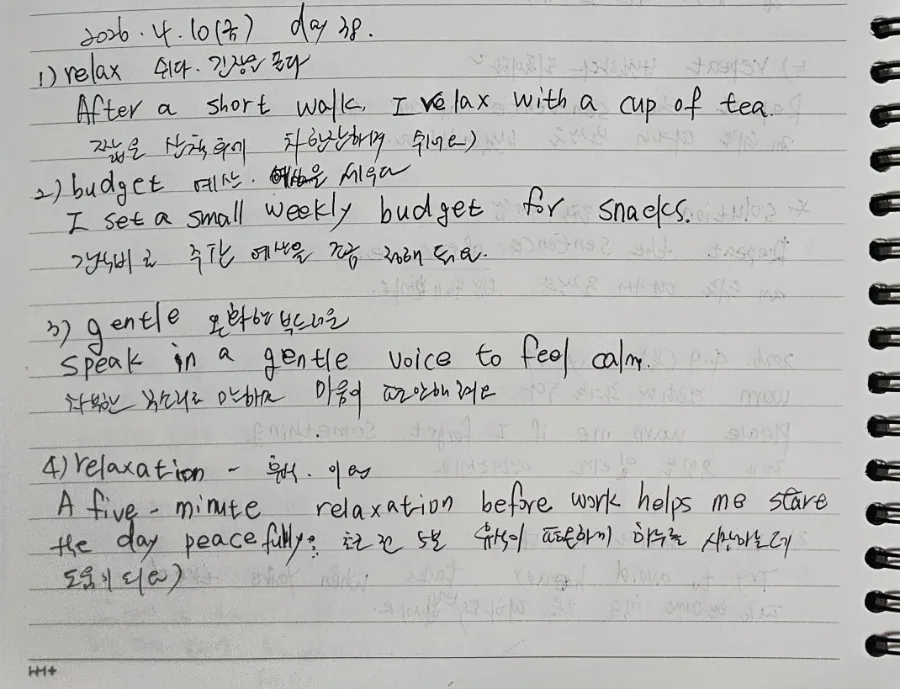

Mastering 5 new Korean words daily is key to boosting your language skills. In 2026, this effective method uses just 5 minutes to maximize your review and retention. Experience firsthand how consistency transforms into fluency.
How to Effectively Learn 5 Korean Words Daily in Just 5 Minutes?

Consistently studying Korean words, even for short periods, is crucial for long-term language proficiency. A routine focusing on reviewing 5 words in just 5 minutes daily can yield significant results, even with a packed schedule. Many learners attest to improved word recall using this concentrated approach. The secret isn't just listing words, but actively engaging with their meaning, pronunciation, and real-world usage through example sentences. This helps you grasp how each word functions in context, enabling natural application. For instance, learning '하다' (hada - to do) alongside examples like '공부하다' (gongbuhada - to study) or '운동하다' (undonghada - to exercise) clarifies its versatile role. Incorporating personal mnemonic devices, like associating '사랑' (sarang - love) with a cherished memory, further strengthens recall. These personalized strategies embed words deeper into your long-term memory.
Why Are Pronunciation and Mnemonics Crucial for Korean Word Memorization?
Effective Korean vocabulary acquisition hinges on accurate pronunciation and personalized mnemonic techniques. Consistently mimicking native speaker pronunciation while saying words aloud helps imprint their correct spelling and meaning onto your memory. For example, practicing the pronunciation of '쉽다' (swipda - easy) while imagining a smooth, effortless action can link the sound to its meaning. Furthermore, grouping related words, such as '먹다' (meokda - to eat) and '음식' (eumsik - food), or learning words with similar roots, enhances learning efficiency. This contextual and associative learning approach moves beyond rote memorization, fostering a deeper understanding of word nuances and application, ultimately boosting both speaking and writing skills.
What Are the Specific Steps in a 5-Minute Korean Word Review Routine?
A structured 5-minute Korean word review routine maximizes learning efficiency. Start by spending one minute reading each new word aloud, focusing on its pronunciation and meaning. Next, dedicate another minute to reading example sentences that incorporate the word, understanding its usage in context. Follow this with a minute of self-testing: look at the Korean word and try to recall its English meaning. Then, spend a minute on a quick fill-in-the-blank exercise using example sentences. Finally, use the last minute to intensely review 1-2 words you found particularly challenging, perhaps revisiting your mnemonic or pronunciation practice. Consistently applying this 5-minute routine daily can significantly improve your word retention and recall.
What Common Mistakes Do Learners Make When Studying Korean Vocabulary?
Many Korean learners stumble over common pitfalls. A frequent error is focusing solely on word definitions while neglecting pronunciation and example sentences, hindering accurate comprehension and application. For instance, memorizing '감사하다' (gamsahada - to be thankful) without practicing its pronunciation or seeing it in sentences like '도와주셔서 감사합니다' (Dowajusyeoseo gamsahamnida - Thank you for your help) limits practical use. Another mistake is learning words in isolation instead of exploring related terms, roots, or etymologies, which hampers vocabulary expansion. Lastly, many learners cram new words without consistent review, leading to rapid forgetting. Recognizing these mistakes and adopting a balanced approach—emphasizing pronunciation, context, related words, and regular review—is crucial for sustained progress. Finding personalized review methods, like creating sentences that evoke gratitude to remember '감사하다', can deepen understanding and long-term retention.
Master these 5 daily words with our 5-minute review routine for guaranteed retention.





