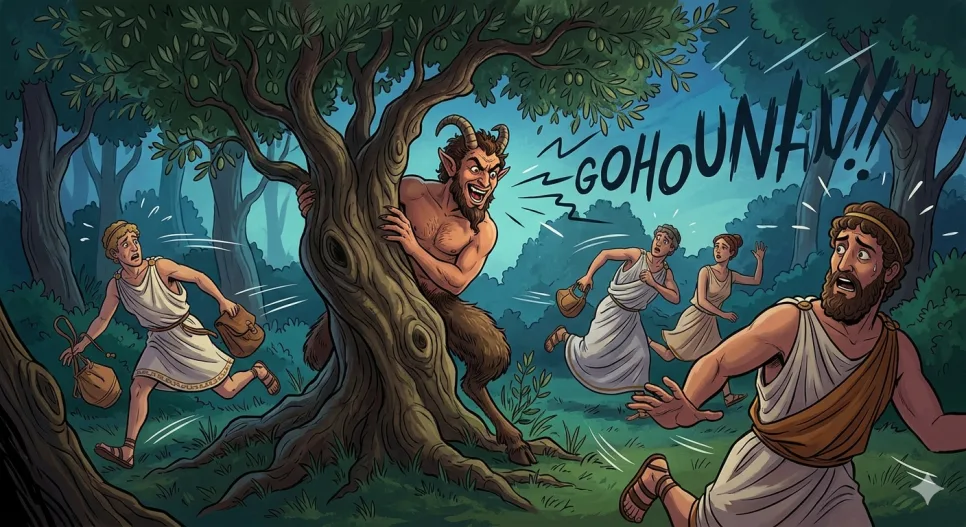
Did you know common English words like 'panic,' 'echo,' and 'cereal' have roots in ancient mythology? Understanding these fascinating etymologies can make learning English vocabulary much more engaging. For instance, 'panic' stems from a Greek god's scream, and 'cereal' is linked to a Roman goddess of agriculture. In 2026, unlock a deeper appreciation for the English language by exploring the hidden stories behind your everyday words.
What Greek God's Scream Gave Us the Word 'Panic'?
The English word 'panic,' which describes a sudden, overwhelming fear, originates from the ancient Greek god Pan. Pan was the god of the wilderness, shepherds, and flocks, often depicted with the legs and horns of a goat. He was known for his mischievous nature, particularly his habit of letting out sudden, terrifying screams to startle travelers or shepherds in his domain. These sudden cries induced intense fear in those who heard them. Over time, this association between Pan's terrifying cries and the resulting fear led to the word 'panic' entering the English language to describe a state of sudden, irrational terror. The feeling of being overwhelmed and disoriented during a panic attack eerily mirrors the sudden, inexplicable dread inspired by the god Pan himself. This etymological link offers a vivid way to remember the meaning and intensity of the word.
What Are the Mythological Roots of 'Echo' and 'Cereal'?
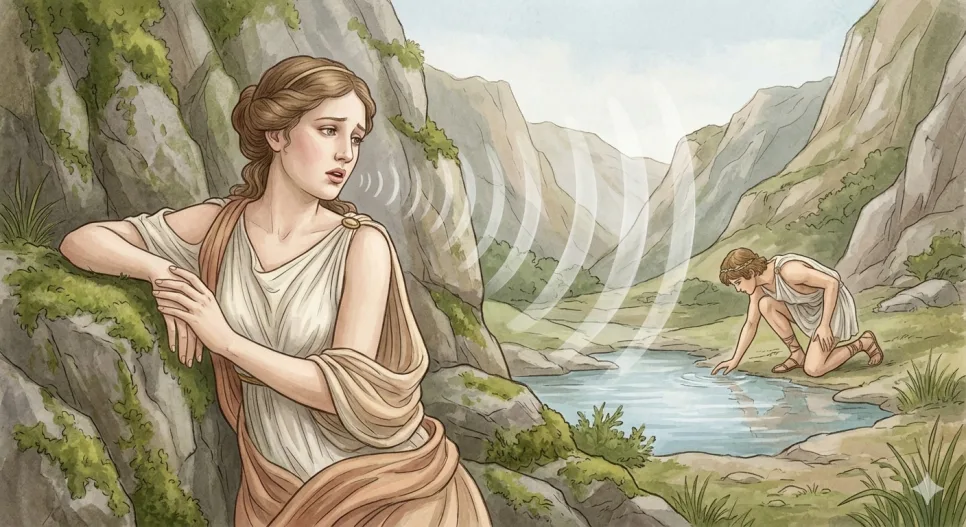
The poignant myth of the nymph Echo provides the origin for the word 'echo,' meaning a reflected sound. According to Greek mythology, Echo was cursed by Hera, queen of the gods, to only be able to repeat the last words spoken to her. She fell in love with the beautiful Narcissus, but could never express her feelings directly and was left to wander the mountains, her voice fading into mere reverberations. Her name, 'Echo,' became synonymous with these repeating sounds. Similarly, the word 'cereal,' referring to grain crops and breakfast foods, comes from Ceres, the Roman goddess of agriculture, grain, and the fertility of the earth. Ceres was revered for teaching humanity how to farm, and her name became associated with all grain-related products, including the breakfast staple we know today. Understanding these stories adds a layer of depth to everyday vocabulary.
How Did the Muses Inspire the Word 'Museum'?
The term 'museum' has its origins in ancient Greece, specifically linked to the Muses, the nine goddesses of the arts, literature, and sciences. In ancient Alexandria, a grand institution called the 'Mouseion' (meaning 'seat of the Muses') was established. This was not just a building but a center for learning, research, and the collection of scrolls and artifacts dedicated to the Muses. Over centuries, the concept evolved. The original 'Mouseion' served as a place for scholars and artists to gather and study, housing a vast library and collections. As the idea spread through Roman culture and into the Renaissance, the focus shifted from a place of study to a repository for art and artifacts, eventually becoming the 'museum' we recognize today – a place dedicated to preserving and displaying objects of artistic, cultural, historical, or scientific interest.
What Mythological Punishment Gave Us the Word 'Tantalize'?
The word 'tantalize,' meaning to torment or tease someone with the sight or promise of something that is unobtainable, comes from the tragic myth of King Tantalus. Tantalus was a figure in Greek mythology who angered the gods and was punished in Tartarus (the deepest part of the underworld). His punishment was particularly cruel: he was forced to stand in a pool of water beneath a fruit tree, with the fruit just out of reach and the water receding whenever he tried to drink. This eternal torment of being perpetually close to satisfying his hunger and thirst, yet never able to, gave rise to the verb 'tantalize.' It perfectly captures the feeling of being teased with something desirable that remains just beyond one's grasp, a common experience in marketing and everyday life.
For more details, check the original source below.





