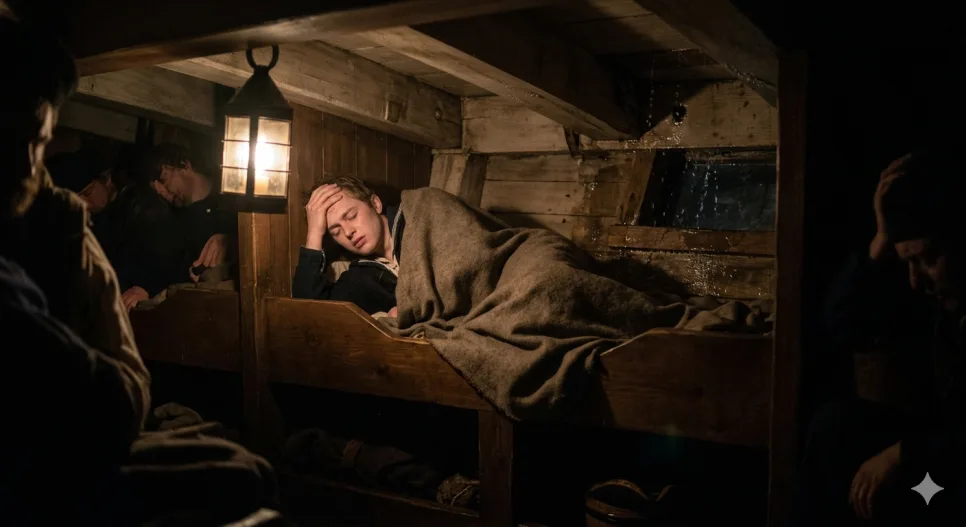
Discover six English idioms with maritime origins that have seamlessly integrated into everyday conversation, updated for 2026. Expressions like 'Under the weather' for feeling unwell stem from sailors' experiences during storms, offering a vivid glimpse into a life at sea.
How Did Nautical English Idioms Become Everyday Phrases?
In English-speaking cultures, the sea has always been a significant element. Due to a long history of seafaring, countless English idioms originated from the harsh realities of the ocean and the lives of sailors. These expressions are more than just vocabulary; they carry fascinating stories that offer insight into the culture and daily life of the past. Today, we'll delve deep into the etymology and meanings of six frequently used sea-related English idioms from an expert perspective. Understanding these idioms will make your English expression much richer and more vivid.
Why Does 'Under the Weather' Mean Feeling Unwell?

Perhaps the most representative example, 'Under the weather' is used to mean 'not feeling well' or 'in poor condition.' This expression originates from the days of sailing ships when encountering severe storms. Sailors experiencing intense seasickness would retreat below deck, 'under the weather rail,' to rest. Over time, this experience evolved into a figurative term not just for bad weather, but for feeling physically unwell or low in spirits. It's a prime example of how the hardships and survival methods of sailors became embedded in language.
The Hidden Meaning Behind 'Show One's True Colors'
'Show one's true colors' means to reveal one's real intentions or true self that has been hidden. Here, 'colors' refers not just to hues, but to the 'flags' used by pirate ships in the past. Pirates would often use the flags of friendly nations as a disguise when approaching merchant ships. However, just before launching an attack, they would lower the false flag and raise their own true flag, their 'true colors.' Thus, this idiom is used in situations where deception or disguise is finally abandoned to reveal one's original intentions or identity. This provides important insight into understanding someone's true motives.
Practical Meanings of 'Learning the Ropes' and 'All Hands on Deck'
'Learning the ropes' means 'to learn the essentials or how to do something,' and it originates from sailing a ship. To maneuver a sailing vessel, one had to skillfully handle the numerous ropes connected to the sails. New sailors were first taught the purpose and operation of these ropes. This phrase figuratively represents the process of learning the basics of a complex system. Meanwhile, 'All hands on deck' means 'all sailors to the deck,' signifying the mobilization of all hands in an emergency. This came from situations where every single person was crucial, and today it's often used when an entire organization's capabilities need to be pooled together. Both expressions contain practical guidance derived from actual sailor experiences.
Understanding Probability with 'Long Shot' and Surprise with 'Taken aback'
'Long shot' refers to 'an attempt with a low probability of success' or 'a shot taken from a long distance.' Early cannons had very low accuracy, making it nearly impossible to hit distant targets; it was essentially a gamble. Therefore, this expression came to represent an attempt made despite low odds of success. On the other hand, 'Taken aback' means 'to be greatly surprised' or 'taken aback.' It describes the shock and confusion sailors would feel when the sails of a ship, caught by a sudden change in wind direction, were blown backward, causing the ship to stop abruptly. It vividly conveys the shock and confusion felt when facing an unexpected situation. These English idioms vividly convey the emotions and circumstances of their time.
More stories about English idioms will continue in the next installment.





