Renovating an older Korean apartment, known as 'gu-chuk' apartments, involves a multi-stage process including demolition, utility work, window replacement, carpentry, wallpapering, lighting, and furniture placement. Understanding each phase and its potential challenges is crucial for a successful remodel. Key areas to focus on for older units include improving insulation and soundproofing to overcome common drawbacks.
Korean Apartment Renovation: Demolition First! How to Handle Noise and Neighbors
The initial step in renovating an older Korean apartment is demolition, removing outdated structures, walls, and flooring to prepare for new designs and systems. This process can generate significant noise, potentially disturbing neighbors. For instance, in a sibling-in-law's renovation, they posted notices and offered small gifts to neighbors to show consideration for the noise. They also made sure to express gratitude to the building's security and management staff to ensure a smooth process. This highlights how successful renovations go beyond just fixing a home; they require consideration for the community.
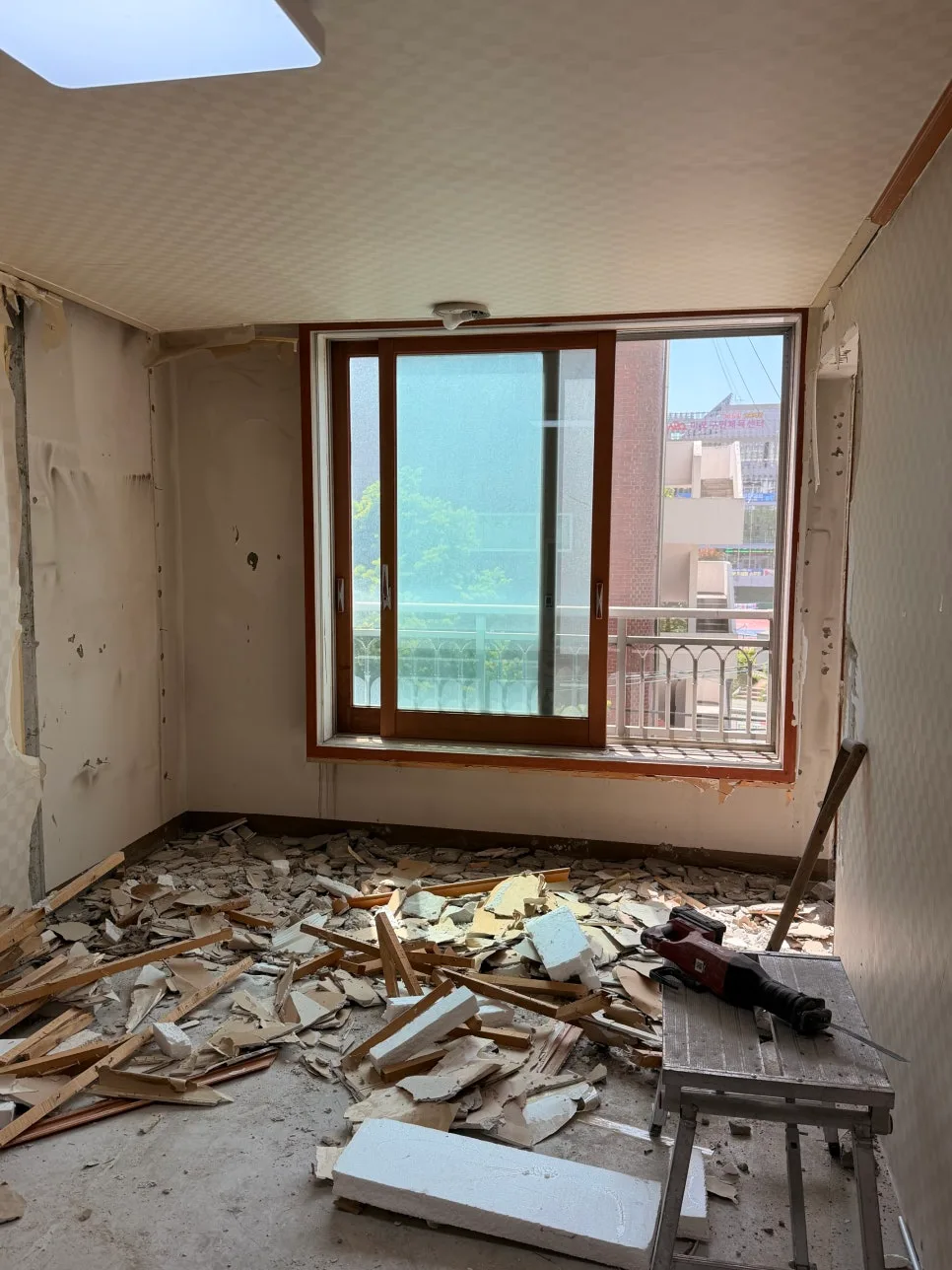
While demolition is the first step in transforming a home's atmosphere, it absolutely requires communication and consideration for those living nearby.
Expanding Space & Enhancing Insulation: Transforming a 20-Year-Old Apartment
Related Articles
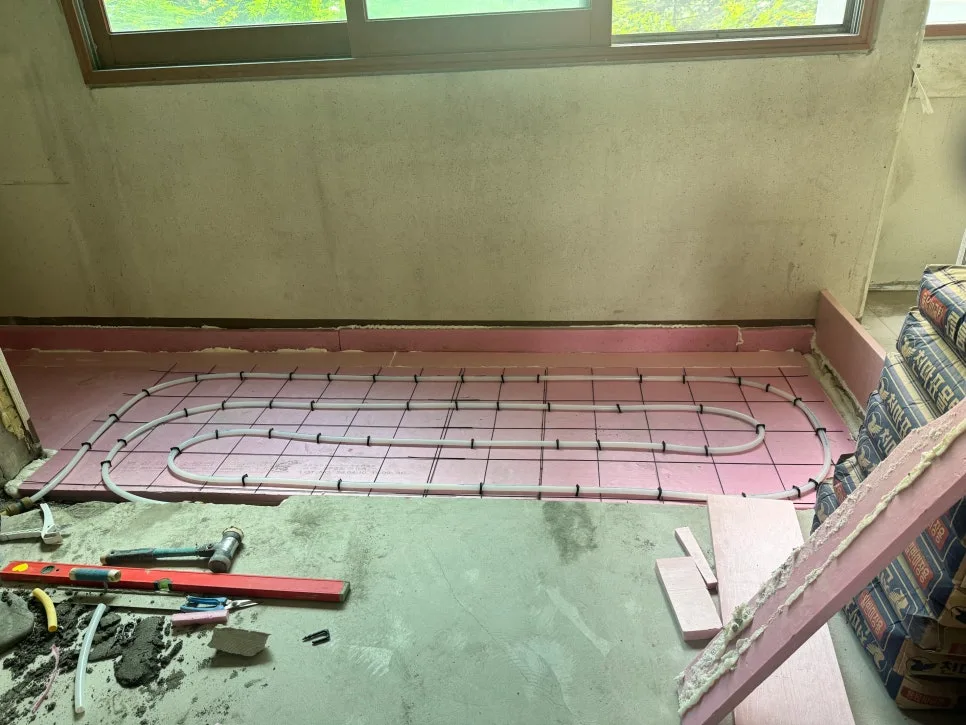
After demolition, heating system work for any expanded spaces follows. Older apartments, often around 20 years old, typically have poor insulation, making reinforcement essential. Improving heating and cooling efficiency is not just about aesthetics; it directly impacts residents' comfort. In Korea, homes that offer actual comfort during daily living are increasingly valued over purely stylish ones. Expanding living areas while incorporating better insulation and modern systems is key to upgrading older Korean apartments.
System Air Conditioner Piping & Window Replacement: Complex but Crucial Processes
Next is the system air conditioner piping installation. This involves complex electrical and piping work within the ceiling, requiring specialized skills. Proper installation, like that for a Samsung 4-unit system, is vital for optimal performance.
Window replacement significantly impacts the home's insulation, soundproofing, and natural light. Fortunately, exterior work for Re-BART windows was completed before rain was forecast for Seoul. Replacing windows dramatically improves a home's thermal efficiency and can block outside noise. These seemingly complex processes combine to enhance the overall quality of your home.
Carpentry, Wallpaper, Lighting & Furniture: Creating a Livable Space
Following window installation, carpentry work begins, forming the structural framework with new walls, ceilings, and molding. After carpentry, wallpaper and lighting are installed. Finally, furniture placement completes the transformation, turning the space into a comfortable home. Watching a bare space evolve daily is fascinating. Cold structures transform into warm, inviting living areas, showcasing the true magic of interior design. This process will continue as the new family's home is completed.