For small business owners in 2026, the key to reducing your income tax burden lies in meticulously tracking expenses and maximizing eligible deductions. Since your business income is taxed alongside other personal income like wages or interest, it's crucial to accurately account for all deductible expenses and claim every available tax credit and reduction. This comprehensive approach ensures you don't overpay and avoid potential penalties.
What is Korean Comprehensive Income Tax (Jongsose) for Small Businesses?
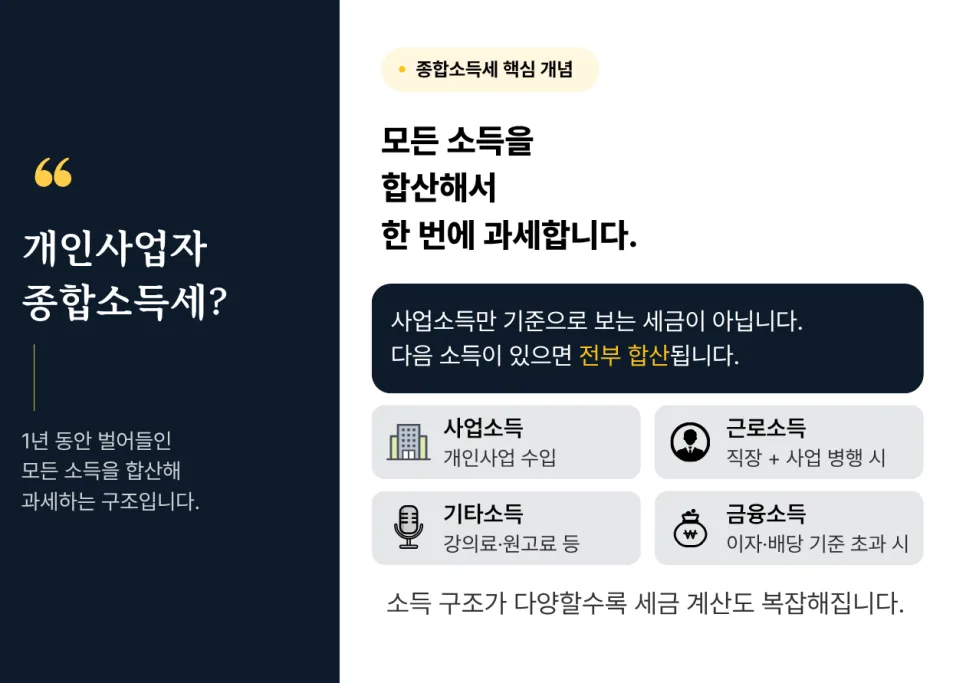
Comprehensive Income Tax (종합소득세, Jongsose) for small business owners in Korea is an annual tax levied on all income earned throughout the year. This includes not only business profits but also wages from other employment, income from freelance work or lectures (other income), and certain interest or dividend income exceeding specific thresholds. Because the tax calculation can become complex with diverse income streams, it's vital to stay updated on any tax law changes for 2026. The Korean tax authority (National Tax Service) has robust systems for tracking various income sources, making tax evasion or omission risky and potentially leading to significant penalties.
Who Needs to File Comprehensive Income Tax, and What Are the Penalties for Non-Filing?
Generally, anyone with income is required to file. This includes individuals with a registered business, freelancers who have 3.3% withheld at source, employees with side businesses, and platform workers (like delivery drivers or gig economy participants). If you fail to file, the National Tax Service may assess your tax liability based on their available data, often resulting in additional taxes and penalties. Furthermore, non-filing can trigger requests for clarification or even a tax audit, leading to further complications. With increasingly sophisticated data analysis, the consequences of missing a filing deadline or omitting income are becoming more severe, making timely and accurate reporting essential.
Understanding the Comprehensive Income Tax Calculation Structure and Tax Saving Strategies
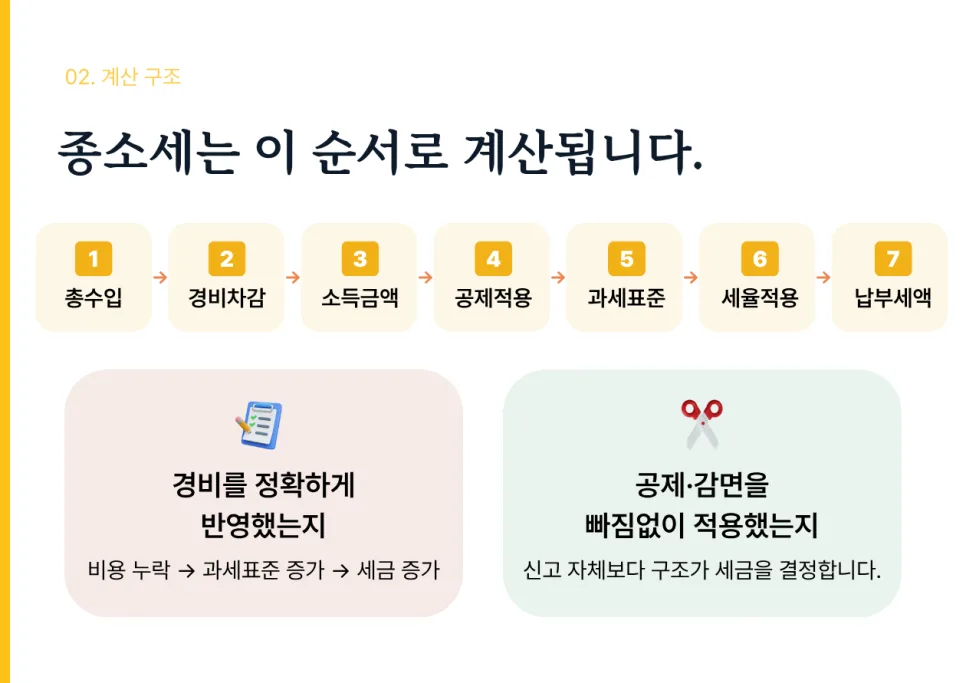
The calculation of Comprehensive Income Tax begins by subtracting necessary business expenses (필요경비, piryo-gyeongbi) from your total revenue to determine your taxable income. This income is then subject to progressive tax rates. Finally, tax credits and reductions are applied to arrive at the final amount due. The most significant impact on your final tax bill comes from accurately reflecting expenses and claiming all eligible deductions and credits. For instance, meticulously tracking business-related credit card transactions, bank transfers, and eligible asset depreciation can significantly lower your taxable income. Additionally, claiming personal deductions such as those for dependents, insurance premiums, medical expenses, and specific business-related tax credits can further reduce your tax liability. Many small business owners overlook these crucial steps, leading to higher tax payments than necessary.
What Common Expenses and Deductions Do Small Business Owners Often Miss for Income Tax Filing?
In practice, small business owners frequently overlook several key areas when filing their Comprehensive Income Tax. Firstly, expense omissions are common: failing to record business credit card payments, neglecting to deduct bank transfers for business purposes, or not accounting for depreciation on business assets. Secondly, revenue miscalculations can occur, such as double-counting platform sales or missing certain revenue streams, which can lead to penalties and audits. Thirdly, many fail to apply for all available deductions and credits. This includes basic personal deductions like those for dependents, insurance, and medical costs, as well as potential tax credits or reductions specifically available to small businesses, depending on their size and industry. Ensuring all eligible items are captured is vital for maximizing tax savings.
For more details, check the original source below.





