With stricter apartment regulations in South Korea, large-sized officetels (officetel is a Korean term for a studio or one-bedroom apartment, often in a mixed-use building with commercial space) in Seoul are seeing a surge in popularity and price. This trend is driven by a combination of factors including a shortage of new apartments, eased loan regulations, and the high cost of traditional housing, making larger officetels an attractive alternative for owner-occupiers. In contrast, smaller officetels are gaining traction in regional cities as rental income properties, catering to a different market dynamic. This analysis explores the outlook for officetel investments in 2026, considering regulatory shifts and supply changes.
What's Driving the Price Surge in Seoul's Large Officetels?
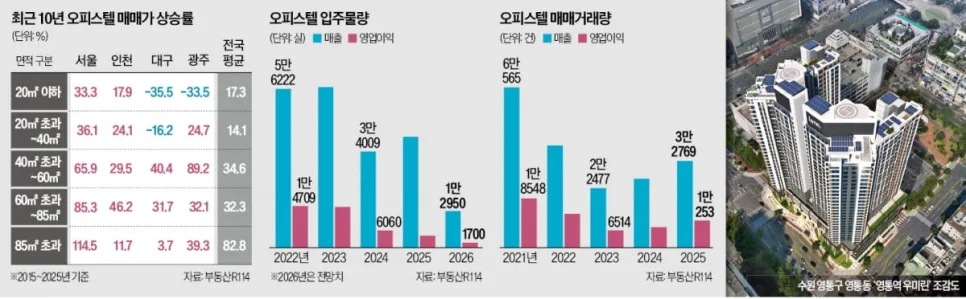
Over the past decade, data reveals a significant divergence in price appreciation between different officetel sizes in Seoul. Specifically, officetels larger than 85 square meters (approximately 915 sq ft) have seen price increases of 114.5%, dwarfing the 33.3% rise for units under 20 square meters (approximately 215 sq ft). This substantial difference highlights how larger officetels are increasingly perceived not just as living spaces, but as viable substitutes for apartments. The core reasons behind this shift are Seoul's severe shortage of new apartment constructions, increasingly stringent loan regulations on traditional housing, and the prohibitive cost of purchasing an apartment. Facing these challenges, many prospective homeowners are turning to larger officetels as a more accessible option to achieve homeownership, especially those seeking three or more bedrooms and meeting residency requirements, often at a lower price point than comparable apartments.
Why Does the Regional Officetel Market Differ from Seoul's?
In regional cities across South Korea, the real estate landscape presents a different picture compared to the capital. Unlike Seoul, these areas generally have a sufficient supply of apartments, diminishing the appeal of larger officetels as direct apartment substitutes. Consequently, the demand in these markets is more focused on smaller officetels, typically under 60 square meters (approx. 645 sq ft), which are popular as rental income properties. This trend is fueled by a growing number of single-person and two-person households, alongside investors looking for steady monthly rental yields rather than significant capital appreciation. The rental market in these regions is robust, making smaller officetels a more practical and profitable investment for those seeking consistent cash flow, often yielding between 5% to 7% annually, compared to the lower yields in Seoul's appreciating market.
How Do Government Regulations Impact the Officetel Market?
Government policies, particularly those concerning loan-to-value (LTV) ratios and other lending regulations, play a crucial role in shaping the officetel market. In recent years, the easing of LTV restrictions for officetels, especially in Seoul, has made them more accessible to a wider range of buyers. This regulatory adjustment has allowed more individuals, including first-time homebuyers and those looking to upgrade from smaller units, to secure financing. As a result, officetels have increasingly served as a channel for capital inflow into the real estate market, acting as a crucial alternative when apartment purchases become more difficult due to stricter lending rules. This flexibility in financing has been a significant factor in boosting demand and prices, particularly for larger units perceived as more livable alternatives to apartments.
What is the Projected Supply of Seoul Officetels in 2026?
The supply of new officetels in Seoul is projected to experience a significant downturn in the coming years. After peaking at approximately 14,000 units in 2023, the number of new officetel completions is expected to plummet to around 1,700 units by 2026. This drastic reduction in new supply, often referred to as a 'supply cliff,' is a major factor that could drive up prices. With demand remaining relatively stable or even increasing due to the ongoing housing shortage and regulatory environment, a significant imbalance between supply and demand is anticipated. This scarcity of new units is likely to put upward pressure on both rental rates and sale prices for existing and newly developed officetels in the Seoul metropolitan area.
What Are the Key Risks Associated with Officetel Investment?
Investing in officetels comes with specific risks that potential buyers must consider. Firstly, officetels typically incur higher acquisition taxes compared to apartments. The acquisition tax rate for officetels is a flat 4%, whereas for apartments, it varies based on the number of properties owned, often starting lower for a primary residence. Secondly, when used for residential purposes, officetels are counted towards an owner's total number of properties. This means that for individuals who already own one or more homes, purchasing an officetel can significantly increase their tax burden through higher comprehensive real estate taxes and capital gains taxes upon sale. It is crucial for investors to consult with a tax professional to understand these implications fully and plan accordingly before making an investment.
For more details, check the original source below.