A public servant's investment of $1.7 billion in SK Hynix, using $370 million of their own capital and $1.33 billion in margin loans, exemplifies the extreme risks of 'debt-to-invest' (bitu) strategies. This case highlights the intense 'bitu' fervor fueled by market optimism and expectations of a semiconductor industry rebound, demonstrating how investors are increasingly taking on excessive leverage.
Why is 'Debt-to-Invest' in SK Hynix So Risky?
A self-proclaimed public servant recently revealed on an anonymous online community that they invested a total of $1.7 billion in SK Hynix stock. Of this amount, $1.33 billion was borrowed through margin financing from a brokerage firm, representing a leverage ratio of approximately 4.4 times their own capital. Margin loans typically come with high interest rates, around 7-9% annually, and carry the significant risk of forced liquidation (known as 'bandaemaemae' or reverse sale) if the stock price falls. This aggressive investment strategy is a symptom of the current market environment, where soaring SK Hynix stock prices, driven by expectations of a semiconductor industry recovery, AI server investments, and HBM (High Bandwidth Memory) demand, are encouraging bolder investment decisions. Indeed, the outstanding balance of margin loans for SK Hynix has surged by 156.8% year-to-date, indicating a rapid increase in 'debt-to-invest' activities. This trend can create a dangerous 'it will only go up' mentality among investors, leading to perilous situations.
How Did the Public Servant Fund Their SK Hynix Investment?
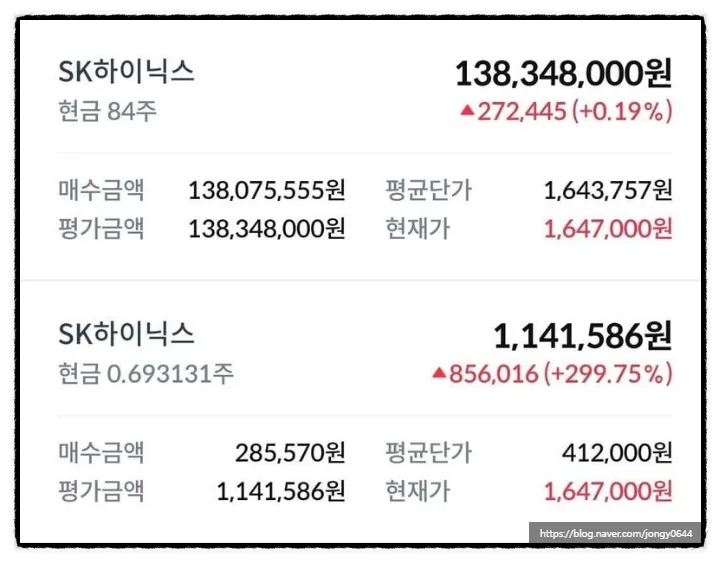
The investor in question reportedly used approximately $370 million of their own capital and secured the remaining $1.33 billion through margin financing from a securities firm. Their average purchase price was around $3,100 per share. The investor claimed to have a history of turning $74,000 into $666,000 within 11 months and had previously invested $740,000 in SK Hynix when the stock was at $460 per share, before making the subsequent $1.33 billion leveraged investment. This aggressive approach is rooted in a strong conviction that the semiconductor market will trend upwards through 2028 and a desire for accelerated wealth accumulation. The investor also addressed potential accusations of manipulation regarding the timing of their loan and purchase dates, explaining that the D+2 settlement cycle in stock trading can cause discrepancies.
What Distinguishes Investment from Speculation?
Many believe investing in good companies is inherently safe, but the method of acquisition can easily veer into speculation. For instance, buying SK Hynix stock with $370 million in cash could be considered an investment. However, adding a $1.33 billion loan to make a total investment of $1.7 billion significantly increases the speculative nature. This is because the investor is exposed to a level of risk they cannot withstand if the market experiences an unexpected downturn. Margin financing, in particular, becomes a race against time. Interest accrues continuously, and the pressure of potential forced liquidation looms with falling stock prices, meaning time is not on the investor's side. Ultimately, the key to long-term success lies in 'surviving the investment' by managing risk diligently and avoiding being swept up in short-term market fluctuations. A cautious approach tailored to an individual's risk tolerance and financial situation is crucial.
What's the Worst-Case Scenario for SK Hynix 'Debt-to-Invest'?
The most significant risk associated with 'debt-to-invest' in SK Hynix is forced liquidation. Investors using margin financing face the possibility of their shares being automatically sold by the brokerage firm if the stock price falls below a certain threshold. This can lead to not only the loss of the entire principal but also the accumulation of additional debt, creating a devastating financial spiral. This is not financial advice. Consult a licensed financial advisor.
English crawl path
Next English reads from this pilot cluster
Continue through the category hub, latest English stories, and related posts so this translated article is not an isolated URL.
Tags
💬Frequently Asked Questions
What should I check first in SK Hynix 'Debt-to-Invest' Risk: Public Servant's $1.7B Loan Analysis 2026?
Does this Finance article link back to the Korean source?
Where can I find similar English stories?
English discovery path
Explore more English K-culture stories
Keep browsing the indexed English pilot cluster so Google and readers can move between this story, the category hub, and fresh discovery pages.
Original Source
Read the Korean original