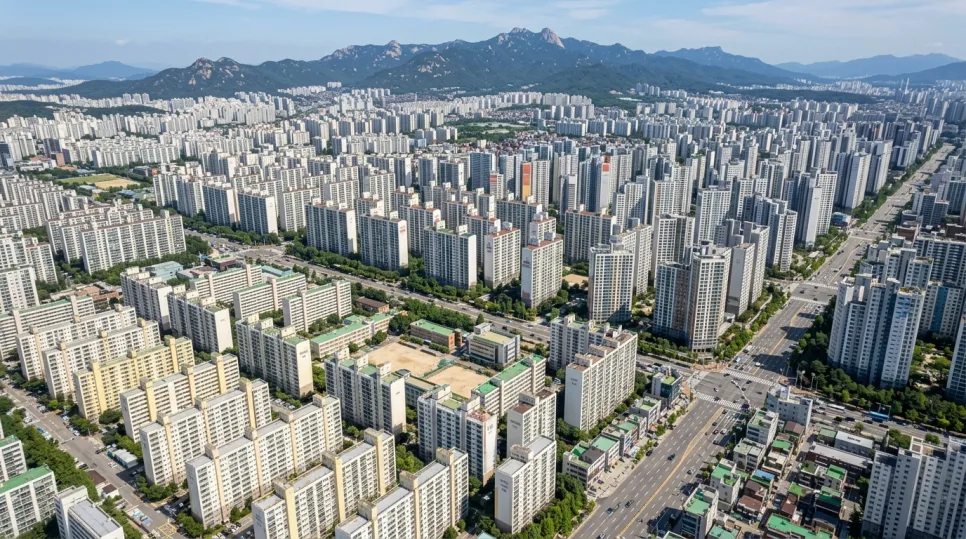
The Seoul apartment market in 2026 is poised for new investment opportunities as the 'gap filling' phenomenon narrows the price difference between Gangnam and other areas. Experts predict Seoul apartment prices will rise by around 5% this year, with particular attention on the potential of Gangbuk (North Seoul) and surrounding metropolitan areas.
What Changes Can We Expect in the 2026 Seoul Apartment Market?

Unlike in the past, the 2026 Seoul apartment market is expected to see simultaneous price increases in Gangnam and Gangbuk, rather than a time lag. In March of this year, Gangbuk apartment prices surpassed the psychological threshold of 1.1 billion KRW (approx. $800,000 USD) for the first time, demonstrating this shift. This trend is closely linked to investment funds moving into undervalued areas due to stricter regulations on multiple homeowners by the government. Previously, Gangnam prices would rise first, followed by Gangbuk, but now both regions are experiencing price increases almost concurrently. This shift signifies actual price increases of tens of millions of KRW (thousands of USD) and makes understanding these new market dynamics crucial for investors.
What Exactly Is the 'Gap Filling' Phenomenon in Real Estate?
Related Articles
In real estate investment, 'gap filling' refers to the phenomenon where prices in one area rise, causing prices in other comparable areas to follow suit. For instance, if Gangnam apartment prices increase from $730,000 USD to $800,000 USD, investors perceive Gangbuk (North Seoul) as relatively undervalued compared to Gangnam. This collective psychology drives capital into Gangbuk, leading to price increases that narrow the gap between Gangbuk and Gangnam. This process typically starts with Gangnam's surge, followed by Gangbuk and surrounding metropolitan areas, eventually stabilizing the price difference to a certain extent. Understanding this phenomenon is key to identifying future investment opportunities.
What Are the Actual Price Data for Gangnam and Gangbuk Apartments?
Looking at actual data reveals the 'gap filling' phenomenon more clearly. While Gangnam apartment prices peaked around $950,000 USD in June 2022 and then declined, by March 2026, Gangnam averaged approximately $840,000 USD, and Gangbuk averaged around $810,000 USD, significantly reducing the price gap. Notably, areas like Seongbuk-gu and Dobong-gu recorded their highest monthly gains in a decade since 2015, showcasing the rapid rise in Gangbuk. However, the surge in Gangbuk isn't solely due to following Gangnam; it's also influenced by a complex interplay of factors like a shortage of Jeonse (lump-sum deposit rental) supply and a decrease in new apartment inventory. It's important to note the current Jeonse supply situation is extremely tight.
Where Are the Investment Opportunities for Seoul Apartments in 2026?
Understanding the ongoing 'gap filling' phenomenon allows for effective identification of investment opportunities in 2026. The top investment targets remain well-located areas in Gangbuk and Gangseo, particularly apartments with excellent subway accessibility and those that are new or recently renovated. These areas still have some undervalued segments compared to Gangnam. Secondarily, metropolitan areas with good accessibility to Seoul and expanding infrastructure (such as Incheon's Geomdan, Hwaseong in Gyeonggi, Dasan in Namyangju, and Pangyo) are attracting attention. For those considering areas outside the immediate Seoul city limits, these rapidly developing satellite cities offer potential growth.
What Are the Key Considerations for Investing in Seoul Apartments in 2026?
When investing in Seoul apartments in 2026, it's crucial to consider potential policy changes and interest rate hikes. Government regulations on real estate can shift, impacting market dynamics. Additionally, rising interest rates could increase borrowing costs and affect affordability. Therefore, thorough research and consultation with a licensed financial advisor are highly recommended to navigate these factors and make informed investment decisions. Diversifying your investment portfolio and understanding your risk tolerance are also essential components of a sound investment strategy.
For more details, check the original source below.





