According to investment news released on May 3, 2026, the memory semiconductor market is expected to extend its supercycle due to strong demand for DDR5 and HBM, while the HDD market is also anticipated to see an upcycle driven by increased AI data needs. Specifically, rising NAND flash prices and growing enterprise demand are poised to positively impact the overall storage market.
What's the 2026 Memory Semiconductor Market Outlook?
The memory semiconductor market is projected for an extended supercycle, fueled by a surge in demand for DDR5 and High Bandwidth Memory (HBM). With the shift towards AI-centric CPUs, DDR5 adoption is expected to increase significantly, potentially up to four times the current levels. The launch of AI CPUs from Intel and AMD is intensifying demand, leading to potential DDR5 supply bottlenecks. Both HBM and DDR5 are currently experiencing supply shortages, and the market situation could fluctuate based on the production capacity expansion pace by SK Hynix and Samsung Electronics. Meanwhile, weakening DDR4 demand in the consumer market is creating a divergence from premium memory segments. Analysis from industry experts suggests that the price of 16GB DDR5 modules rose by 2.8% in April alone, maintaining a premium.
What's the Structural Shift and Price Outlook for NAND Flash?
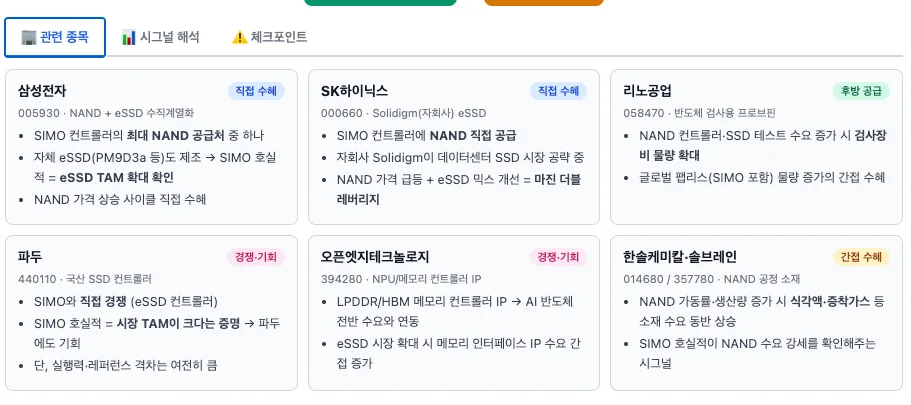
The NAND flash market is anticipated to see a price increase of over 30% in the third quarter of 2026, indicating a continuation of the NAND cycle that exceeds market expectations. SanDisk's (SNDK) Non-Binding Memorandum (NBM) agreement, securing a supply obligation of $420 billion with five customers through 2027 (covering over 33% of total supply), supports this forecast. With bit supply growth limited to approximately 20% annually and enterprise demand projected to grow at a robust rate of over 60% annually, tight supply-demand conditions are expected to persist. NAND eSSD prices are projected to rise from around $0.35 per GB to $0.45 per GB by Q3 2026.
What's Driving the HDD Market's Upswing and Investment Opportunities?
Surprise earnings from Western Digital (WDC) and Seagate clearly signal an upswing in the HDD market. WDC reported Q3 revenue of $33.4 billion (+45% YoY) with a gross profit margin of 50.5%, and guided for Q4 gross profit margins between 51-52%. Seagate also achieved 55% YoY growth in its datacenter segment in Q3 and forecasts gross profit margins exceeding 60% through 2027. Capacity for Nearline HDDs is virtually booked through June 2027, driven by increasing demand for synthetic data from Generative AI and Physical AI. Paradoxically, the sharp rise in NAND prices is enhancing the price competitiveness of HDDs, contributing to their sustained market share in the storage landscape.
What Are the Changes in the Semiconductor Equipment and Packaging Markets?
Tokyo Electron (TEL) has raised its forecast for the Wafer Fab Equipment (WFE) market for 2026-27 by 15-20%, driven by simultaneous strength in both DRAM and logic semiconductor markets. This increases the likelihood of achieving its annual revenue target of 3 trillion yen. Intel's emerging EMIB (Embedded Multi-die Interconnect Bridge) technology is also gaining attention as a potential alternative to TSMC's CoWoS packaging, which could reshape the competitive landscape in the packaging market and potentially impact TSMC's dominant position. This development could lead to a re-evaluation of Intel Foundry Services' profitability prospects.
For more details, check the original source below.





