
Foreign investors are shifting billions from giants like Samsung and SK Hynix into robotics stocks, signaling a major trend for 2026. This move highlights the growing belief that the robotics industry, powered by advanced AI, is poised to become the next critical engine for economic growth, moving beyond factory automation to sophisticated humanoid robots capable of complex tasks.
Is Robotics the Next Frontier After Semiconductors in the AI Era?
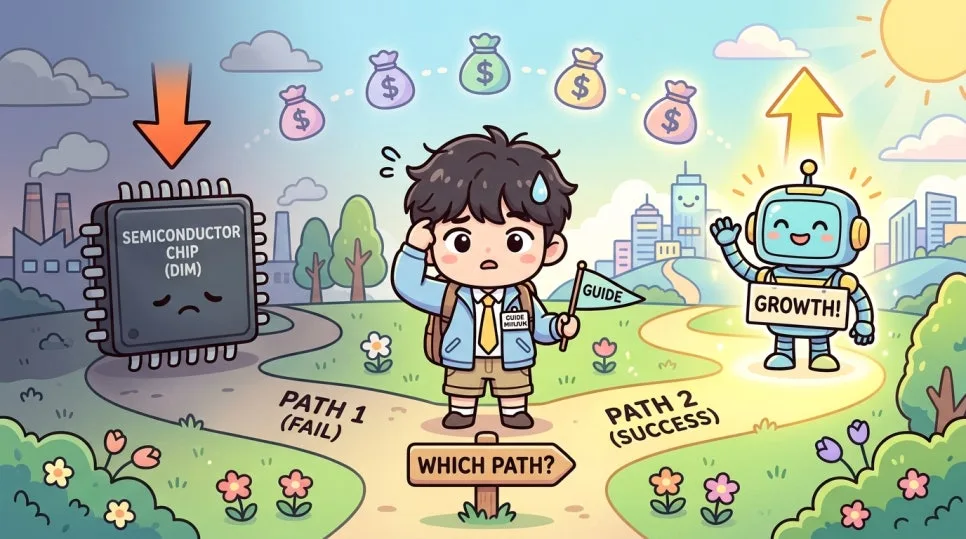
Recent market activity shows a significant pivot by foreign investors. Instead of heavily investing in semiconductor giants like Samsung Electronics and SK Hynix, capital is increasingly flowing into robotics companies such as LG Electronics, Doosan Robotics, and Rainbow Robotics. This trend suggests a strategic shift, anticipating that robotics, fueled by rapid AI advancements, will be the next major growth sector. The focus is particularly on humanoid robots that can mimic human cognitive and physical abilities, indicating a future where AI integrates seamlessly into the physical world. Companies that can master both advanced AI software and precise hardware control will likely lead this transformation.
Understanding Moravec's Paradox: The Core of Robotics Technology
To grasp the future of robotics, it's crucial to understand Moravec's Paradox. This principle states that human-level perception and mobility, tasks we find easy like picking up an object or maintaining balance, are incredibly difficult for robots. Conversely, complex calculations and logical reasoning, which are challenging for humans, are relatively simple for AI. Therefore, the future of robotics hinges on the synergy between sophisticated hardware capable of intricate movements and AI software that can accurately interpret and execute human commands. Companies like LG Electronics and Doosan Robotics are investing heavily in humanoid technology, robotic joint components, and AI platforms because this fusion is key to unlocking the next generation of intelligent machines. If semiconductors are the 'brain' of AI, then robots are the 'body' that allows AI to interact with and shape our physical reality.
Robots Are Expanding into Every Aspect of Our Lives
The evolution of robotics promises to revolutionize not just industrial settings but our daily lives. We're moving beyond robots confined to factory floors, performing repetitive tasks, to intelligent machines being deployed in hospitals, elder care facilities, logistics centers, and even our homes. In an era of aging populations and labor shortages, robots are emerging as essential solutions. They can assist with patient care, transport goods, perform household chores, and much more, potentially reducing labor costs and enhancing service quality across various sectors. This expansion into everyday life is expected to significantly accelerate the growth of the robotics industry, making these technologies indispensable for societal progress.
Investing in Robot Stocks: Navigating Volatility and Finding Value
While the growth prospects for the robotics industry are compelling, investors should approach this sector with caution. Robot stocks that have seen rapid price increases may experience significant volatility due to high expectations. It's essential to discern whether the current enthusiasm is a sustainable trend driven by technological breakthroughs or merely a short-term speculative bubble. Investors should look beyond the 'robot' label and focus on companies with demonstrable technological prowess, viable revenue models, and clear long-term growth potential. Evaluating specific strengths like humanoid capabilities, AI integration, and real-world applications is crucial for making informed investment decisions. As with any investment, it's vital to align your strategy with your personal financial goals and risk tolerance, and consider consulting with a financial advisor.
For more details, check the original source below.





