In 2026, the power grid equipment industry is poised for an unprecedented supercycle, driven by a confluence of factors including the fundamental shift in energy paradigms, a surge in AI data center power demands, and the critical need to replace aging infrastructure. This presents significant growth opportunities for key players in the sector.
Why Are Grid Upgrades and AI Data Centers Driving Power Equipment Demand?
The explosive demand in the power equipment market today is a result of several compounding factors. In my experience, market upswings are far more impactful when multiple drivers align rather than relying on a single catalyst. Developed nations, particularly in North America, are facing a critical juncture where their aging power grids require urgent replacement for safety and efficiency. Simultaneously, the rapid expansion of the AI industry has created a massive new demand for electricity through data centers. These facilities consume exponentially more power than conventional buildings, necessitating substantial investments in high-voltage transformers and distribution equipment. For instance, import data from North America shows that transformer imports in Q1 2026 increased by over 25% year-over-year, reaching record highs. This demand is not a short-term trend but a structural shift expected to persist for over a decade, further amplified by increased investment in renewable energy generation facilities, likely maintaining a supplier's market for the foreseeable future.
What's Driving HD Hyundai Electric's Market Dominance and Financial Performance?
Related Articles
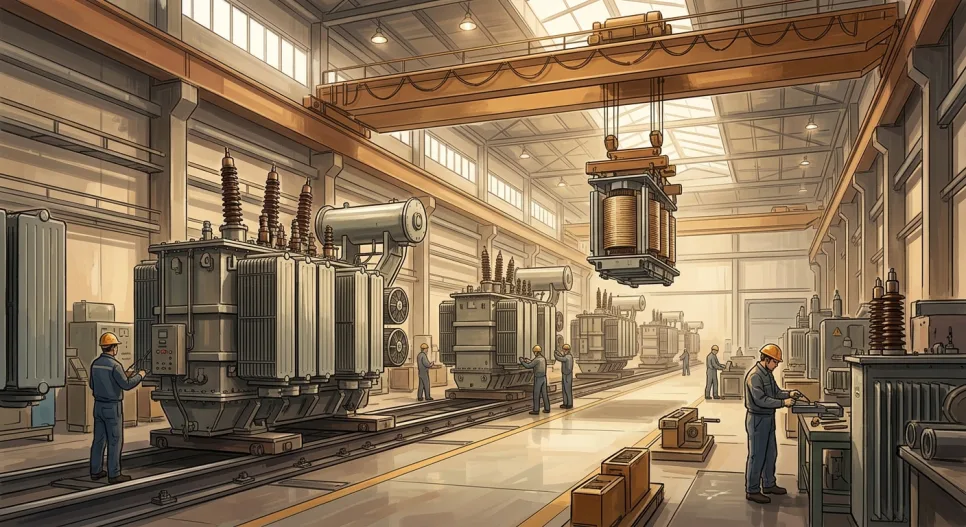
HD Hyundai Electric, a leading domestic power equipment manufacturer, is demonstrating remarkable financial performance. In Q1 2026, the company reported an earnings surprise, significantly exceeding market expectations for both revenue and operating profit. Notably, maintaining an operating profit margin in the mid-20% range showcases a vastly improved financial resilience compared to its past struggles with low-price order competition. Such consistent profitability in manufacturing is a strong indicator of the company's pricing power in the market. Leveraging its unparalleled competitiveness in high-voltage transformers, particularly in North American and Middle Eastern markets, HD Hyundai Electric had secured over three years of orders by May 2026, ensuring high revenue visibility. Reports from the field indicate that its Ulsan plant is operating at full capacity 24/7, and even the logistics systems are being overhauled to manage the overwhelming volume of export orders to North America, underscoring the company's fundamental strength and potential stock price support.
How Do LS ELECTRIC and Hyosung Heavy Industries Differ in Their Growth Strategies?
While HD Hyundai Electric excels in the high-voltage segment, LS ELECTRIC has established a robust portfolio in distribution and low-voltage equipment. By expanding its local manufacturing facilities in North America, LS ELECTRIC is enhancing its responsiveness to capture demand for power distribution equipment within data centers. Overall, Korean companies are increasing their influence across the entire power grid spectrum, from high-voltage to low-voltage systems. LS ELECTRIC also shows strength in smart grids and Energy Storage Systems (ESS), offering additional growth momentum from the expanding energy efficiency market. Hyosung Heavy Industries, a traditional powerhouse in high-voltage transformers, is also increasing its market share in Europe and North America. Its technological advantage in high-value flexible AC transmission systems (FACTS), such as STATCOM, is highly favored in developed markets that prioritize grid stability. Although each company focuses on different voltage levels and regions, they all benefit from the massive tailwind of the power equipment supercycle. Investors should carefully compare each company's order backlog composition and regional sales breakdown to select stocks aligned with their investment preferences.
Related Articles
How Do Copper Price Fluctuations and Raw Material Risks Affect Power Equipment Companies?
When analyzing power equipment stocks, copper price fluctuations are a critical variable to consider. Copper constitutes a significant portion of the manufacturing costs for transformers and cables, leading to perennial concerns about its impact on profitability. However, a realistic assessment of the current market dynamics suggests a different scenario than in the past. In a supplier's market, it is considerably easier to pass on increased raw material costs to product prices. Consequently, the impact of rising copper prices on corporate profits is expected to be limited. Nonetheless, rapid price volatility due to geopolitical risks or sudden supply-demand imbalances warrants caution. Furthermore, given the long lead times and high initial investment characteristic of the power equipment industry, changes in macroeconomic indicators and interest rate levels can also pose potential risks. A prudent investment decision requires a comprehensive consideration of these diverse factors. This is not financial advice. Consult a licensed financial advisor.
For more details, check the original source below.