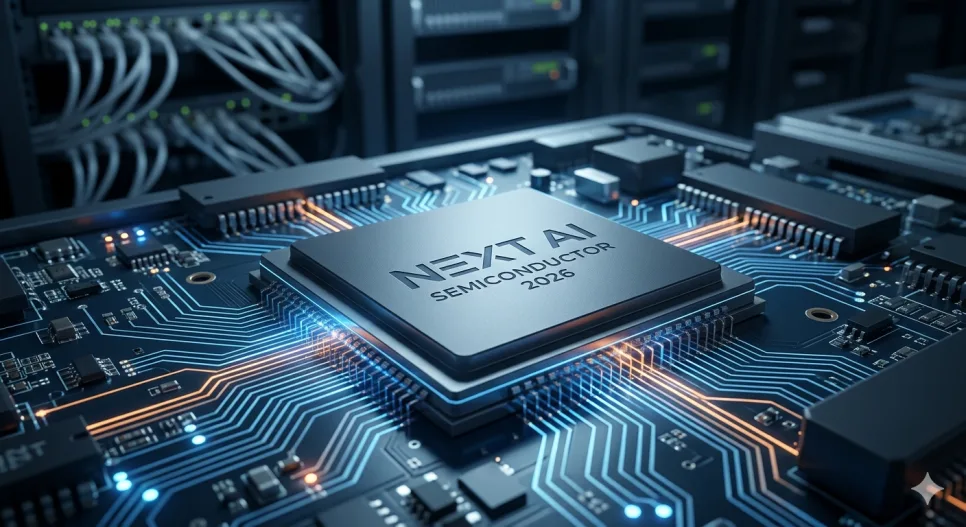
Beyond Nvidia, who will lead the AI semiconductor market in 2026? The AI semiconductor market is poised for expansion, creating new opportunities in areas like custom chip development, software, power infrastructure, on-device AI, and specialized chip designers. This guide explores the evolving landscape and investment strategies for the coming year.
Nvidia's Dominance: Shifting Market Dynamics
Currently, Nvidia holds a commanding share in the AI training chip market. However, major tech giants like Google, Amazon, and Meta are actively developing their own proprietary chips, signaling a move to reduce reliance on Nvidia. This indicates that as the AI market matures and expands, diverse players will find opportunities. I'm closely monitoring these shifts, analyzing companies beyond Nvidia that show significant promise. Based on industry reports and earnings calls, the competitive landscape is likely to become more varied due to ongoing technological advancements.
Beyond Hardware: Software and Infrastructure in the AI Era
While AI chip manufacturers initially captured investor attention, the focus is now broadening. Emerging investment opportunities include software that efficiently powers AI, immersion cooling technologies to manage heat generated by massive data processing, and energy infrastructure crucial for stable power supply. I'm personally exploring not only semiconductor stocks but also companies involved in power grids and transformers, recognizing the foundational importance of AI infrastructure. Just like a complex factory needs reliable electricity and efficient cooling, the AI industry depends on these essential support systems. Companies providing these infrastructure solutions stand to benefit directly from AI's continued growth.
Identifying the 'Next AI' Companies for 2026
While specific stock recommendations require careful consideration, several areas within the AI semiconductor market warrant attention for 2026. Firstly, on-device AI is a significant trend. This technology enables AI computations directly on personal devices like smartphones and laptops, bypassing the need for cloud servers. This offers enhanced privacy and faster response times, presenting a new growth avenue for hardware manufacturers such as Samsung Electronics and Apple. Secondly, custom chip (ASIC) designers are gaining traction. Companies like Broadcom (AVGO) and Marvell (MRVL) are designing highly optimized, purpose-built chips that are crucial for maximizing AI performance. Their importance is expected to grow as AI applications become more specialized.
Navigating AI Sector Investments: Growth Amid Volatility
Having invested in the AI sector for over a year, I've observed its significant growth potential despite considerable volatility. While short-term price fluctuations can be unsettling, the underlying corporate earnings often justify the long-term upward trend. To manage this volatility, a strategy of diversification is key. Instead of concentrating investments in a single stock, utilizing semiconductor ETFs like SOXX or SMH allows for investment across a basket of AI-related companies. This approach helps mitigate risk and provides a more stable investment experience.
Final Considerations for AI Semiconductor Investments
The AI industry holds immense promise for the future, but its rapid technological evolution means unforeseen variables can emerge. It's crucial to remember that all investment decisions and their outcomes are the investor's responsibility. Therefore, it is wise to align investment choices with your personal financial situation and risk tolerance, practice diversification, and consult with a financial advisor when necessary. The AI semiconductor market will continue to evolve, making ongoing interest and continuous learning essential.
Learn more about the future of the AI semiconductor market and investment strategies.





