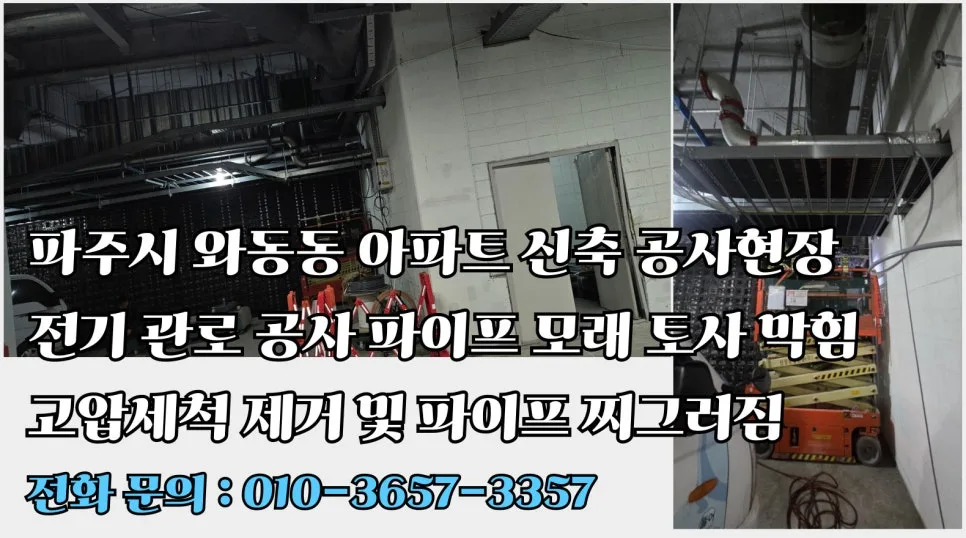
Electrical conduit blockages in new apartments, particularly in areas like Paju's Wodong-dong, refer to situations where electrical wires cannot be smoothly pulled through pipes. For a 55-meter (approx. 180 ft) long, 40mm (approx. 1.5 inch) corrugated conduit where entry is blocked at the 6-meter (approx. 20 ft) mark, solutions typically involve high-pressure water jetting and camera inspection.
What Causes New Apartment Electrical Conduit Blockages?
During the construction of new apartments, issues can arise where debris accumulates inside the corrugated pipes or conduits before electrical wires are inserted. Sometimes, the conduit itself can sag or become deformed. This prevents the smooth passage of electrical cables. A blockage at the 6-meter (approx. 20 ft) point of a 55-meter (approx. 180 ft) conduit is unusual but can be caused by sharp bends, internal sediment buildup, or external factors. Based on site observations, these blockages often stem from minor installation errors or environmental influences. In real-world scenarios, electricians frequently struggle when wires fail to penetrate even 10 meters (approx. 33 ft), significantly hindering the installation process.
Can High-Pressure Water Jetting Fix Electrical Conduit Blockages?
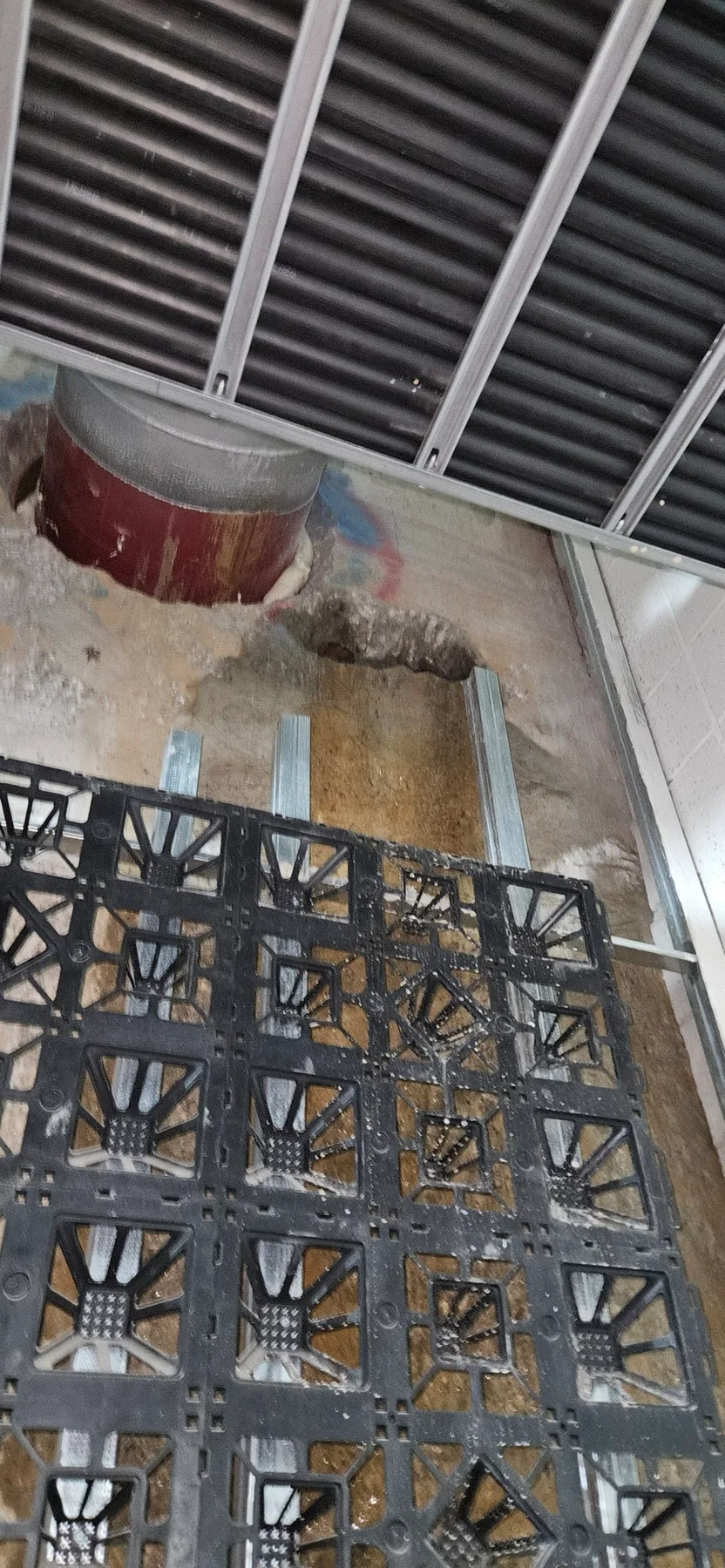
For a corrugated pipe around 40mm (approx. 1.5 inches) in diameter, high-pressure water jetting can be effective in removing internal sand, soil, or debris, thereby clearing the blockage. This method uses a powerful water stream to push through obstructions, facilitating the smooth passage of electrical wires. Before starting, it's crucial to check drainage conditions and secure a sufficient water supply. If direct clearing proves difficult, the process can still provide valuable information about the conduit's condition and precise location of the obstruction.
Confirming Blocked Electrical Conduit Status with Camera Inspection
After attempting to clear the blockage with high-pressure water jetting, a camera inspection is essential to accurately assess the conduit's internal condition. This allows for a thorough check for any remaining debris, or signs of sagging or damage within the pipe. As seen in similar cases, if the camera reveals that the conduit has sagged, attempting further high-pressure jetting could be risky and potentially cause more damage. Therefore, precise diagnosis through camera inspection is vital to prevent further issues and determine the most effective resolution.
Is Excavation the Final Solution for Blocked Electrical Conduits?
If camera inspection reveals significant deformation or damage to the conduit, and high-pressure water jetting is unsuccessful, excavation may be considered as a last resort. However, excavation is a time-consuming and costly process, so it should only be decided upon after thorough consultation with professionals. Depending on the site conditions, alternative solutions like replacing only the affected section of the conduit or installing a bypass line might be more efficient. If the conduit's location is precisely identified, excavating the minimum necessary area can lead to a more cost-effective repair.
For a more detailed breakdown of the resolution process, please refer to the original source.





