
Considering the National Growth Fund in 2026? This policy-backed investment offers a chance to benefit from tax deductions of up to $6,000 annually and contribute to the development of cutting-edge industries. However, it's crucial to understand its advantages, disadvantages, and eligibility requirements before investing.
What is the National Growth Fund and Why is it Important in 2026?
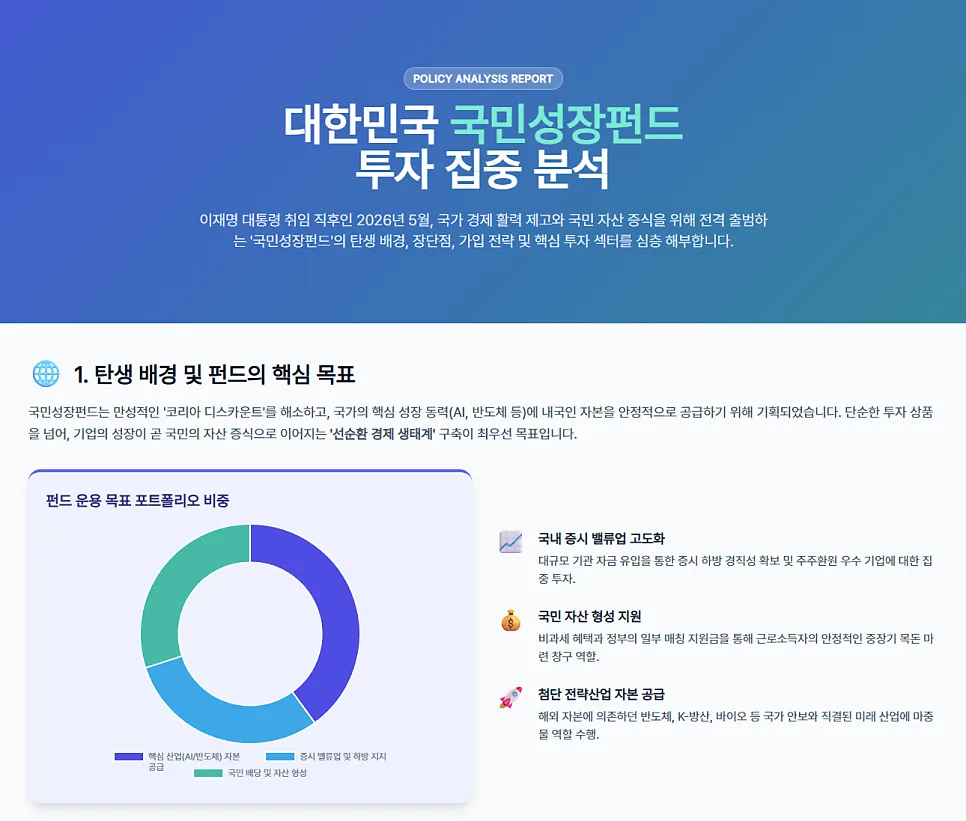
Launched in May 2026, the 'National Participation National Growth Fund' is more than just a fundraising initiative; it's an ambitious policy financial product designed to merge national future growth engines with the asset formation of ordinary citizens. Stemming from President Lee Jae-myung's key campaign promise, this fund aims to foster advanced strategic industries and promote stable asset growth for the general public. With an initial offering of 600 billion KRW (approximately $450 million USD), the plan is to manage over 150 trillion KRW (approximately $112 billion USD) over the next five years, signaling the government's strong commitment to securing new national economic growth drivers. The President emphasized a philosophy that 'growth not shared with the people is unsustainable,' designing the fund to provide financial benefits directly to citizens. This initiative seeks to improve structures where financial benefits are concentrated among a few, aiming to share the fruits of national development with the public.
What are the Core Objectives of Fostering Advanced Industries and Shifting to 'Productive Finance'?
The primary driver behind the National Growth Fund's conception is the intensifying global technology competition. AI, semiconductors, and biotechnology are now critical elements directly linked to national security and economic survival. With major nations like the US and China investing heavily in advanced industries, there's a recognized limitation in securing competitiveness through private capital alone. Consequently, the government aims to transition towards 'productive finance,' channeling dormant funds, often tied up in short-term speculative assets like real estate, into research and development (R&D) and facility investments for innovative companies. The National Growth Fund seeks to aggregate national capital through direct public investment, establishing a tripartite structure where the government sets the direction, the public provides capital, and companies drive innovation, thereby revitalizing the industrial ecosystem. This is expected to be a crucial stepping stone for sustainable national economic growth.
In an Era of High Inflation, Can the National Growth Fund Act as a Hedge Against Rising Prices?
In the first half of 2026, geopolitical risks in the Middle East are exacerbating price pressures on crude oil and raw materials, intensifying inflation in South Korea. Consumer prices in April 2026 rose 2.6% year-on-year, reaching a 21-month high. While the government is implementing measures to support industries affected by high oil prices and stabilize costs, the threat of imported inflation remains a significant concern for the real economy. This high inflation and prolonged interest rate uncertainty increase volatility in traditional stock and bond markets, making asset growth difficult for individual investors. The National Growth Fund is expected to serve as a buffer against inflation, protecting the real asset value of citizens and acting as a hedge against market volatility. The government prioritizes price stability through supply chain management for oil and key raw materials, and productive investment through the fund can contribute to long-term economic stability.
What are the Tax Benefits and Investment Conditions for the 2026 National Growth Fund?
The National Growth Fund offers significant tax benefits, allowing investors to receive tax credits on up to 9 million KRW (approximately $6,700 USD) of their annual investment. This can result in a tax refund of up to 1.485 million KRW (approximately $1,100 USD) for those in the 16.5% income tax bracket. Eligibility is broad: any South Korean citizen aged 18 or older with an income can invest. The first phase of sales runs for three weeks starting May 22, 2026, through major commercial banks and securities firms. While the fund aims to foster strategic industries, potential downsides include the risk of moral hazard and debates about the fund's operational effectiveness. Crucially, early termination of the fund may incur a 16.5% income tax on gains, making it essential to approach this as a long-term investment.
Key Considerations and Potential Risks of the National Growth Fund
While the National Growth Fund presents attractive tax incentives and a mission to support national growth, investors should be aware of potential risks. The fund's structure, designed to channel capital into specific strategic industries, carries inherent risks associated with those sectors' performance. If these industries do not develop as anticipated, the fund's returns could be negatively impacted. Furthermore, the potential for moral hazard, where beneficiaries might not operate with maximum efficiency due to government backing, is a concern often raised with policy-driven funds. Early withdrawal penalties (16.5% income tax) underscore the importance of committing funds for the long haul. Investors should carefully weigh these risks against the potential rewards and tax benefits, consulting with a financial advisor to ensure it aligns with their overall investment strategy.
For more details, check the original source below.





