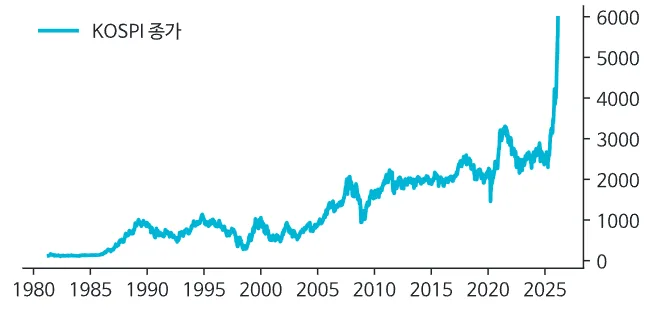
If you're feeling uneasy despite the KOSPI breaking 6600, it's likely due to a concentration in specific large-cap stocks and foreign investor inflows driving the market. While AI industry expectations are positive, managing risk with potential volatility in mind is crucial for your 2026 investment strategy.
KOSPI 6600 Breakout: Why the Unease?
Despite the KOSPI (Korea Composite Stock Price Index) hitting record highs, many investors feel a sense of apprehension. This unease stems from the nature of the recent rally, which has been heavily influenced by foreign capital pouring into specific large-cap stocks, particularly in the semiconductor sector. This concentration suggests that the market's strength isn't broadly distributed, leading to concerns about potential sharp corrections if foreign investors shift their positions. Historically, periods of intense sector-specific rallies followed by late entry from retail investors have often led to significant volatility, making a purely optimistic outlook on the current market challenging.
AI Industry Hype: Can It Sustain the Rally?
The current rally, centered around the semiconductor sector, is gaining long-term growth momentum due to its strong ties to the AI industry. The ongoing advancements in AI technology are expected to continuously drive demand for semiconductors, providing a potential catalyst for sustained KOSPI growth. This structural growth story suggests the rally might not be a short-term phenomenon. However, it's premature to assume the market will continue its upward trajectory based solely on these expectations. Several other factors will play a crucial role, including the direction of global interest rates, the sustainability of the semiconductor industry's upswing, and the flow of foreign capital. A holistic view is essential.
Current Market: 'Good Rally' or 'Tough Rally'?
The current KOSPI 6600 level is a point of debate rather than certainty. Some view it as the beginning of a sustained rally, driven by the structural growth potential of the AI industry. Others see it as a potential peak, citing the concentrated nature of the gains and the rapid ascent. This ambiguity creates fertile ground for common investor mistakes: entering the market late due to fear of missing out (FOMO) or selling during minor pullbacks. Therefore, this period calls for rigorous risk management rather than aggressive investment. A disciplined approach, involving phased investments and clear entry criteria, is a more prudent strategy than chasing the market.
Investment Risk Management: What's the Strategy?
In a market characterized by such uncertainty, effective risk management is paramount. Instead of investing a large lump sum, it's advisable to deploy capital in stages. Avoid blindly chasing popular stocks; instead, establish your own clear buying criteria and stick to them. It's crucial to analyze the market situation coolly and avoid emotional decision-making. If you find it difficult to navigate these investment decisions, consulting with a financial advisor can help you develop a strategy tailored to your risk tolerance and financial goals.
Key Factors Influencing the KOSPI's Future
Several key variables will continue to shape the KOSPI's trajectory. Firstly, the direction of global interest rates remains critical. A retreat from rate-cut expectations or a renewed tightening cycle could put pressure on the market. Secondly, the sustainability of the semiconductor industry's boom is vital. If AI demand doesn't meet expectations or if supply gluts emerge, it could negatively impact chip-related stocks. Finally, the flow of foreign capital is a significant driver. A reversal from the current inflow trend could lead to a more rapid decline than anticipated. Any negative signals in these areas could trigger substantial market volatility.
For more details, check the original source below.





