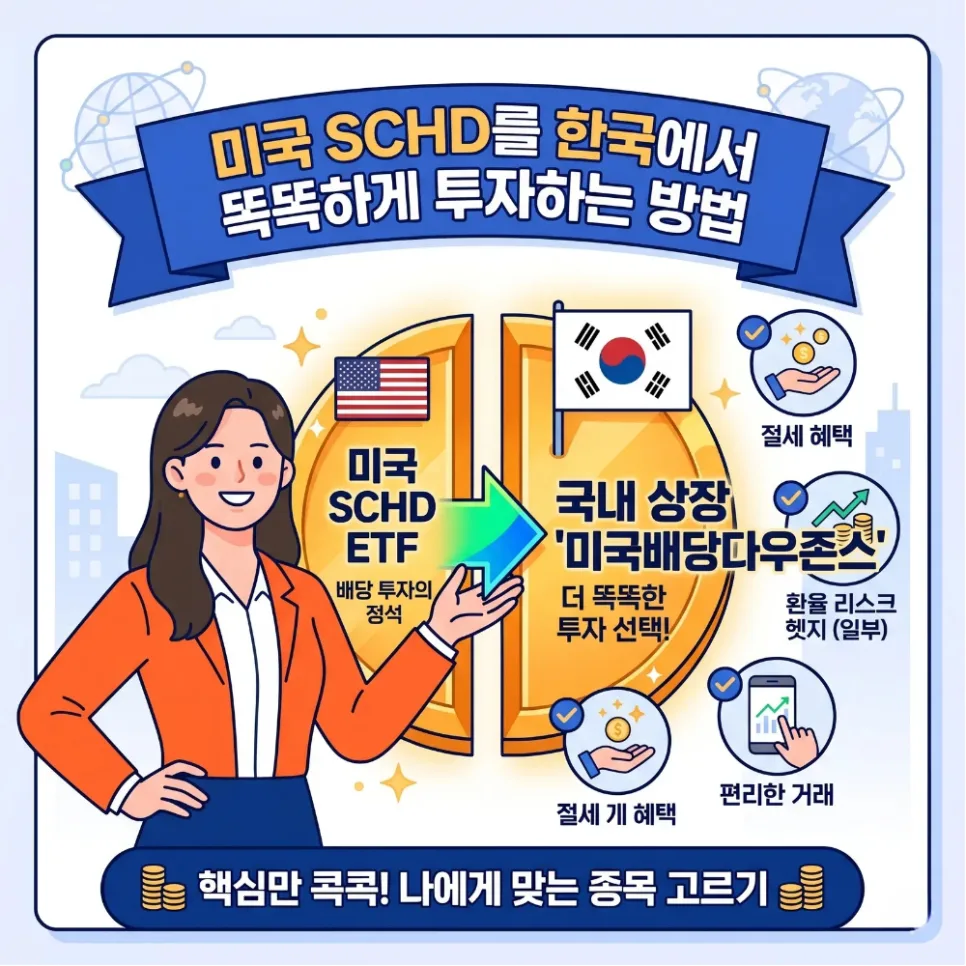
Looking for a way to get monthly dividends and tax benefits similar to the US SCHD ETF, but with Korean-listed options? In 2026, leverage accounts like ISA, Pension Savings, and IRP to reduce your tax burden and build a stable income stream with these Korean SCHD ETF strategies.
Why Are Korean SCHD ETFs Gaining Attention in 2026?
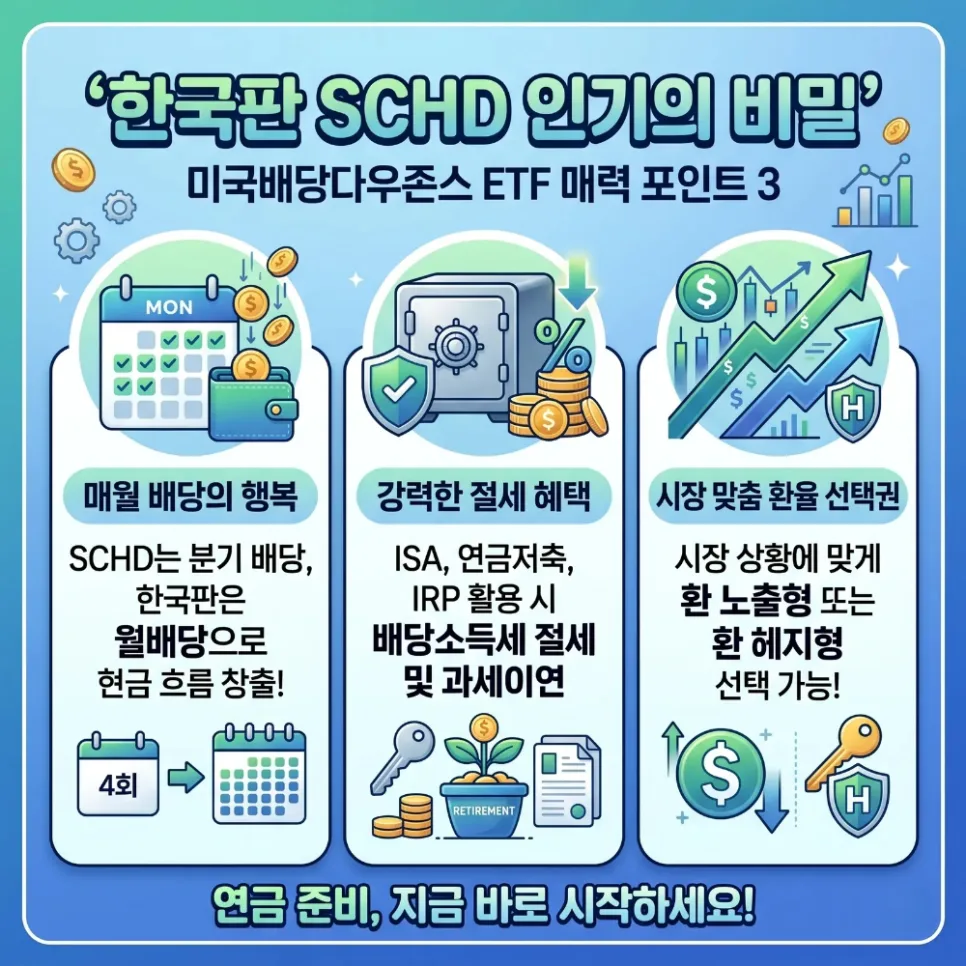
While the US SCHD ETF is a popular choice for investing in 100 high-quality dividend growth stocks, Korean-listed ETFs tracking the same index offer compelling advantages for domestic investors. These ETFs provide monthly dividend payouts, creating a consistent cash flow, and offer significant tax benefits when held within retirement accounts like ISA, Pension Savings, or IRP. This means you can enjoy tax savings and tax deferral, making them highly effective for long-term retirement planning. Additionally, many of these Korean ETFs offer currency-hedged options, allowing you to manage foreign exchange risk based on market conditions.
What Are the 3 Key Criteria for Selecting a Korean SCHD ETF?
Choosing the right Korean SCHD ETF for long-term investment requires careful consideration of several factors. First, scrutinize the 'effective total expense ratio.' This includes not just the stated management fee but also other operating expenses and trading costs. A lower effective total expense ratio generally leads to better long-term returns. Second, check the 'net asset value (NAV) and trading volume' to ensure sufficient liquidity. ETFs with large NAVs and high trading volumes can be easily bought and sold at desired prices, minimizing potential losses due to bid-ask spreads. Third, decide between 'currency-hedged (H) vs. currency-unhedged' options. If you anticipate the US dollar strengthening, a currency-unhedged ETF might be beneficial. Conversely, if dollar depreciation is a concern, a currency-hedged ETF can mitigate that risk. Selecting the appropriate currency strategy is crucial for managing foreign exchange fluctuations.
Who Benefits Most from Monthly Dividend ETFs?
Monthly dividend ETFs are an excellent option for investors seeking to generate additional income beyond their regular salary. They can be particularly advantageous when held within tax-advantaged retirement accounts like ISA, Pension Savings, or IRP, where dividend income can be taxed at a lower rate or deferred. This strategy allows for the maximization of compounding effects over the long term, making it ideal for retirement planning. Furthermore, these ETFs appeal to investors who prioritize stable income and capital appreciation over aggressive growth, offering a balanced approach to wealth accumulation.
What Should You Watch Out For with Korean SCHD Investments?
While investing in Korean SCHD ETFs offers attractive benefits, it's essential to be aware of potential pitfalls. Firstly, look beyond the stated 'total expense ratio' to identify any hidden costs, such as management fees, operating expenses, and trading commissions, which can impact long-term profitability. Secondly, consider the ETF's 'liquidity.' ETFs with low trading volumes may have wider bid-ask spreads, potentially leading to unexpected losses when buying or selling. Thirdly, understand the implications of 'currency fluctuations.' Currency-unhedged ETFs are subject to exchange rate volatility, while currency-hedged ETFs aim to mitigate this risk but may not eliminate it entirely. Therefore, carefully assess your investment goals, risk tolerance, and market outlook before making a decision. Consulting with a financial advisor is recommended to determine the best strategy for your individual circumstances.
This is not financial advice. Consult a licensed financial advisor.





