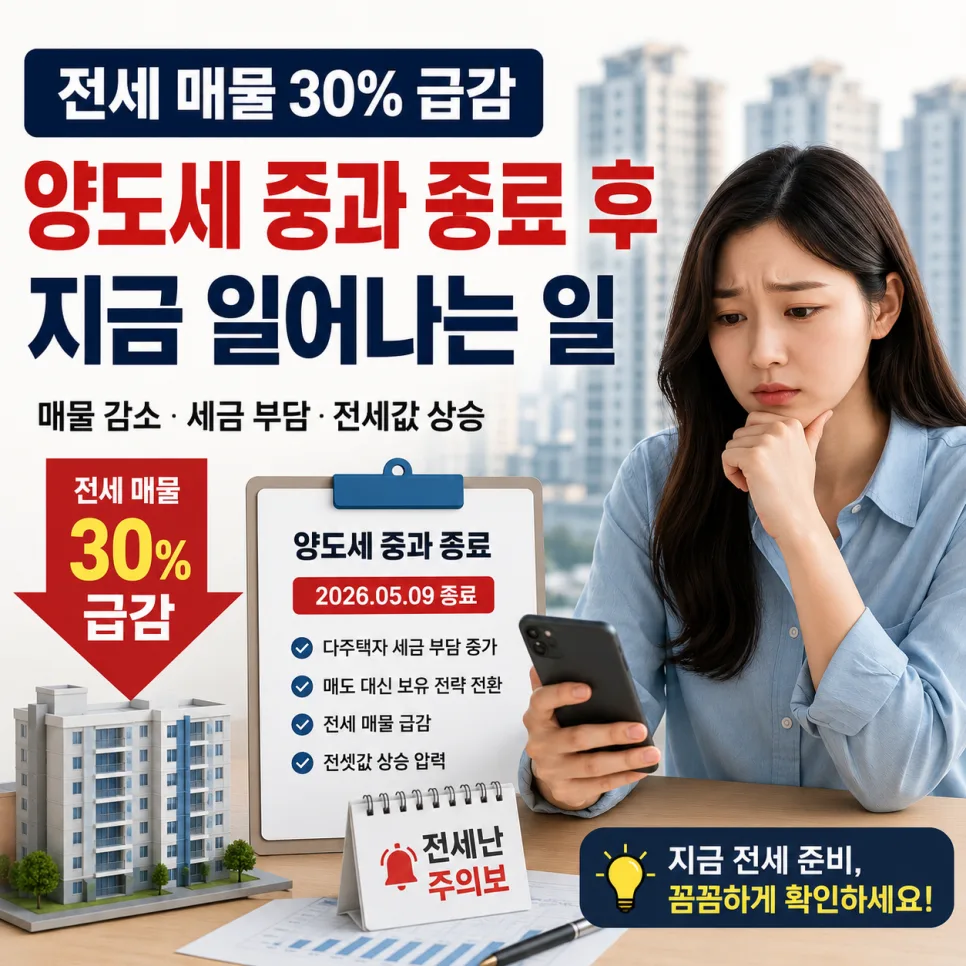
South Korea's unique 'jeonse' (lump-sum deposit) rental market is facing a severe crisis in 2026. Following the end of a capital gains tax deferral for multi-homeowners, the supply of jeonse apartments in Seoul has plummeted by over 26%, forcing tenants to navigate a rapidly shifting rental landscape. Landlords are increasingly holding onto properties or converting them to monthly rentals, intensifying the jeonse shortage.
What's Causing the 'Jeonse' Rental Shortage in Korea?
The primary driver behind the dramatic drop in jeonse listings is the expiration of the capital gains tax deferral for multi-homeowners on May 9, 2026. This means that effective May 10, 2026, homeowners with two or more properties will face a 20% surcharge on capital gains tax, and those with three or more will see a 30% surcharge, in addition to standard rates. This significant tax burden incentivizes landlords to withhold properties from the market ('버티기' - 'holding out') rather than selling, and to switch rental agreements from jeonse to monthly rent ('월세 전환'). Data from real estate analytics firm Asil shows that as of May 11, 2026, Seoul apartment jeonse listings decreased by 26.1% (from 22,156 to 16,389 units) compared to January 23, 2026. This represents a staggering 49.9% decrease from April 2024 levels. Areas like Seongbuk-gu (-86.6%), Gwanak-gu (-72.7%), and Gangdong-gu (-67.1%) are experiencing particularly sharp declines.
How Does the End of Tax Deferrals Impact the Rental Market?
The temporary suspension of capital gains tax surcharges, which began in 2022, officially concluded on May 9, 2026. This policy change has fundamentally altered landlord behavior. Previously, homeowners could sell their properties without the added tax burden, potentially offering more jeonse options. Now, facing substantial tax liabilities, many are opting to keep their properties off the market. This 'holding out' strategy, coupled with a noticeable shift towards monthly rentals, is directly contributing to the scarcity of jeonse properties. The trend is evident in the rising proportion of monthly rentals: in Q1 2026, monthly rentals accounted for 70.5% of all lease agreements, a 6.2 percentage point increase year-over-year. Furthermore, stricter regulations like the '10.15 Real Estate Measures' in 2025, which designated all of Seoul as a 'Speculative Zone' and imposed a two-year mandatory residency requirement, have curtailed speculative 'gap investments' (buying a property with a small down payment, often relying on the tenant's deposit). This has reduced the supply of new jeonse units. Compounding the issue, new apartment completions in Seoul for 2026 are projected to be over 30% lower than the previous year, exacerbating the supply-demand imbalance.
Is This the Beginning of the 'Monthly Rent Era' in Korea?
The current market conditions strongly suggest a shift towards a predominantly monthly rent ('wolse') economy. KB Real Estate's Jeonse Supply Index (KB Jeonse Sukgeup Jisu) reached its highest point since July 2020 in March 2026, indicating severe supply shortages. This, combined with landlords withholding properties, has led to projections of a potential 5% or more increase in Seoul's jeonse prices for 2026. Seoul Economic Daily reported in May 2026 that sales, jeonse, and monthly rents in Seoul apartments are all rising concurrently, a trend expected to continue through the latter half of the year. This escalating cost and scarcity of jeonse properties are pushing more tenants towards monthly rentals, potentially signaling the full onset of a 'wolse era.' Tenants may find themselves needing to accept higher deposits and monthly payments, necessitating careful financial planning and a re-evaluation of long-term housing strategies.
Essential Precautions for Tenants Facing Jeonse Market Changes
With the resurgence of capital gains tax surcharges, tenants must be vigilant about potential lease renewal rejections as landlords may opt to occupy the property themselves ('실거주 전환'). Fortunately, the government has introduced an exception allowing up to a two-year deferral on capital gains tax for landlords whose tenants are currently residing in the property. It is crucial for tenants to ascertain if their landlord intends to utilize this provision. To mitigate the risk of real estate fraud, thoroughly reviewing the property's title deed ('등기부등본') and securing a jeonse deposit insurance policy (like those offered by HUG) is absolutely essential. Exploring alternative housing options, such as public rental housing or 'Happy House' initiatives, can also provide a safety net. Given the complexity of individual circumstances, consulting with a real estate professional is advisable to develop the most suitable housing strategy.
Navigating the Future: Preparing for a Shrinking Jeonse Market
The decline in jeonse listings signifies more than just a supply shortage; it points to a fundamental structural shift in South Korea's real estate market. The combination of landlords withholding properties and the accelerating trend towards monthly rentals will likely increase volatility in the jeonse market. Tenants should approach this situation with a clear understanding of the current dynamics and formulate long-term housing plans accordingly. When signing or renewing a jeonse contract, it's vital to verify the tenant's right to request contract renewal and understand the landlord's intentions regarding self-occupancy. Securing deposit return insurance remains a non-negotiable step. Additionally, tenants should reassess their budgets in anticipation of rising monthly rent costs and actively investigate government-supported housing programs or alternative accommodation options. This proactive and multi-faceted approach will enable greater flexibility and resilience in adapting to the evolving real estate landscape.
Tags
💬Frequently Asked Questions
How much did jeonse listings decrease after the capital gains tax deferral ended?
What are the main reasons for the decrease in jeonse listings?
What should tenants watch out for when signing a jeonse contract now?
What is the future outlook for the jeonse market in Korea?
Original Source
Read the Korean original