
If you're looking for the key trends in the US semiconductor stock rally and the reasons behind Intel's dramatic stock surge, this analysis of the 2026 market situation is for you. Notably, Intel has captured market attention with its largest stock increase since 1987.
Why Did Intel Stock Surge 23% Amid the 2026 US Semiconductor Rally?
On the 24th local time, the New York Stock Exchange saw broad gains, led by the S&P 500 and Nasdaq Composite. Intel, in particular, experienced a record-breaking surge of over 23%, driven by its second-quarter revenue forecast significantly exceeding market expectations. This dramatic rise is interpreted as a reflection of renewed confidence in Intel's ability to regain competitiveness and re-enter its growth trajectory amidst expanding AI demand. Market analyses suggest Intel is rapidly recovering ground in the AI chip competition, with some brokerage firms upgrading their ratings to 'Buy.' Intel's strong performance has reignited the ongoing semiconductor rally. The Philadelphia Semiconductor Index (SOX) extended its record streak to 18 consecutive trading days, and the market is paying close attention to the rapid easing of concerns about the profitability of AI investments by major tech companies. This shift is seen as a driver for the broader market, benefiting semiconductor and industrial sectors alike.
What's Driving the Semiconductor Rally, and What's Next for Intel?
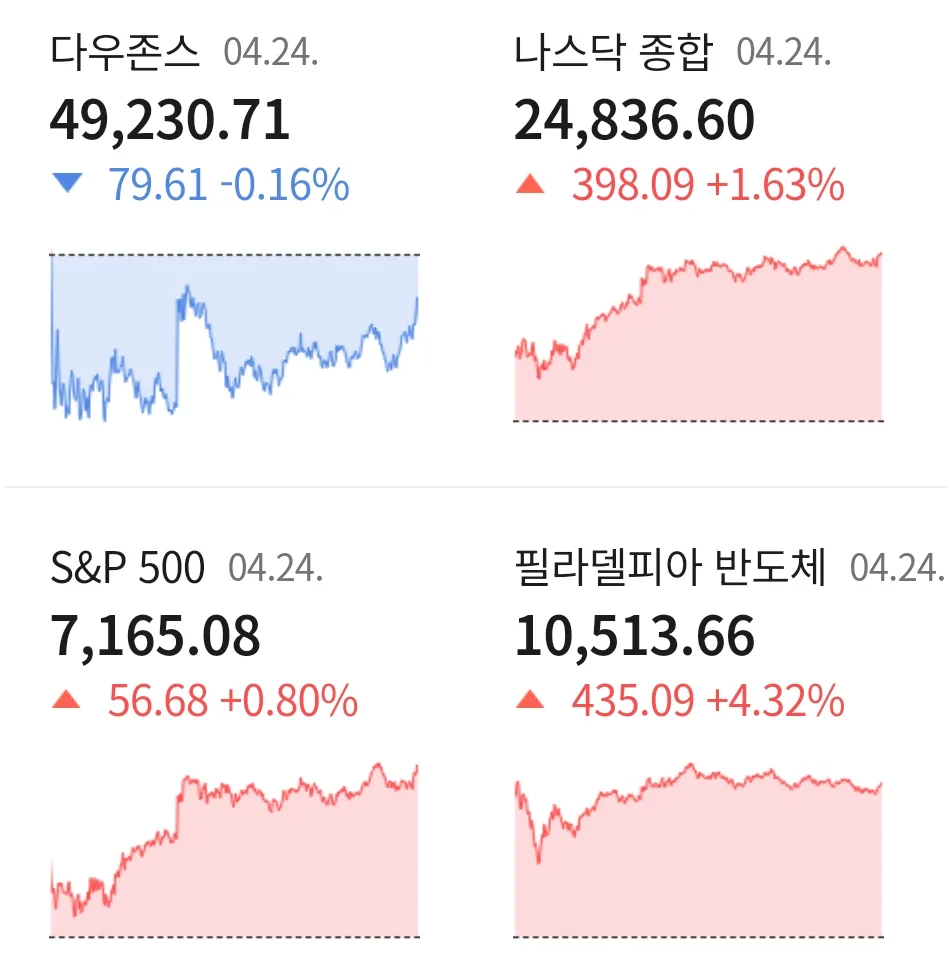
The surge in semiconductor stocks, spearheaded by Intel's impressive performance, is largely fueled by the escalating demand for AI-powered technologies. Companies like Amazon, Google, Microsoft, and Meta are heavily investing in AI infrastructure, creating a robust demand for advanced chips. Intel's renewed focus on high-performance computing and AI accelerators, coupled with its manufacturing capabilities, positions it to capitalize on this trend. Analysts predict that Intel's strategic investments in R&D and its revamped product roadmap will enable it to capture a significant share of the AI chip market. This optimism is reflected in the stock market, with the Philadelphia Semiconductor Index (SOX) reaching new highs. The sustained growth in AI adoption across various industries, from cloud computing to autonomous vehicles, suggests a continued upward trend for semiconductor companies poised to meet this demand.
President Trump's Stance on Iran and Efforts to Stabilize Oil Prices
In parallel to market dynamics, geopolitical factors are also influencing the financial landscape. President Trump has signaled a potential resumption of negotiations with Iran and has pursued policies aimed at stabilizing oil prices. These efforts include extending exemptions for certain trade regulations, which could ease supply chain pressures and mitigate inflationary impacts. Such actions are viewed positively by the market, as they reduce uncertainty surrounding global energy supplies and their potential impact on inflation. The Federal Reserve's stance on monetary policy also plays a crucial role. With the conclusion of investigations involving the Fed Chair, and the expansion of currency swap lines, there's a growing sentiment that the Fed may adopt a more accommodative monetary policy. This could lead to lower interest rates, which typically boosts the valuation of growth stocks, particularly in the technology sector, further fueling market gains.
What to Watch For Amid the Semiconductor Rally
While the semiconductor rally continues, investors should remain vigilant. Firstly, volatility surrounding earnings reports is a key factor. Similar to Intel's case, exceeding market expectations can lead to significant stock price increases, but failing to meet them can result in sharp declines. Therefore, closely monitoring earnings announcement dates and market consensus is crucial. Secondly, continuous monitoring of AI investment profitability is essential. Although AI investments are driving the semiconductor sector's growth, long-term profitability questions remain. Investors should track the pace of AI technological advancements and the market's assessment of actual revenue generation. Lastly, the impact of geopolitical risks cannot be overlooked. Changes in international relations, such as those involving Iran, can affect oil and raw material prices, indirectly influencing semiconductor production costs and demand. Staying informed about macroeconomic indicators and international news is therefore important. Individual investment decisions should be made responsibly and, if necessary, in consultation with a financial advisor.
For more details, check the original source below.





