
The average salary in South Korea's finance sector has surpassed the ₩100 million (approx. $75,000 USD) mark, reaching dream job status for many. Based on 2025 year-end results and the latest 2026 trends, this analysis breaks down the true salary rankings by sector and the reality of the gender pay gap. This is not financial advice. Consult a licensed financial advisor.
Why Do Brokerages Top the Finance Salary Rankings?
Salary levels within the finance industry can vary significantly depending on the specific sector. As of 2025, securities firms (brokerages) led the pack with an average annual salary of ₩120-150 million (approx. $90,000 - $112,500 USD), with firms like Meritz Securities and Korea Investment & Securities exceeding ₩130 million (approx. $97,500 USD). Brokerages often feature a high proportion of performance-based bonuses, meaning top positions can earn over ₩200 million (approx. $150,000 USD). This high-risk, high-return structure means compensation is heavily tied to individual and firm performance. Non-life insurance companies are also emerging as strong contenders, with average salaries ranging from ₩100-140 million (approx. $75,000 - $105,000 USD), driven by improved financial results. The five major commercial banks offer stable salaries between ₩110-120 million (approx. $82,500 - $90,000 USD), but their upward potential may be more limited compared to brokerages. Credit card companies typically offer average salaries of ₩90-110 million (approx. $67,500 - $82,500 USD), often prioritizing benefits and work-life balance over sheer salary figures.
Are There Cases Where Women's Average Salaries Outpace Men's in Finance?
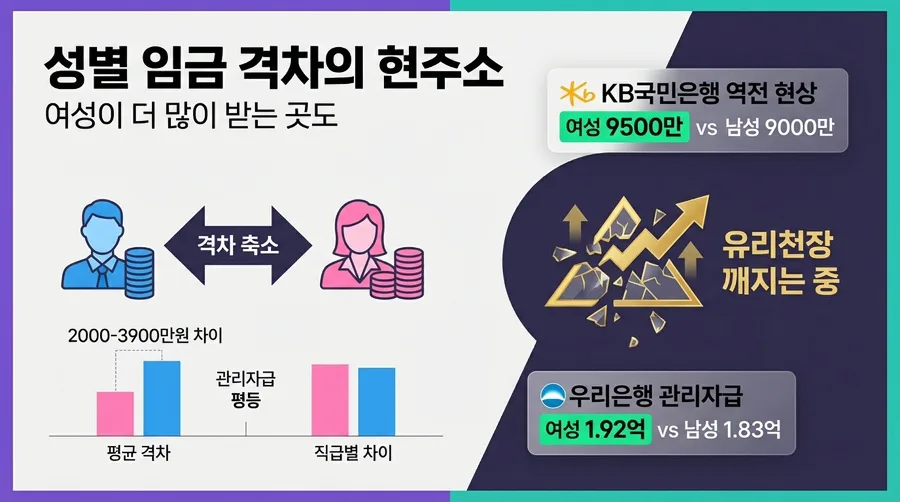
Recent disclosures on gender pay gaps in the financial sector are revealing interesting trends. On average, male employees still earn approximately ₩20-39 million (approx. $15,000 - $29,000 USD) more than female employees. However, a closer look at specific roles and companies shows a narrowing gap. For instance, at KB Kookmin Bank, for management-level positions and above, the average male salary was ₩188 million (approx. $141,000 USD) and the average female salary was ₩181 million (approx. $135,750 USD), indicating a significantly smaller difference. In some departments, women's average salaries have even surpassed men's. Similarly, at Woori Bank, management-level women are reported to earn more than their male counterparts. These examples suggest that the glass ceiling is gradually breaking, and the key determinant of salary level is increasingly shifting from the institution to the specific role and career progression achieved.
What Are the Key Trends for Finance Job Seekers in 2026?
For those preparing to enter the finance job market in 2026, significant shifts are on the horizon. The trend towards 'targeted hiring' (핀셋 채용), focusing on individuals with specific digital finance skills like AI and big data, is expected to accelerate over large-scale public recruitment drives. Consequently, specialized IT and data-focused roles will likely see increased compensation and bonuses, leading to a widening pay gap between different job functions. Reflecting the current economic climate, the desired starting salary for new graduates has seen a realistic adjustment, settling around ₩43 million (approx. $32,250 USD). This reflects both companies' intentions to lower entry barriers and a more grounded expectation from job seekers.
Beyond High Salaries: What Are the Pitfalls of High-Paying Finance Jobs?
While the finance sector continues to offer attractive compensation, it demands a high level of professionalism and digital proficiency. It's crucial to recognize the intense performance competition that underlies these high salaries. Furthermore, while the gender pay gap is narrowing, disparities based on job level and function still exist, which should be considered in long-term career planning. The growing importance of digital finance skills necessitates continuous learning and adaptation, contributing to the widening pay gap between specialized roles. Therefore, rather than solely pursuing high salaries, it's advisable to carefully consider your aptitude and long-term career goals when making career decisions. Individual circumstances can greatly influence salary and career prospects, making professional consultation a valuable step.
For more details, check the original source below.