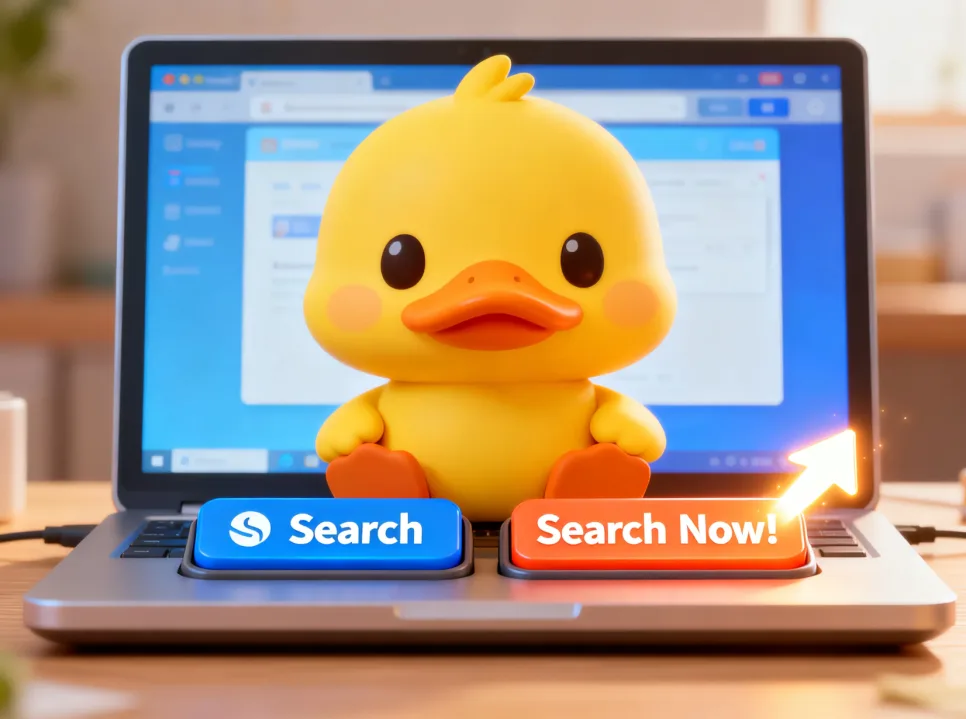
Simply changing a button's text from 'Search' to 'Search Now' can boost booking rates by an impressive 38%. This powerful CTA strategy bridges the gap between user intent and action by reducing cognitive load and providing a clear, immediate directive. Discover the psychology behind 'now' and the 'Safe Step' principle for driving conversions in 2026.
Why Does Adding 'Now' to CTAs Increase Bookings by 38%?
A real-world experiment on a travel platform demonstrated a 38% increase in bookings simply by changing the 'Search' button to 'Search Now.' This finding, from conversion rate optimization experts Conversion Rate Experts (CRE), highlights the significant impact of subtle wording changes on user behavior. The addition of 'Now' combats the 'intention-action gap' by emphasizing the current moment, encouraging immediate action rather than procrastination. This psychological nudge helps overcome common decision-making hurdles like 'choice paralysis' and 'temporal discounting,' where users tend to prioritize immediate comfort over future rewards.
What makes this simple addition so effective? Firstly, a button like 'Search' or 'Search Now' represents a low-friction action. It doesn't require personal information or immediate commitment, making it easy to click. Adding 'Now' acts as a gentle guide, signaling the optimal time to act without feeling overly pushy. Secondly, 'Now' focuses the user's attention squarely on the present, pushing aside thoughts of 'I'll do it later.' This immediate focus can be powerful in driving action. Thirdly, 'Search Now' functions as a clear directive, reducing the mental effort users might otherwise spend figuring out their next step. This clarity streamlines the user journey and makes the desired action feel more accessible.
What Are the Root Causes of the 'Intention-Action Gap' on Travel Platforms?
The phenomenon of users hesitating to book despite high traffic on travel platforms can be explained by the 'intention-action gap.' This psychological concept describes the disconnect between a person's intention to perform an action and their actual execution of it, often due to various barriers. On travel sites, two primary factors contribute to this gap. First, 'choice overload' or 'choice paralysis' occurs when users are presented with too many options—destinations, accommodations, activities—making it difficult to decide. This overwhelming selection can lead to inaction. Second, 'temporal discounting' describes our tendency to favor immediate gratification over larger future rewards. The slight effort required to complete a booking now might seem less appealing than the immediate comfort of continuing to browse without commitment. These factors combine to create a situation where users intend to book but end up postponing the action indefinitely.
Why Can a 'Buy Now' Button Be Counterproductive?
Directly demanding action with phrases like 'Buy Now' can sometimes backfire and decrease conversion rates. This relates to the 'Safe Step' principle. When a visitor isn't fully ready to commit—perhaps they still need more information, comparisons, or are in an early research phase—a strong, direct call to action can create significant psychological resistance. For instance, presenting a 'Buy Now' button on a product category page, before the user has had a chance to explore details, pricing, or reviews, can feel overly aggressive. This pressure might cause them to abandon the page altogether. In contrast, CTAs that encourage low-friction, initial steps, like 'Search Now' or 'Learn More,' lower the psychological barrier to engagement. They guide users gently into the conversion funnel, making subsequent steps feel more natural and less daunting. Therefore, CTA wording must align with the user's current stage in their decision-making process.
What Should Be Considered When Improving CTA Wording?
When refining CTA wording, several key considerations are crucial. Most importantly, the language must match the user's current context and readiness. A direct 'Buy Now' might be effective at the final purchase stage, but softer CTAs like 'Learn More,' 'Start Free Trial,' or 'Get a Quote' are often better for users in the information-gathering phase. These phrases guide users smoothly toward the next step without demanding immediate commitment. Clarity and specificity are also vital. Vague terms like 'Click Here' or 'Info' are less effective than action-oriented phrases that clearly state the benefit or outcome, such as 'Find Your Perfect Match' or 'Discover Latest Trends.' Finally, A/B testing is indispensable. The most effective CTA varies significantly based on industry, target audience, and page objective. Hypothesis-driven testing and data analysis are essential for identifying the optimal wording that resonates with your specific users and drives desired actions.
English crawl path
Next English reads from this pilot cluster
Continue through the category hub, latest English stories, and related posts so this translated article is not an isolated URL.
Tags
💬Frequently Asked Questions
What should I check first in Boost Conversions: The 'Search Now' CTA Secret (2026)?
Does this Finance article link back to the Korean source?
Where can I find similar English stories?
English discovery path
Explore more English K-culture stories
Keep browsing the indexed English pilot cluster so Google and readers can move between this story, the category hub, and fresh discovery pages.
Original Source
Read the Korean original





