In 2026, you can quickly check if you're subject to Korean comprehensive income tax filing within a minute using the Hometax portal. This applies if you have specific types of income, such as business income, employment income from multiple sources, or interest/dividend income exceeding 20 million KRW (approx. $14,000 USD). Understanding your filing status is crucial to avoid penalties and potentially claim tax refunds.
Who Needs to File Korean Income Tax in 2026?
As May 2026 approaches, it's vital to determine if you're required to file Korean comprehensive income tax for the previous year (2025). Generally, you may be a filing target if you have any of the following income types: business income, employment income, interest/dividend income, pension income, or other miscellaneous income. This includes individuals like sole proprietors, real estate lessors, freelancers taxed at a 3.3% withholding rate, those with salaries from two or more employers, or individuals whose total financial income exceeds 20 million KRW (approx. $14,000 USD) annually. Even if you're a salaried employee, if you have income beyond your regular paycheck or work as a freelancer and have already paid taxes, you might still need to file. Many individuals, even after completing year-end tax adjustments, find they have additional income and can claim tax refunds or finalize their tax obligations through comprehensive income tax filing.
How to Check Your Filing Status on Hometax in 1 Minute
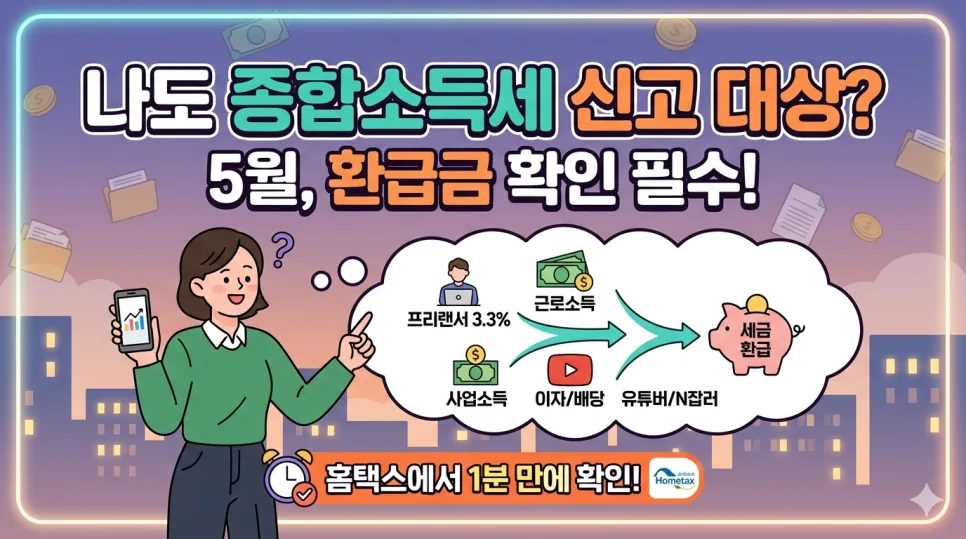
The National Tax Service (NTS) typically sends tax notices to eligible filers in early May. These notices might arrive via text message or KakaoTalk, so be sure to check your messages carefully and don't mistake them for spam. The most reliable and fastest method is to log in directly to the Hometax website (PC) or the Sometax app (mobile). After logging in using simple authentication methods, navigate to the [Tax Filing] menu, select [Comprehensive Income Tax Filing], and then access the [Filing Assistance Service]. This service will immediately show your filing type (e.g., Type A to R) and your income amount, clearly indicating whether you are a filing target and how you should proceed.
When Are You Exempt from Comprehensive Income Tax Filing?
Not everyone with income is required to file comprehensive income tax. Salaried employees who only have employment income and have completed their year-end tax settlement through their employer are generally exempt from filing separately. Similarly, daily workers who have already paid taxes on their daily wages, individuals whose interest/dividend income is 20 million KRW (approx. $14,000 USD) or less annually, or those with private pension income of 15 million KRW (approx. $10,500 USD) or less who are subject to separate taxation, may also be exempt. This exemption also applies to simple insurance solicitors or door-to-door salespeople with annual earnings below 75 million KRW (approx. $52,500 USD) who have completed their year-end tax settlement with their company. Therefore, accurately understanding your income sources and amounts is crucial.
Penalties for Non-Filing and Opportunities for Refunds
If you are a filing target but fail to submit your comprehensive income tax return within the designated period (typically May 1st to June 1st), you may face a non-filing penalty of 20%. This can result in a significant financial loss, making timely filing essential. Conversely, for freelancers or part-time workers who have had the 3.3% tax withheld, if the amount withheld exceeds the actual tax liability, you can claim a refund by filing your comprehensive income tax return. Therefore, even if you haven't received a notice, it's wise to check your filing status and potential refund opportunities through the Hometax 'Filing Assistance Service' to ensure you don't miss out.
For accurate filing status, check directly on Hometax.