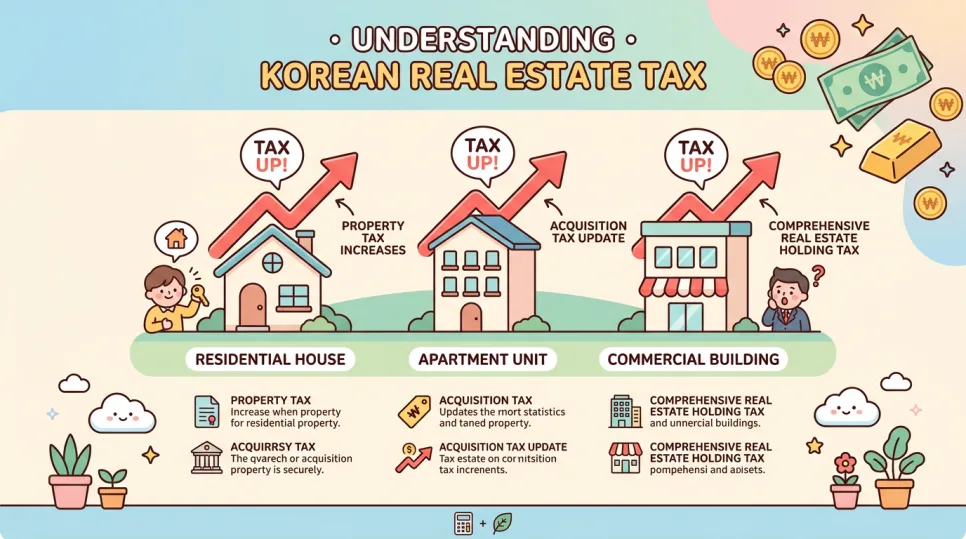
Starting May 10, 2026, South Korea will re-implement stricter capital gains tax rules for individuals owning multiple properties. For those with two homes, the tax rate can increase by 20 percentage points above the base rate, reaching up to 65%. Owners of three or more homes will face an additional 30 percentage points, potentially pushing the total tax burden to 82.5% including local taxes. This measure aims to curb speculative real estate investment.
What is the 2026 Capital Gains Tax Increase for Multiple Homeowners?

Capital gains tax is levied on the profit made from selling assets like real estate. For instance, if you buy a house for $400,000 (approx. ₩500 million) and sell it for $800,000 (approx. ₩1 billion), the $400,000 profit is subject to this tax. The term '중과 (junggwa)' signifies a heavier tax imposition. The government is reintroducing this policy to control speculative demand among multiple property owners and stabilize the housing market. This specific increase is set to take effect on May 10, 2026, following a four-year grace period. In my experience, such tax policy shifts significantly impact real estate transactions, making it crucial to verify the latest regulations at the time of sale. For owners of multiple properties, the timing of a sale can drastically alter the tax liability.
How Much Does the Capital Gains Tax Increase for Multiple Homeowners Add Up To?
The increased capital gains tax rates are tiered based on the number of properties owned. While a single-home owner typically pays the base rate (6-45%), a second-home owner will see an additional 20% added to the base rate, potentially reaching a maximum of 65%. For those owning three or more homes, an extra 30% is added, bringing the maximum rate to 75%. Factoring in the 10% local income tax, the effective tax rate could soar to 82.5%. For example, if a homeowner with three properties in a designated speculative zone sells a house and realizes a $800,000 profit (approx. ₩1 billion), they might have to pay over $660,000 (approx. ₩825 million) in taxes. This would leave them with only about $140,000 (approx. ₩175 million) after taxes. Therefore, it's essential for multiple property owners to meticulously calculate potential taxes before listing a property for sale.
Does the Capital Gains Tax Increase Apply to All Properties?
The heightened capital gains tax for multiple homeowners specifically applies to properties located within 'designated speculative zones' (조정대상지역). These zones are areas identified by the government to curb real estate speculation. Currently, these include all of Seoul and parts of Gyeonggi Province. However, these designations are subject to change based on government policy. It's vital to check the latest official announcements from the Ministry of Land, Infrastructure and Transport before any property transaction. Some areas previously designated might have been de-listed, while new areas could be added. Verifying the current status is the first step to avoiding unexpected tax burdens.
What Are the Tax Reduction Strategies for Multiple Homeowners?
Several strategies can help mitigate the impact of increased capital gains taxes for multiple property owners. One approach is to prioritize selling the property with the smallest capital gains first. Another option is to pre-emptively gift properties to family members, such as a spouse or children, thereby paying gift tax instead of a potentially higher capital gains tax. If you temporarily own two homes due to relocation, you might qualify for tax exemptions if you sell the original home within a specified period. Additionally, utilizing the annual capital gains tax deduction of $2,000 (approx. ₩2.5 million) per person is crucial. However, the effectiveness and applicability of these strategies vary greatly depending on individual financial circumstances and property holdings. Consulting with a tax professional is highly recommended before making any decisions.
What Should Be Considered Regarding the Capital Gains Tax Increase for Multiple Homeowners?
The re-implementation of stricter capital gains taxes for multiple homeowners could lead to a 'lock-in effect,' where owners are hesitant to sell due to high tax burdens, potentially reducing market supply. This could, in turn, contribute to rising property values. Conversely, some owners might rush to sell before the deadline, creating a temporary surge in listings. It's important to monitor market dynamics closely. Properties outside designated speculative zones, or those meeting specific non-taxable criteria, will not be subject to these increased rates. Therefore, a thorough understanding of the relevant regulations is essential. Given the significant financial implications, seeking advice from a tax expert is the wisest course of action rather than making hasty decisions.
For more details on the capital gains tax increase for multiple homeowners, check the original source below.





