As of 2026, non-English music, led by K-pop, is rapidly rising in popularity, reshaping the global music market. Songs in Spanish, Korean, Arabic, and other languages are climbing chart rankings, challenging the long-standing dominance of English-language music.
- Non-English music streams have more than doubled on platforms like Spotify between 2020-2025.
- Key rising genres include Brazilian funk (+36%), K-pop (+31%), and Trap Latino (+30%).
- Global artists like Bad Bunny and Rosalía are achieving massive success without singing in English.
Based on the original Korean blog post and linked source page, translated and summarized by BackToLink for global discovery.
What's Driving the Surge in Non-English Music Popularity?
For decades, music from the US and UK has dominated the global market, leveraging English lyrics and cultural soft power. However, recent data from Spotify indicates this English-language hegemony is weakening. Demand for tracks in Spanish, Korean, Arabic, and other languages is exploding. Spotify reported that non-English tracks in the charts have more than doubled between 2020 and 2025. This signifies a broader trend of increased musical exchange that transcends linguistic barriers, opening doors for diverse cultural expressions.
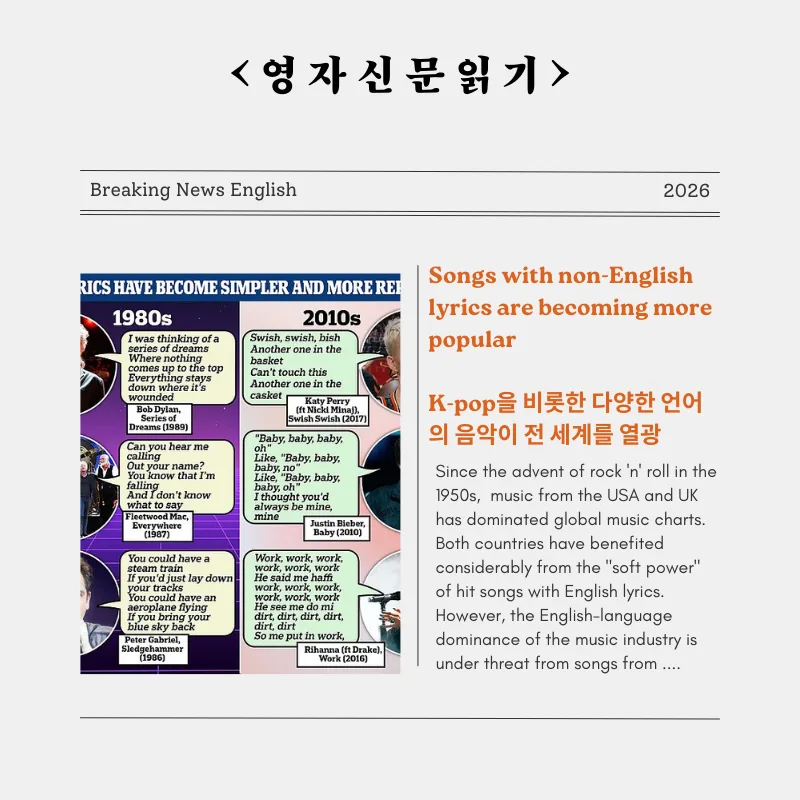
Global Success Stories: K-Pop and Spanish Music Leading the Charge
A prime example of English's declining dominance is Puerto Rican artist Bad Bunny. Despite singing exclusively in Spanish, he was Spotify's most-streamed artist globally in 2025. Similarly, Spanish artist Rosalía made waves with her multi-lingual album 'Lux,' earning critical acclaim and awards. Spotify data highlights significant growth in non-English genres over the past five years: Brazilian funk saw a 36% increase in chart presence, K-pop rose by 31%, and Trap Latino by 30%. These figures underscore a clear global shift towards embracing music from diverse linguistic and cultural backgrounds.
Which Genres Are Gaining Traction in the Evolving Music Market?
In recent years, genres like Brazilian funk, K-pop, and Trap Latino have shown remarkable growth on music charts. Their streaming numbers have surged by over 36%, 31%, and 30%, respectively. This indicates not just a decline in English music's influence, but also the active expansion of non-English music markets. Music publication NME suggests this trend is likely to continue, reflecting a growing global audience eager to consume music from various cultures without language limitations.
What's Next for Non-English Music's Rise?
The proliferation of music streaming platforms and social media has significantly accelerated the popularity of non-English music. Fans can now easily discover and share music from their favorite international artists, bypassing traditional language barriers. Furthermore, the unique appeal and captivating performances of specific cultural music, such as K-pop, have captured the hearts of fans worldwide. This momentum is expected to grow, transforming the music market into a vibrant space for diverse linguistic and cultural exchange. While English music's influence won't disappear, it will likely coexist and co-create new trends with a wider array of global sounds.
What Should You Keep in Mind When Enjoying Non-English Music?
Exploring non-English music is an exciting journey, but it's helpful to consider a few points. Firstly, translated lyrics or content might sometimes lose the original nuance or cultural context. Whenever possible, seeking out original lyrics or understanding the cultural background can enhance your appreciation. Secondly, some non-English music is deeply rooted in specific regional cultural characteristics, which might resonate differently with listeners from various backgrounds. It's important to approach diverse music with an open mind and actively explore different styles to find what best suits your taste. Ultimately, personal preference varies, so the best approach is to listen widely and discover your own favorites.
For more details, check the original source below.