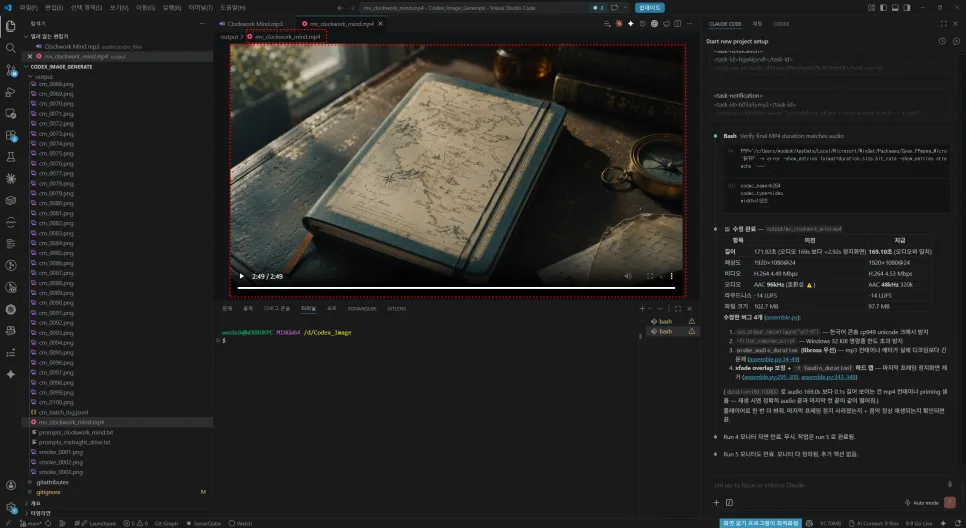
Using Codex and Claude Code, you can now create music videos with 100 AI-generated images, bypassing complex filming and editing. This automated process allows AI to interpret a song's mood and lyrics, design scenes, and then generate high-quality visuals to complete your video content.
What's the Core Principle Behind Using Codex & Claude for AI Music Videos?
Combining Codex and Claude Code revolutionizes music video production by automating key steps. Think of them as a director and a scriptwriter working together. Claude excels at understanding the overall musical flow, lyrical storytelling, and conceptualizing the music video's storyboard. Meanwhile, Codex takes this blueprint and enhances it by generating specific prompts and code for AI image generation. For instance, if Claude suggests 'a dreamy night scene for a sad ballad,' Codex refines this into detailed instructions that help AI image models produce the best possible visuals. This process is akin to having an AI automatically draft 100 storyboard frames for your music video. In my experience, the synergy between these two AI tools dramatically cuts down production time and costs.
What Are the Specific Steps to Create a Still Shot Music Video with 100 AI Images?
Related Articles
Creating a still shot music video using 100 AI-generated images involves three main stages. First, AI analyzes the song's lyrics and mood to design the overall storyline and scene composition. Language models like Claude play a crucial role here, translating the song's emotional tone into a visual storyboard. Second, based on this storyboard, AI like Codex generates prompts optimized for image creation. These prompts include specific directions for style, color palette, composition, characters, and backgrounds. Third, these prompts are fed into image generation AIs such as Midjourney or Stable Diffusion to produce 100 high-quality images. Arranging these images sequentially and applying simple transitions can result in a polished still shot music video without the need for extensive filming or complex editing. I've personally found this method allows for the creation of a basic music video prototype in just a few hours.
What Should You Consider When Creating AI Music Videos with Codex & Claude Code?
When producing AI music videos with Codex and Claude Code, keep a few points in mind. First, AI-generated results aren't always perfect; expect to revise and refine them to achieve your final vision. AI might misinterpret lyrical nuances or create images lacking consistency. Second, consider copyright implications. The ownership of AI-generated images is still a developing legal area, so always check relevant laws and platform policies, especially for commercial use. Third, understand AI's limitations. While powerful, AI may struggle with highly abstract emotions or replicating an artist's unique style perfectly. Therefore, use AI as a strong assistant, but ensure your creative ideas and final decisions lead the process. My experience shows that directly using AI outputs is less effective than guiding the AI with clear intentions and iterative feedback.
What Are the Expected Benefits of Creating Music Videos with 100 AI Images?
Utilizing 100 AI images for music video production offers significant advantages over traditional methods. The most prominent benefit is the drastic reduction in both production time and cost. By replacing expensive professional equipment, crews, and studio rentals with AI image generation, artists and small teams can create music videos affordably. Furthermore, the ability to visualize virtually any scene imaginable, unbound by physical limitations, is a major draw. Fantastical settings or abstract concepts that are difficult to realize in reality can be brought to life through AI. This expands the creativity and expressive range of the content. Finally, the automated workflow lowers the barrier to entry, giving more individuals the opportunity to visually express their music. This technology can realistically cut down the time from concept to final product by as much as 90% compared to traditional methods.