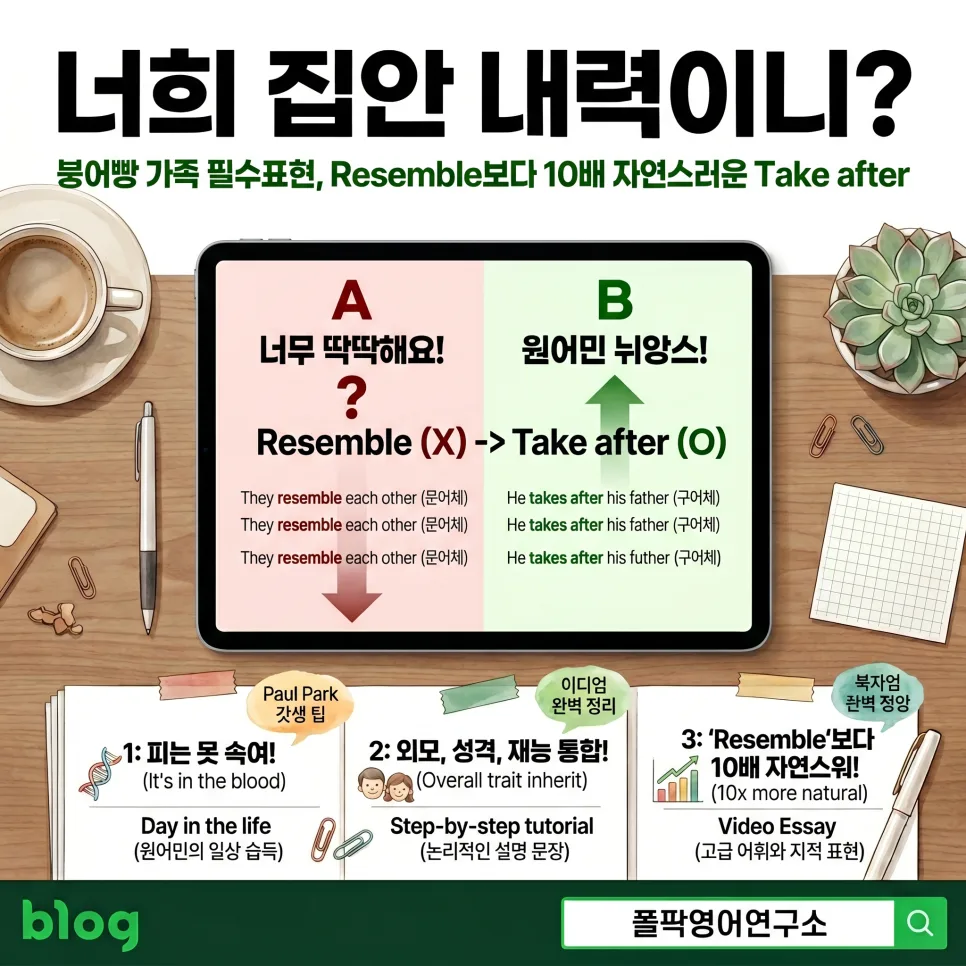
When talking about family resemblances, using the English phrase 'take after' can make your conversations sound more natural and fluent. This versatile expression covers not just looks, but also personality traits and talents, making it a key phrase for anyone learning Korean culture or the English language. Mastering 'take after' will help you connect more deeply with how Americans discuss family similarities.
When to Use the Phrase 'Take After'?
The phrase 'take after' is used when you want to say that a family member or close acquaintance resembles a specific person. This resemblance can extend beyond just physical appearance to include personality, habits, or even talents. For instance, saying 'He takes after his father' implies a likeness to his dad, whether it's in looks or a particular characteristic. I've often heard people say, 'I take after my mom in being stubborn,' when discussing inherited personality traits. It's a much more colloquial and friendly term than 'resemble,' often carrying a nuance of inherited traits, like discussing family history.
What's the Difference Between 'Take After' and 'Resemble'?
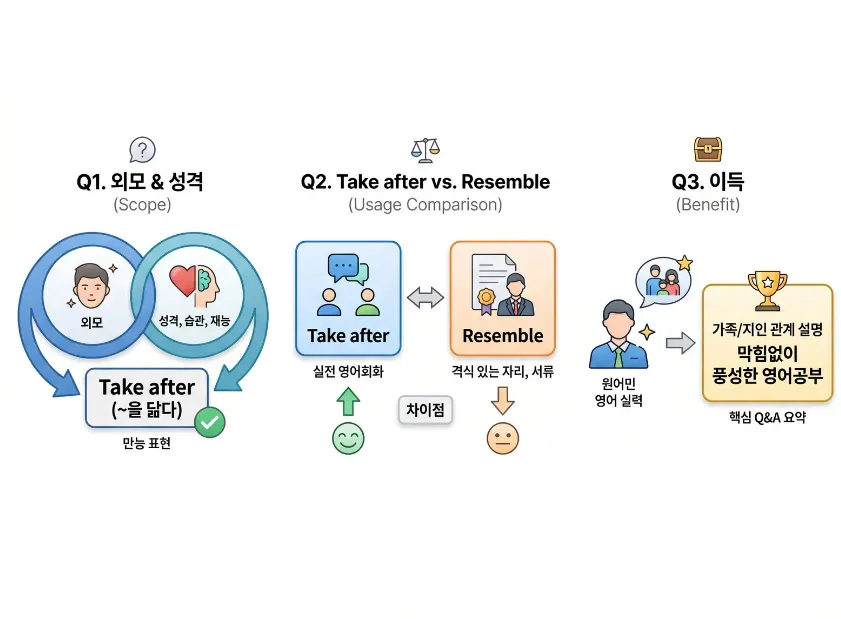
'Take after' is primarily used in spoken, informal contexts, making it feel very natural when discussing family or close relationships. In contrast, 'resemble' is a more formal expression, typically found in written documents or formal speeches, and can be used for people, objects, or situations that are similar. For example, you might say, 'The building resembles the one in the picture.' However, using 'resemble' in everyday conversation can sound a bit stiff. For casual chats, 'take after' is far more effective. It excels at conveying the idea of inheriting traits from parents or grandparents, akin to discussing a family legacy.
Real English Examples Using 'Take After'
Let's explore how 'take after' can be used in various situations. First, for physical resemblance: 'She really takes after her mother with her beautiful smile.' Second, for personality or habits: 'I take after my dad when it comes to being punctual.' Using this with phrases like 'when it comes to' adds richness to your expression. Third, for inherited talents: 'He takes after his grandfather; he's a gifted musician.' These examples show just how versatile 'take after' can be in your English conversations.
Important Considerations When Using 'Take After'
While 'take after' is commonly used to describe positive similarities, it's important to note that it can also be used to describe negative traits. For example, 'He takes after his uncle in his bad temper.' Therefore, consider the context of the conversation and your relationship with the person you're speaking to. Additionally, 'take after' is primarily used for people. If you want to express similarity between objects or abstract concepts, using 'resemble' or 'be similar to' would be more appropriate. Mastering this phrase can significantly enhance your conversations about family dynamics and personal connections.
English crawl path
Next English reads from this pilot cluster
Continue through the category hub, latest English stories, and related posts so this translated article is not an isolated URL.
Tags
💬Frequently Asked Questions
What should I check first in Master 'Take After' in 2026: Korean Family Resemblance Explained?
Does this Language Learning article link back to the Korean source?
Where can I find similar English stories?
English discovery path
Explore more English K-culture stories
Keep browsing the indexed English pilot cluster so Google and readers can move between this story, the category hub, and fresh discovery pages.
Original Source
Read the Korean original





