
Struggling with a blank mind during phone English calls? In 2026, learn 5 practical strategies and real-life expressions to confidently handle unexpected conversations. This guide offers proven techniques based on actual experience to boost your English speaking skills.
Why Does Your Mind Go Blank on Phone English Calls?
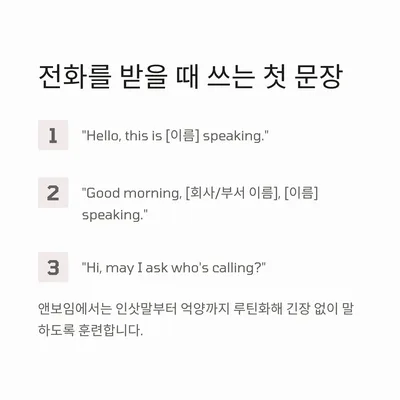
The primary reason your mind goes blank during phone English calls is the lack of visual cues. Unlike face-to-face conversations, phone calls rely solely on voice, making every word choice feel more critical and potentially stressful. This is especially true when communicating in a language that isn't your native tongue. Many of my students at Anboim initially felt the same anxiety, experiencing sweaty palms before answering calls. However, with structured practice focusing on real-call scenarios, they've transformed into confident English speakers. Overcoming this challenge requires more than just memorizing phrases; it involves mastering a set of coping mechanisms and routines tailored for phone conversations.
Mastering Essential Phone English Greetings for a Strong First Impression
The initial greeting on a phone call, though simple, significantly shapes the caller's perception. Delivering phrases like "Hello, this is [Your Name] speaking" or "Good morning, [Company/Department Name], [Your Name] speaking" with clear pronunciation and confidence is key. If you're unsure who is calling, polite yet direct questions like "Hi, may I ask who’s calling?" or "Can I ask what this is regarding?" are essential. At Anboim, we emphasize not just the words but also infusing your voice with natural warmth and appropriate intonation. Our actual lessons include voice recording feedback to help you develop a natural speaking style, ensuring you sound relaxed and approachable even in stressful situations.
Navigating Call Transfers and Content Confirmation with Ease
Phone conversations often require you to transfer calls or ask the caller to wait. Using phrases like "Let me transfer your call" or "Please hold for a moment" smoothly is crucial. Equally important is knowing how to politely ask for repetition if you miss something due to poor connection or fast speech. Phrases such as "Sorry, could you repeat that?" or "Would you mind speaking a little slower?" are vital. Using a stiff tone can lead to misunderstandings, so practicing the speed and intonation of these requests is essential. We provide supplementary MP3 materials featuring these key phrases for repeated practice, ensuring you can use them effectively in real-time.
Natural Phone English Closings and Re-requesting Information
The way you end a call leaves a lasting impression. Familiarize yourself with natural closing phrases like "Thanks for calling," "It was great talking to you," or "I’ll follow up with an email." The goal isn't just memorization but integrating these into the natural flow of a conversation. For instance, a complete call might involve starting with "Hello, [Your Name] speaking," confirming the caller with "Who’s calling, please?", connecting them if necessary with "Let me connect you with our manager," politely re-requesting information with "Could you say that again, please?", and concluding with "Talk to you soon." Mastering this entire flow helps automate your responses, allowing you to speak instinctively rather than thinking through each step.
Common Phone English Mistakes and How to Prevent Them
The most frequent mistake in phone English is mechanically reciting memorized phrases without adapting them to the actual call context. Another common error is speaking too quickly or with unnatural intonation due to nervousness, making it hard for the other person to understand. To prevent these errors, consistent practice in simulated phone environments is key. Regularly follow routines like listening and repeating from MP3s, completing speaking missions for different call scenarios, and recording yourself for feedback will significantly boost your confidence and naturalness during actual calls. I often hear from students that their speaking has become much more natural. If you find yourself freezing up whenever the phone rings, start incorporating the expressions and training methods introduced today.
For detailed training materials, check our official website.





