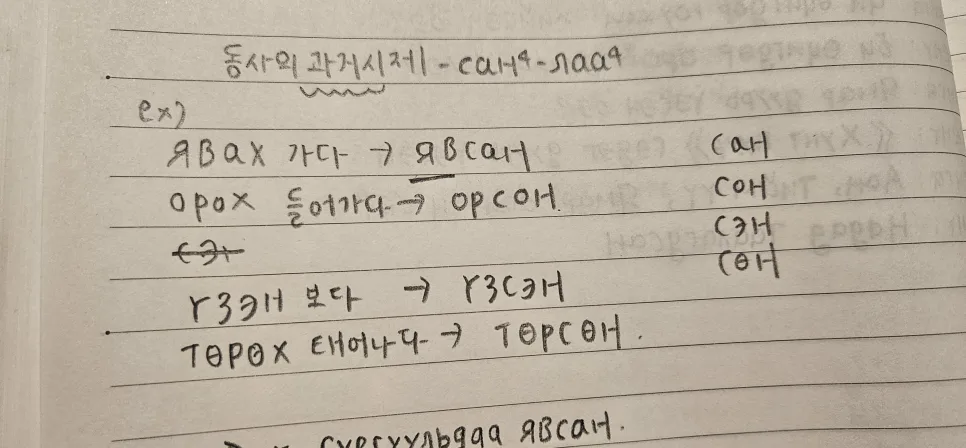
Learning Mongolian past tense verbs involves adding the suffixes 'сан' (san) or 'лаа' (laa) to the verb stem, which then change based on vowel harmony rules. This grammatical structure remains a key focus for learners in 2026. Experts break down these essential components for effective language acquisition.
How Do You Form Mongolian Past Tense Verbs?
In Mongolian, forming the past tense primarily involves attaching one of two suffixes to the verb stem: 'сан' (san) or 'лаа' (laa). This is comparable to how English uses suffixes like '-ed' or irregular forms to indicate past actions. For instance, 'Yesterday it rained' in Mongolian is 'Бороо орлоо' (Boroо orloo). While the concept of past tense is universal in languages, foreign learners often find these specific conjugations challenging. The Mongolian system requires careful attention because these suffixes are subject to vowel harmony, leading to various forms. My personal experience learning Mongolian highlighted that while memorizing the rules initially is crucial, consistent practice allows for natural usage over time.
What Are the Mongolian Vowel Harmony Rules?
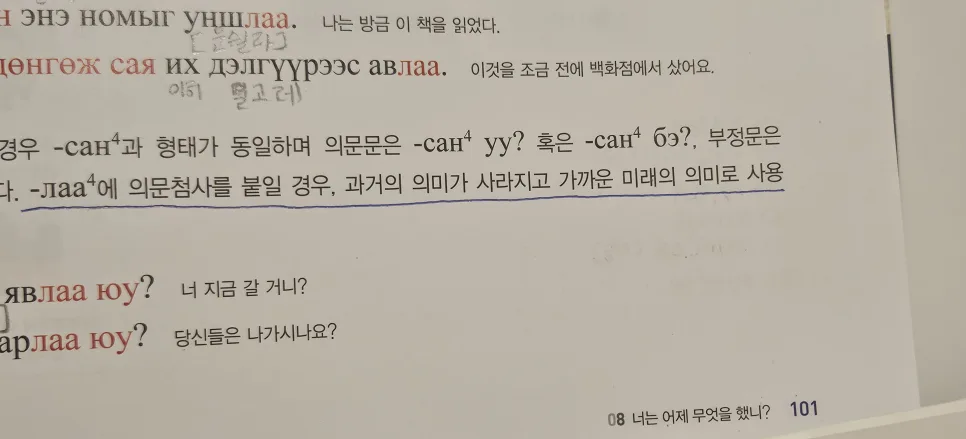
The '4' in 'сан4' and 'лаа4' signifies that these suffixes are subject to Mongolian vowel harmony rules, resulting in different forms. Specifically, 'сан4' can become -сан (san), -сэн (sen), -сон (son), or -сөн (sön). Similarly, 'лаа4' transforms into -лаа (laa), -лээ (lee), -лоо (loo), or -лөө (lөө). For example, 'I read a book' is 'Би ном уншлаа' (Bi nom unshlaa), and 'I drank coffee' is 'Би кофе уулаа' (Bi kofe uulaa). The phrase 'It rained' can be expressed as 'Бороо орлоо' (Boroо orloo) or 'Бороо орсон' (Boroо orson), with subtle nuances differentiating them. Mastering these vowel harmony rules is essential for accurately expressing past events in Mongolian. While it might seem complex at first, consistent exposure to examples greatly aids comprehension and application.
When Are Past Tense Suffixes Used Like Future Tense?
An interesting aspect of Mongolian grammar is how past tense suffixes can imply a near future meaning when combined with the interrogative particle 'юу' (yuu). For example, 'Явлаа юу?' (Yavlaa yuu?) translates to 'Are you going?' or 'Will you go?', effectively posing a question about an upcoming action. Similarly, 'Хоол идлээ юу?' (Hool idlee yuu?) means 'Will you eat?' and 'Уншлаа юу?' (Unshlaa yuu?) asks 'Will you read?'. This grammatical flexibility enriches Mongolian's expressive capabilities. It's important to note that this future-implying usage of past tense suffixes occurs specifically in interrogative contexts. Understanding these exceptions requires further study but significantly boosts a learner's grasp of the language's nuances.
What Should You Be Careful About When Learning Mongolian Past Tense Verbs?
When studying Mongolian past tense verbs, the primary focus should be on accurately understanding and applying the vowel harmony rules. Differentiating when to use the various forms of 'сан' and 'лаа' is critical. Learners should also be mindful of the specific situations where past tense endings, when paired with 'юу', can indicate future intent, avoiding confusion with standard past tense usage. Instead of rote memorization, it's more effective to learn through diverse examples and real-world usage scenarios. For those learning independently, relying on reputable resources and consistent review is key to mastering these grammatical details. Tailoring your study approach to your personal learning style will significantly contribute to your success in mastering the Mongolian language.
For more detailed Mongolian grammar, check the original source below.





