Mastering the Mongolian genitive case can be tricky, but this 2026 guide breaks down the essential rules for self-learners. Based on core concepts from introductory Mongolian courses, we'll cover genitive case endings, possessive pronouns, and how to form questions without interrogative words, making your language journey smoother.
Why Is the Mongolian Genitive Case So Complex?
Consistent review is key when learning any new language, especially one with a grammar structure as different from English as Mongolian. Many learners find the initial speaking stages challenging due to the complex case endings that don't have a direct one-to-one translation with English possessives like "'s" or "of." While the Mongolian genitive case indicates possession, it attaches various endings to nouns depending on the final letter and gender. Unlike English, where "mother's," "school's," and "cup's" all use the same possessive marker, Mongolian employs a much more intricate system. Grasping these rules is the crucial first step toward improving your Mongolian fluency.
What Are the Types of Mongolian Genitive Case Endings and How Are They Used?
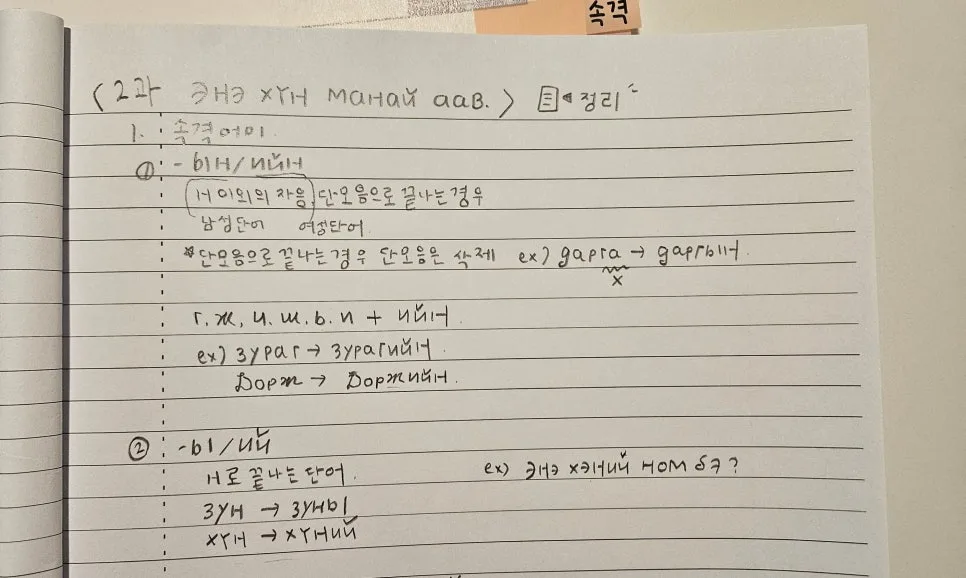
The Mongolian genitive case endings can be broadly categorized into three main types. First, '-ын / -ийн' is used for words ending in a consonant (excluding 'г, и, ж, ч, щ, ь') or a short vowel. If the word ends in a short vowel, that vowel is dropped before the ending is added. If the word ends in 'г, и, ж, ч, щ, ь', the ending '-ийн' is used. Second, '-ы / -ийн' is primarily for words ending in '-ы,' but words with a silent 'n' might use 'n + -ы' or 'n + -ий.' Additionally, words ending in 'н' or certain long vowels might use 'г + -ийн.' Third, '-н' is attached to words ending in diphthongs or 'ий.' Understanding these diverse ending rules is essential for accurate sentence construction. (Source: ECKBOOKS, "The Barun Mongolian First Step")
What Are the Possessive Forms of Mongolian Personal Pronouns?
In Mongolian, the possessive forms of personal pronouns function similarly to English phrases like "my," "your," etc., indicating ownership. The first-person singular pronoun 'би' (I) becomes 'миний' (my). The second-person singular 'чи' (you) transforms into 'чийний' (your). The honorific second-person singular 'та' (you, formal) becomes 'таны' (your, formal), and the third-person singular 'тэр' (he/she) changes to 'түүний' (his/her). For plurals, 'бид' (we) becomes 'бидний' (our), 'та нар' (you all) becomes 'та нарын' (your all's), and 'тэд' (they) becomes 'тэдний' (their). Familiarizing yourself with these possessive pronoun forms will help you clearly express ownership in your sentences.
How Do You Form Questions Without Interrogative Words in Mongolian?
Mongolian allows for question formation even without using interrogative words, a concept we touched upon in Lesson 1 but is worth reviewing. Typically, questions are formed by adding specific question-ending particles to the end of a sentence or by altering sentence structure and intonation. For instance, you can use question particles like '-уу', '-үү', '-юу', or '-үү' at the end of a declarative sentence to turn it into a question. Alternatively, context and a rising intonation at the end of the sentence can signal that it is a question.
For more details, check the original source below.





