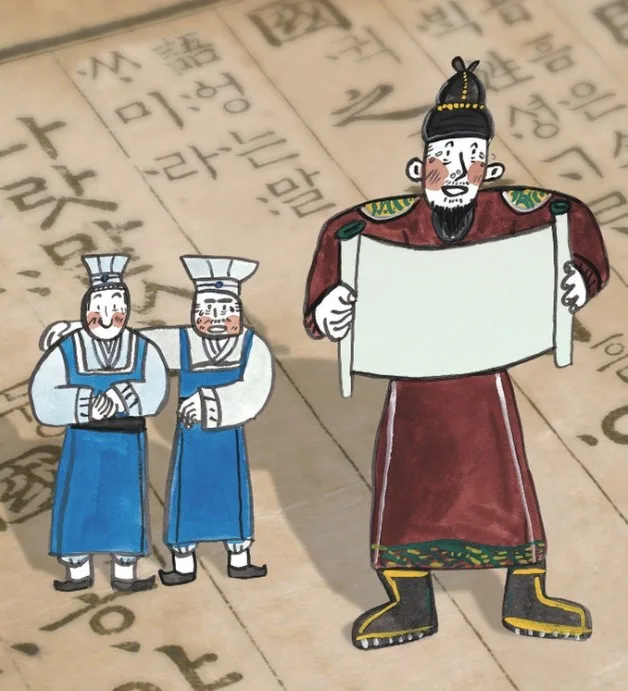
Understanding the differences between Middle Korean and Modern Korean is crucial for grasping the historical evolution of the Korean language. Middle Korean, born from King Sejong the Great's dedication to his people, featured distinct characteristics like pitch accent (성조), vowel harmony (모음 조화), initial consonant clusters (어두자음군), and unique orthographic practices such as 이어적기 (connected writing) and the 8-consonant final sound rule (8종성법). These features set it apart from Modern Korean and offer insights into the linguistic landscape of the past. Exploring these differences helps us appreciate the depth of King Sejong's linguistic vision.
How Was Middle Korean Different from Modern Korean?
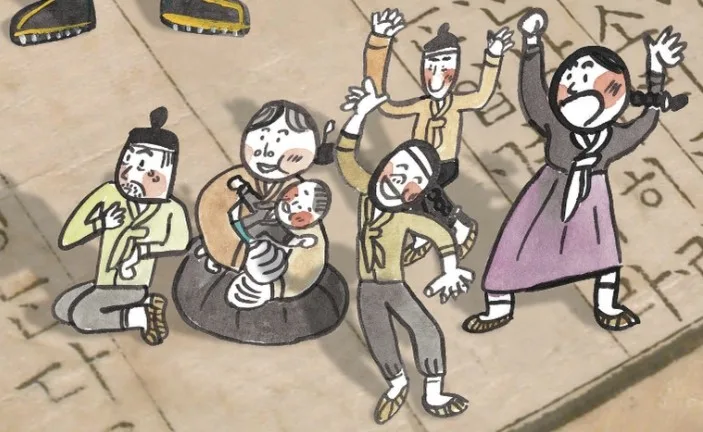
Middle Korean presented several phonological and orthographic distinctions compared to its modern counterpart. One of the most striking features was the presence of a 'pitch accent' (성조). In Middle Korean, dots called 'bangjeom' (방점) were placed to the left of characters to indicate the pitch of a syllable, a concept distinct from the modern Korean notion of vowel length. Additionally, 'vowel harmony' (모음 조화) was a prominent feature, with light vowels (ㆍ, ㅏ, ㅗ) tending to pair with other light vowels, and dark vowels (ㅡ, ㅓ, ㅜ) with other dark vowels within the same word. For instance, the word '말ᄊᆞ미' (mal-ssami) exemplifies this vowel harmony. Middle Korean thus placed significant importance on both pitch and vowel congruence.
What Were the Unique Writing Systems of Middle Korean?
The orthography of Middle Korean differed significantly from Modern Korean. It featured 'initial consonant clusters' (어두자음군), where two or more consonants could appear at the beginning of a word, such as in ᄠᅳ들 (tteul). 'Byeongseo' (병서), the practice of writing identical (각자 병서, e.g., 문ᄍᆞᆼ) or different consonants (합용 병서, e.g., ᄠᅳ들) side-by-side horizontally, was also used. Furthermore, the 'connected writing' (이어적기 or 연철) method involved carrying over the final consonant of one syllable to the beginning of the next (e.g., 말ᄊᆞᆷ+이 → 말ᄊᆞ미). This contrasts sharply with Modern Korean's 'separate writing' (끊어적기 or 분철). The 8-consonant final sound rule (8종성법) limited the final consonants to only eight (ㄱ, ㄴ, ㄷ, ㄹ, ㅁ, ㅂ, ㅅ, ㆁ), and the Dongguk Jeongun system was employed to approximate Chinese pronunciation for Hanja. These writing conventions might appear unfamiliar to modern Korean speakers.
What Letters Were Used in Middle Korean But Not Modern Korean?
Middle Korean utilized several letters that are no longer in use in Modern Korean. Notable among these include the semi-vowel 'ㅸ' (a labial fricative), the old 'ㆁ' (a velar nasal), the 'ㅿ' (a voiceless alveolar affricate), the 'ㆆ' (a glottal stop), and the vowel 'ㆍ' (a 'ah' sound). Examples of their use can be found in words like '수ᄫᅵ' (su-wi, meaning easily), '문ᄍᆞᆼ' (mun-jjang, meaning character), 'ᄆᆞᅀᆞᆷ' (ma-eum, meaning heart), '훈민정ᅙᅳᆷ' (Hunminjeongeum), and '말ᄊᆞ미' (mal-ssami, meaning words). The existence of these letters is key evidence of Middle Korean's distinct phonetic system. Additionally, the use of '에' as a comparative particle and the exclusive use of '이, ㅣ, ø' as subject markers, without '가', are other notable differences from Modern Korean.
What Should Be Noted When Comparing Middle Korean Features to Modern Korean?
When comparing Middle Korean features to Modern Korean, several points require attention. Firstly, Middle Korean was primarily written vertically, and words were generally not spaced apart. Secondly, it's essential to clearly distinguish between 'connected writing' (이어적기) and 'separate writing' (끊어적기). For instance, '놈이' (nom-i) is an example of separate writing, while '노미' (no-mi) is connected writing. Thirdly, the presence of 'bangjeom' for pitch accent should not be overlooked, as it was a vital element in distinguishing syllable pronunciation. By considering these differences comprehensively, one can accurately understand Middle Korean's characteristics and its relationship with Modern Korean. The emphasis might vary depending on individual learning goals and comprehension levels, making it beneficial to consult various resources for in-depth study.
English crawl path
Next English reads from this pilot cluster
Continue through the category hub, latest English stories, and related posts so this translated article is not an isolated URL.
Tags
💬Frequently Asked Questions
What should I check first in Learn Korean: Middle Korean vs. Modern Korean (2026)?
Does this Language Learning article link back to the Korean source?
Where can I find similar English stories?
English discovery path
Explore more English K-culture stories
Keep browsing the indexed English pilot cluster so Google and readers can move between this story, the category hub, and fresh discovery pages.
Original Source
Read the Korean original





