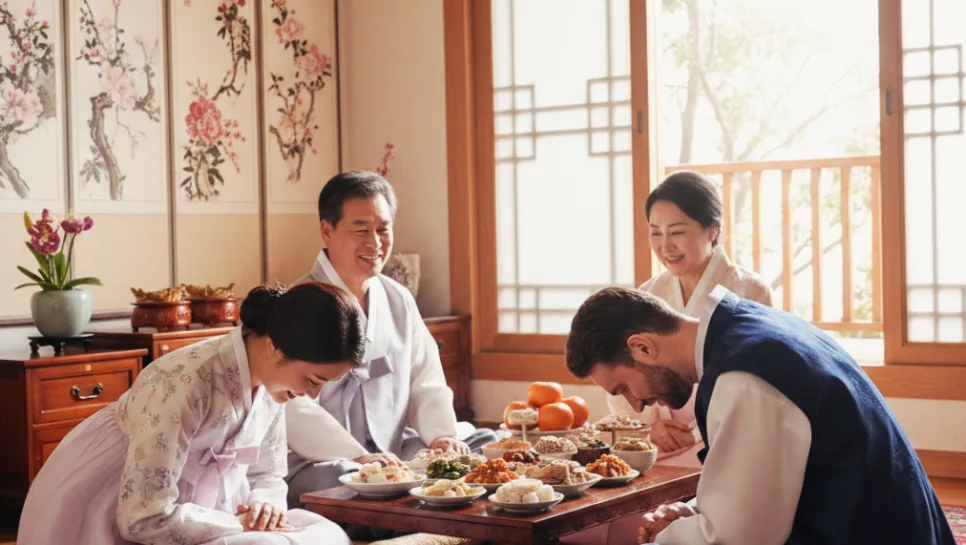
Navigating Lunar New Year (Seollal) as an international couple presents a unique opportunity to deepen cultural understanding. Mastering practical English phrases for introducing Korean traditions, family members, food, and customs like 'sebae' (bowing) is key for seamless communication. This guide provides essential English expressions for international couples to confidently share the joy of Seollal with their partners and families, fostering a richer, more connected holiday experience.
What is Seollal? Introducing Korean Lunar New Year to Your Partner 2026
For international couples, the first step in celebrating Seollal together is clearly and concisely explaining its significance to your foreign partner. Focus on the core meaning and cultural importance rather than complex historical details. Many couples find success using phrases that highlight Seollal as a major traditional holiday centered around family gatherings and new beginnings. This approach not only conveys essential information but also sparks curiosity about Korean culture, paving the way for a shared holiday experience. Understanding the holiday's essence makes the celebration more meaningful for everyone involved.
Explaining Seollal Family Gatherings in English
Seollal is a precious time for international couples to introduce each other's families and strengthen their bonds. Using warm and inviting English expressions helps your partner naturally understand Korea's family-centric culture. Sharing experiences like visiting parents and relatives during the holiday emphasizes the importance of family ties. These conversations are invaluable for your partner's cultural immersion and make the shared holiday experience significantly more rewarding. It's a chance to bridge cultural gaps and build deeper connections within the family unit.
Talking About Seollal Food in English with Your Partner
Seollal cuisine is a delightful gateway to experiencing Korean culture. Explaining traditional dishes like 'tteokguk' (rice cake soup) can be particularly engaging, especially when you share its cultural significance. For instance, explaining that eating tteokguk symbolizes gaining a year in age adds a fascinating layer to the culinary experience. Introducing other festive foods like 'mandu' (dumplings), 'jeon' (pancakes), and 'japchae' (glass noodle dishes) further enhances the anticipation of a rich and flavorful holiday feast.
Explaining the 'Sebae' Bowing Culture in English
The 'sebae' tradition, while perhaps unfamiliar to foreigners, beautifully illustrates Korean respect and tradition. Explaining 'sebae' as a formal bow children perform for elders, followed by receiving 'lucky money' (sebaetdon), offers a unique cultural insight. This explanation goes beyond mere information; it shares Korea's values of filial piety and respect for elders. Discussing sebae adds a unique and meaningful dimension to your conversations, enriching the international couple's understanding of Korean customs.
International Couple Seollal Conversation: Real English Examples and Holiday Plans
Typical conversations between international couples during Seollal often revolve around sharing cultural insights and holiday plans. For example, you might say, "I want you to meet my relatives. Let’s spend the holiday together." This expresses a desire for deeper integration and shared experiences. Explaining that "We visit my parents and relatives during the holiday. It’s a time for family bonding" helps set expectations about the festive atmosphere. These simple yet meaningful exchanges are crucial for building mutual understanding and ensuring a harmonious Seollal celebration for everyone involved.
For more details, check the original source below.