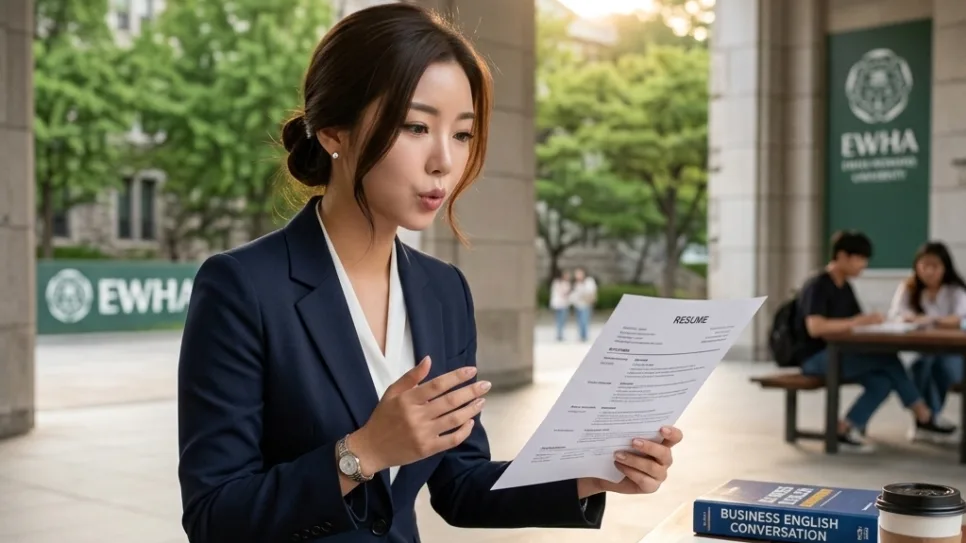
Struggling to speak Korean after years of study? The secret to fluency isn't more memorization, but a shift to active speaking practice. This guide reveals why traditional methods fall short and how to train your mouth to speak Korean confidently by 2026.
Why Does Learning Korean Feel So Hard for Americans?
Many US-based Korean language learners find themselves stuck, unable to form sentences despite investing years in study. The common culprit? An over-reliance on passive learning methods like memorizing vocabulary, studying grammar rules, and passively listening to lectures. This 'input-heavy' approach builds comprehension but fails to develop the crucial 'output' skill needed for actual conversation. Think of it like reading every book about swimming without ever jumping into the water – you understand the theory, but you can't swim. For instance, a learner with a high TOPIK score might still freeze up in a real conversation because their brain is busy translating, not reacting. This mental translation delay is a major hurdle. Ultimately, the biggest roadblock to mastering spoken Korean is the lack of consistent speaking practice.
The Trap of Input-Heavy Learning: Understanding vs. Speaking
A common pitfall for Korean language learners is staying within the confines of 'comprehension-focused' study. This often means prioritizing listening and memorization, neglecting the immediate, reactive speaking practice essential for fluency. Traditional methods create a significant gap: while you might understand Korean spoken at a normal pace, you struggle to respond quickly. True conversational fluency hinges on training your brain to react instantly, much like a sprinter reacts to the starting gun. For example, a student preparing for a job interview might memorize answers to common questions but falter when faced with an unexpected query, lacking the agility to adapt and speak spontaneously. Similarly, many learners consume countless Korean dramas and YouTube lessons, improving their listening skills, but rarely practice speaking themselves, hindering real progress. This imbalance of high input and low output is a primary reason why learning Korean can feel like an uphill battle.
Effective 'Speaking Practice' for Korean Fluency
To dramatically boost your Korean speaking skills, the most effective method is simple: listen and immediately repeat. This technique, known as shadowing, involves mimicking native speakers in real-time. For example, after hearing the phrase '나중에 전화할게' (I'll call you later), you should immediately repeat it. Consistency is key: select about 10 short sentences daily and practice saying them 20 times each to build muscle memory. The crucial mindset is to 'just speak' rather than worrying about perfection. Many learners report significant progress within weeks; for instance, one student was able to respond with short answers after just two weeks of dedicated practice, engaged in basic conversations after a month, and could handle essential communication during a trip abroad after three months. This 'speaking practice' transforms Korean from a subject to 'study' into a language to 'use'. It’s akin to physical training: consistent exercise builds muscle, and consistent speaking builds language fluency. Therefore, focusing on these active speaking drills is vital for mastering spoken Korean.
The Principle of 'Active Use' for Real Korean Fluency
The core of improving your Korean speaking ability lies in shifting from 'studying with your head' to 'using with your mouth.' Passive study methods focus on intellectual understanding, making spontaneous responses in real conversations difficult. In contrast, active use training, like shadowing and immediate repetition, sharpens your reaction time in Korean. This is similar to how athletes hone their reflexes through rigorous drills. Many learners have experienced transformative results with this approach. For example, a professional in their 30s achieved basic conversational fluency for international business trips after three months of consistent practice, demonstrating that real-world communication skills are built through active usage, not just knowledge acquisition. To truly improve your Korean, remember this: listen, speak immediately, and repeat constantly. Korean is not just something to learn; it's something to 'train' for. Based on extensive experience teaching Korean, the issue isn't a lack of aptitude, but often the wrong learning strategy. If your current methods aren't yielding results, it's time to switch to a 'training-focused' approach for effective spoken Korean, suitable for everyone from absolute beginners to interview candidates.
For more details, check the original source below.