
Want to boost your Korean language skills quickly? Engaging with 5-minute Korean quizzes daily can significantly improve your grasp of practical phrases, help you master adverbs of frequency, and correct common Konglish errors. This method is perfect for busy learners aiming for conversational fluency in 2026.
How to Sharpen Your Korean Language Skills in Just 5 Minutes Daily
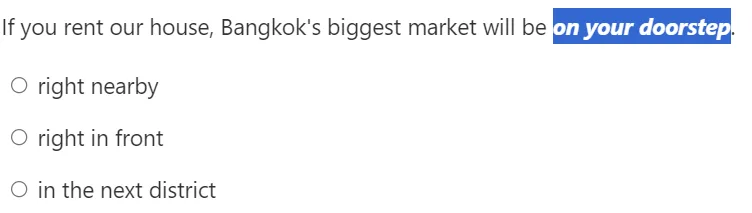
Dedicate just five minutes each day to fun, bite-sized Korean quizzes to effectively learn real-life expressions. This approach is ideal for fitting into your commute, coffee breaks, or any spare moment, making language acquisition feel effortless. For instance, mastering location-based phrases like '바로 문 앞에' (baro mun ape - right in front of the door) can be easily achieved through simple, practical examples. Consistent, short bursts of study are a proven path to improving your Korean language abilities. This method is particularly effective for learners who find longer study sessions daunting, offering a low-barrier entry into daily Korean practice.
Mastering Korean Sentences with Adverbs of Frequency
Adverbs of frequency are crucial for describing how often actions occur in Korean. Understanding their meaning and usage is key. Common adverbs include '항상' (hangsang - always, 100%), '보통' (botong - usually, 80-90%), '자주' (jaju - often, 60-80%), '가끔' (gakkeum - sometimes, 30-50%), '거의 안' (geoui an - rarely, 5-10%), and '절대 안' (jeoldae an - never, 0%). Practice constructing your own sentences using these adverbs, such as '저는 항상 밤에 공부해요.' (Jeoneun hangsang bam-e gongbuhaeyo. - I always study at night.) or '우리는 자주 함께 게임을 해요.' (Urineun jaju hamkke geimeul haeyo. - We often play games together.). This active sentence-building process will make using Korean expressions much more natural and intuitive.
The Truth Behind the Konglish Term 'Hochikiseu'
The term commonly used in Korea for a stapler, '호치키스' (hochikiseu), is actually a Konglish term. Its origin traces back to the brand name of an early stapler manufactured by the American company 'E.H. Hotchkiss'. During the Meiji era, when Japan first imported these products, they began calling staplers 'Hotchkiss' (ホッチキス). This name was then adopted into Korean and became widely used. The correct and standard term for a stapler in Korean is '스테이플러' (seuteipeulleo). Understanding the etymology of such terms helps in using more accurate language.
The Importance of Consistency for Korean Language Fluency
Achieving Korean language fluency isn't an overnight process; it requires consistent effort and practice. Even dedicating a short amount of time daily to Korean exposure, whether through quizzes, sentence practice, or other study methods, is vital. Embrace the belief that 'Consistency' (꾸준함 - kkujunham) will yield results. Learning frequently used expressions and accurately applying grammatical elements like adverbs of frequency through sentence construction significantly boosts practical speaking ability. Tailoring your learning to your personal circumstances and maintaining a steady pace is key to genuine improvement. Seeking guidance from language learning platforms like Talk To Me In Korean (TTMIK) or Duolingo can also be beneficial.
For more Korean quizzes and learning tips, check the original source.





