
Learning Korean using the animated film 'Beauty and the Beast' offers an engaging way to master practical conversational phrases, pronunciation, and intonation. By focusing on repetitive listening and shadowing exercises, you can significantly improve your Korean speaking and comprehension skills, making it an effective tool for beginners.
Mastering Korean Phrases with 'Beauty and the Beast' in 2026
The animated classic 'Beauty and the Beast' is a fantastic resource for learning everyday Korean conversational phrases. For instance, lines like '벨과 결혼하기로 마음을 먹었어요' (I've got my heart set on marrying Belle) teach you how to express strong intentions naturally. You can also learn context-specific dialogue such as '풀어줄게요. 더이상 내 죄수가 아니에요.' (I release you. You're no longer my prisoner.), which are incredibly useful in real-life conversations. Repeating these phrases while listening to the characters' natural intonation and rhythm will boost your confidence in speaking Korean. This method is particularly effective for grasping the musicality of the Korean language.
How to Utilize Korean Dialogue from 'Beauty and the Beast'
The key to learning Korean with animation goes beyond simple memorization; it's about understanding the context of each phrase and integrating it into your own speech. For example, understanding dialogue like '벨의 아버지가 미치광이란 건 모두 알죠. 오늘 밤 여기에서 성에 있는 야수에 대해 열변을 토하더군요.' (Everyone knows her father's a lunatic. He was in here tonight raving about a beast in a castle.) requires grasping the character relationships and the situation. To achieve this, start by watching with Korean subtitles to understand the plot. Then, rewatch with English subtitles to identify unfamiliar words and expressions. Finally, practice shadowing – repeating the dialogue aloud without subtitles – to enhance both your listening and speaking abilities simultaneously.
Pros and Cons of Using 'Beauty and the Beast' for Language Learning
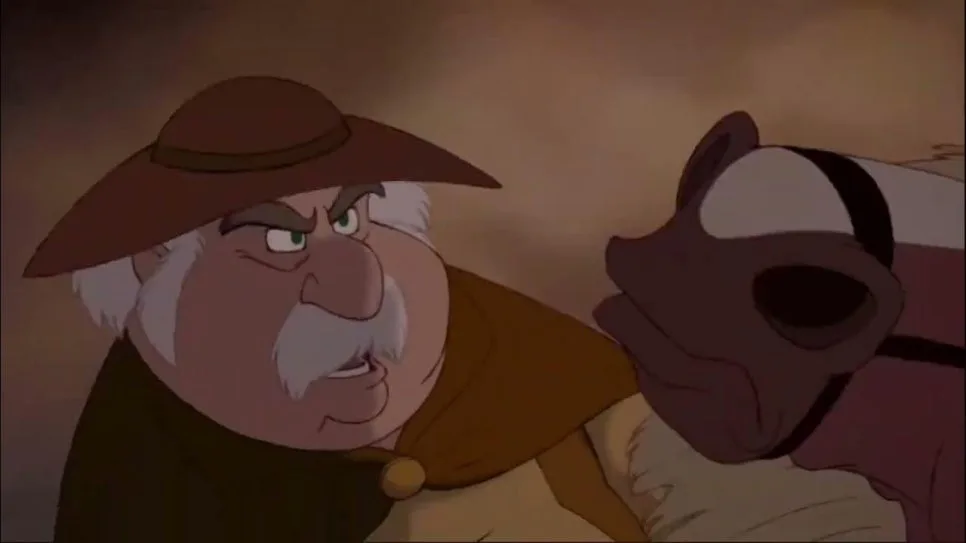
Learning Korean through animations like 'Beauty and the Beast' offers the significant advantage of making the process enjoyable and motivating. Emotional lines, such as '아빠를 다시 만날 수 있으면 좋겠어요. 잠시라도요. 너무 보고 싶어요.' (If only I could see my father again. Just for a moment. I miss him so much.), can greatly boost your motivation. However, a potential drawback is that the exaggerated expressions or unrealistic scenarios common in animation might differ from everyday Korean conversations. Additionally, dialogue reflecting specific cultural nuances or age groups may not resonate with all learners. To overcome these limitations, it's crucial to fully understand the context and nuances of phrases learned from the animation and supplement your learning with additional resources or real-life practice.
Tips for Maximizing Korean Learning with Animation
To truly benefit from using 'Beauty and the Beast' for Korean language acquisition, tailor the experience to your current level and learning goals. While the movie provides excellent conversational practice, it's important to remember that animation dialogue can sometimes be stylized. Focus on understanding the core expressions and their practical applications rather than getting bogged down by every single word. Consider using supplementary materials like Korean language learning apps (e.g., Duolingo, Memrise) or online resources such as Talk To Me In Korean (TTMIK) to reinforce grammar and vocabulary. For those aiming for official proficiency, preparing for the TOPIK exam can provide a structured learning path. Remember, consistency is key; even 15-30 minutes of daily practice can lead to significant progress over time.
For more details, check the original source below.





