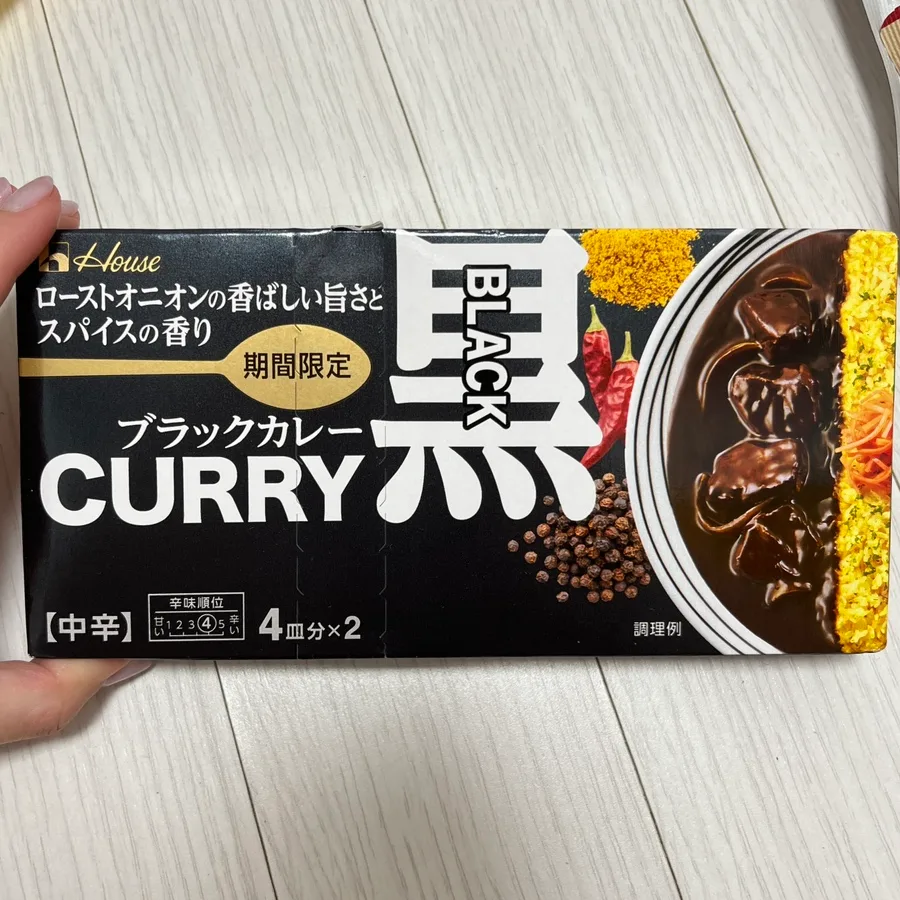
Did you know that a surprising number of Americans are learning Japanese, with many using everyday items like food packaging as study tools? This guide breaks down how to leverage something as simple as a curry box to boost your Japanese language skills, focusing on practical vocabulary and cultural nuances that make learning stick.
Decoding Japanese Food Packaging: A Real-World Approach
Embarking on the journey to learn Japanese can feel daunting, but practical, everyday items can transform into invaluable study aids. I recently explored this by using a popular Japanese product, House Black Curry (medium hot), as a hands-on learning tool. By dissecting the Japanese text on the packaging, I aimed to grasp key phrases and vocabulary, uncovering how food labels can serve as more than just product information – they can be a gateway to understanding the language and its cultural context. This experience highlighted how engaging with real-world materials, like the descriptive text on a curry box, makes learning more vivid and memorable. For instance, understanding phrases describing the 'rich flavor of roasted onions and spices' allows you to absorb Japanese adjectives and nouns related to taste and aroma naturally.
Key Japanese Vocabulary from Curry Packaging Explained
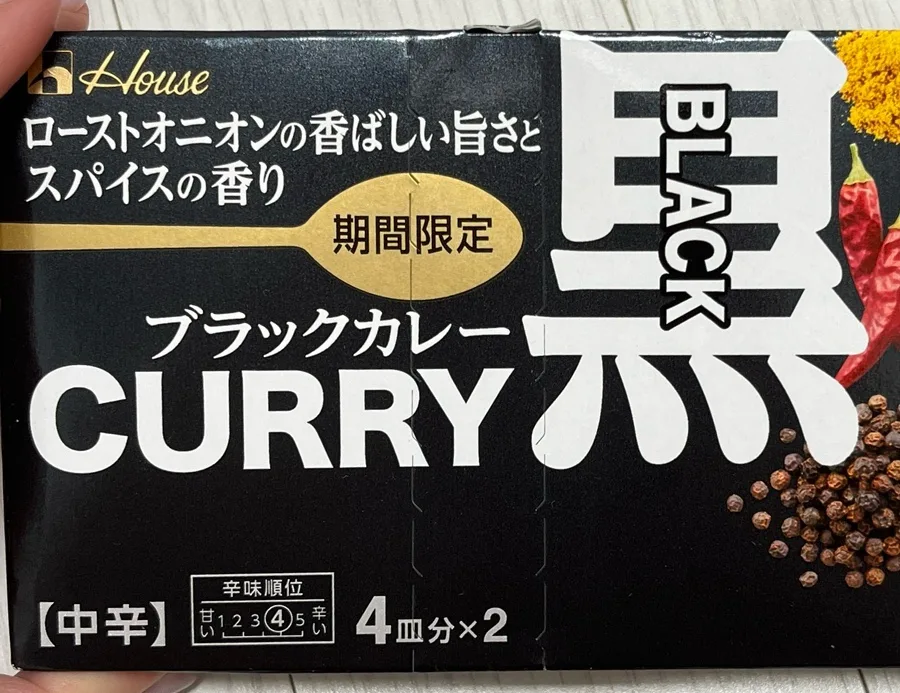
Let's dive into the essential Japanese words found on the House Black Curry packaging. The phrase 'ローストオニオンの香ばしい旨さとスパイスの香り' translates to 'the savory deliciousness of roasted onions and the aroma of spices.' Here, 'ロースト(rosuto)' is the Katakana spelling for the English word 'roast,' indicating something cooked by dry heat, similar to the Japanese verb '焼き(yaki).' 'オニオン(onion)' is also a Katakana loanword for 'onion,' with the native Japanese term being '玉ねぎ(tamanegi).' '香ばしい(koubashii)' is a crucial adjective used to describe the appealing aroma and taste of roasted or grilled foods – think 'nutty' or 'savory.' '旨さ(umasa)' is a noun derived from the adjective '旨い(umai),' meaning 'delicious' or 'tasty,' and it specifically refers to a rich, savory flavor or a state of being delicious. Finally, 'スパイス(supaisu)' is the Katakana for 'spice,' equivalent to the Japanese word '香辛料(koushinryou).' Mastering these terms is key to understanding Japanese food descriptions and menus.
Understanding Japanese Ingredients in Recipes
Food packaging often includes recipe instructions and ingredient lists, providing another layer of language learning. The term '材料(zairyou)' means 'ingredients.' A common notation like '4皿分(yo-sara-bun)' indicates '4 servings,' where '皿(sara)' literally means 'plate.' You might also see instructions like '本品½(honpin nibun no ichi),' meaning 'half of this product.' For the House Black Curry, the recipe calls for '肉(niku)' – meat – about 300g, and '玉ねぎ(tamanegi)' – onions – one medium-sized (around 200g). Cooking oil is listed as 'サラダ油(sarada-yu)' – salad oil – one tablespoon ('大さじ1' or 'oosaji ichi'). Water is specified as 500ml, with a note that 400ml is sufficient if the pot is covered ('鍋にふたをする場合は400ml' - nabe ni futa o suru baai wa yonhyaku miri rittoru). Learning these ingredient names and measurements can significantly enhance your ability to follow Japanese recipes or even shop for groceries in Japan.
Tips and Pitfalls for Learning Japanese with Packaging
While using food packaging is an effective method for learning Japanese, there are a few things to keep in mind. Firstly, Katakana words are loanwords from other languages, primarily English, and their pronunciation can differ from the original. Pay attention to long vowel markers like 'ー' (e.g., in 'ロースト - rosuto'). Secondly, many Japanese words are derived from Chinese characters (Kanji), and their meanings can sometimes vary from their Korean cognates. Always verify the exact meaning using a dictionary. For example, while '旨' in Korean is often related to 'meaning' or 'intent,' in Japanese, it's strongly associated with deliciousness. Lastly, familiarize yourself with specific Japanese expressions found on packaging, such as '中辛(chuu-kara)' for 'medium hot' or '期間限定(kikan gentei)' for 'limited time offer.' These are practical terms you'll encounter frequently when shopping. Integrating these real-world materials into your study routine, perhaps alongside resources like Talk To Me In Korean (TTMIK) or Duolingo, can make your Japanese learning journey more engaging and effective.
For more details, check the original source below.





