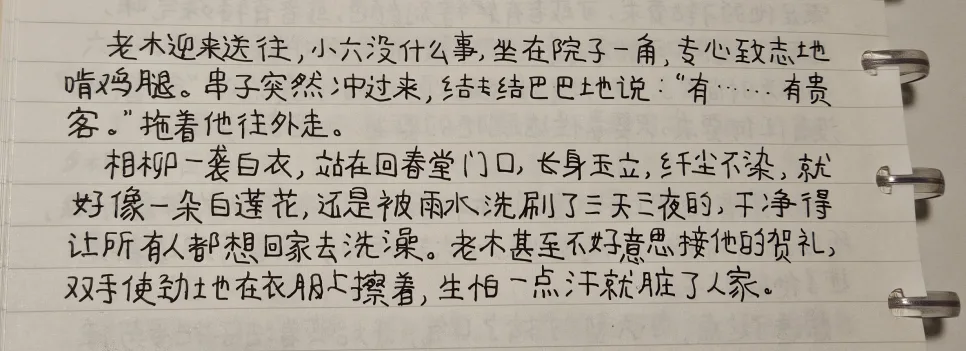
Mastering Chinese can be accelerated by using the novelization of popular dramas like 'Lost You Forever' for character-by-character writing practice (필사, *pil-sa*). This method, combined with referencing drama scenes, significantly boosts vocabulary acquisition and comprehension of Mandarin nuances. For instance, learning phrases like '纤尘不染' (xiān chén bù rǎn - spotless, pure) while visualizing a character's pristine appearance in the drama makes the meaning stick.
How to Study Chinese with the 'Lost You Forever' Novel for Pil-sa
Character-by-character writing, or *pil-sa*, is more than just copying characters; it's a deep dive into understanding the nuances and cultural context of the original text. When you use the novelization of a hit drama like 'Lost You Forever' (长相思, *Cháng Xiāng Sī*), you can grasp the characters' emotions and dialogue meanings more profoundly. For example, the phrase '老木迎来送往,小六没什么事,坐在院子一角,专心致志地啃鸡腿' (Lǎo mù yíng lái sòng wǎng, xiǎo liù méi shénme shì, zuò zài yuànzi yī jiǎo, zhuānxīn zhì zhì de kěn jītuǐ - Old Mu was busy greeting and seeing off guests, while Xiao Liu had nothing to do, sitting in a corner of the yard, intently gnawing on a chicken leg) allows you to learn vocabulary like '迎来送往' (yíng lái sòng wǎng - to greet and see off guests) and '专心致志' (zhuānxīn zhì zhì - to concentrate with all one's might). Learning words within their actual context dramatically improves memorization and boosts your Mandarin expression skills. Consistently practicing *pil-sa* builds a strong foundation for improving your Chinese proficiency.
Key Vocabulary and Expressions to Focus on in the 'Lost You Forever' Novel
When practicing *pil-sa* with the 'Lost You Forever' novel, pay close attention to words and phrases that describe characters' personalities and situations. For instance, the description '相柳一袭白衣,站在回春堂门口,长身玉立,纤尘不染' (Xiāng Liǔ yī xí bái yī, zhàn zài Huí Chūn Táng ménkǒu, cháng shēn yù lì, xiān chén bù rǎn - Xiang Liu, in a white robe, stood at the entrance of the Hall of Returning Spring, tall and elegant, as pure as if untouched by dust) uses '纤尘不染' (xiān chén bù rǎn - spotless, pure) to effectively convey the character's noble and immaculate image. This term goes beyond simply meaning 'clean'; it signifies a state of extreme purity and elegance.

Similarly, scenes like '老木甚至不好意思接他得贺礼,双手使劲地在衣服上擦着' (Lǎo mù shènzhì bù hǎoyìsi jiē tā dé hèlǐ, shuāng shǒu shǐjìn de zài yīfú shàng cāzhe - Old Mu felt too embarrassed to accept his congratulatory gift, rubbing his hands vigorously on his clothes) reveal expressions that showcase a character's humility and respect for others. Learning these detailed descriptions through *pil-sa* is a direct path to improving your Chinese skills.
Important Considerations When Using Drama Novels for Chinese Pil-sa
While using Chinese drama novelizations for *pil-sa* is an effective learning method, there are a few points to keep in mind. Firstly, instead of trying to memorize word-for-word translations, focus on understanding the meaning of words and expressions within their context. For example, the word '致志' (zhì zhì - to be determined) becomes clearer when combined with other words, such as in '专心致志' (zhuānxīn zhì zhì). Secondly, it's more effective to practice *pil-sa* alongside the drama's visuals. Observing the characters' expressions, tone of voice, and the overall situation in the video helps in better understanding the nuances of the vocabulary. Thirdly, after writing, always practice reading aloud. Speaking the words aloud, rather than just reading them silently, aids in pronunciation correction and improves conversational fluency. Implementing these steps will maximize the benefits of your Chinese *pil-sa* practice.
Potential Challenges for Beginners with 'Lost You Forever' Novel Pil-sa
For beginner learners, tackling Chinese drama novelizations like 'Lost You Forever' for *pil-sa* can present several challenges. Firstly, idioms (고사성어, *gōsheng'é*) and literary expressions can be difficult to understand. For instance, phrases like '迎来送往' (yíng lái sòng wǎng) might not be commonly used in modern spoken Chinese. Secondly, sentences describing characters' emotions or complex relationships can feel long and intricate. Thirdly, encountering numerous unknown words and grammar points during the writing process can lead to a loss of motivation. To overcome these hurdles, it's advisable to start with texts that match your current level rather than immediately choosing a difficult novel. Actively using a dictionary for unknown words is crucial, and if possible, joining a Chinese study group or getting help from a tutor can be very beneficial. With persistence and the right learning strategy, these challenges are definitely surmountable.
For more details, check the original source below.





