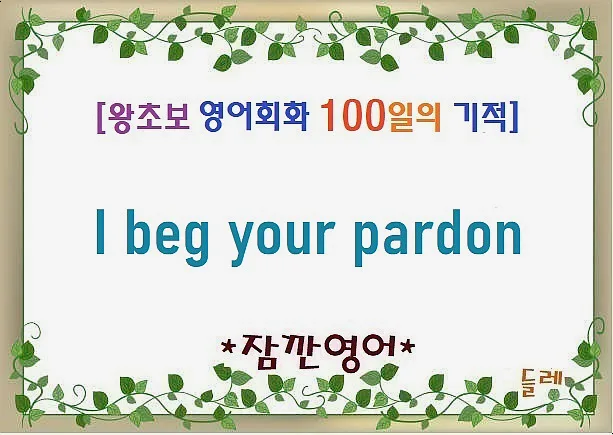
In 2026, the most polite way to ask someone to repeat themselves in English is 'I beg your pardon?'. This phrase is used when you didn't quite hear or understand what someone said, and it conveys a higher level of formality and respect than common alternatives like 'Excuse me?' or 'Pardon me?'. It can also subtly express surprise or disagreement, making it a versatile tool for nuanced communication.
What Does 'I Beg Your Pardon?' Really Mean?
The phrase 'I beg your pardon?' originates from a request for forgiveness, implying you're asking for the speaker's grace because you didn't catch their words. This underlying politeness makes it more than just a simple request to repeat; it's a way to show respect and consideration for the speaker, especially in formal settings. For instance, during an important business meeting or a formal event, using this phrase when you miss something can be highly effective. In my experience, people tend to respond more kindly and are more willing to re-explain when this more formal phrase is used, rather than a curt 'What?'
When Is the Best Time to Use 'I Beg Your Pardon?'
The versatility of 'I beg your pardon?' allows it to be used in several key situations. Firstly, it's ideal when the speaker's voice was too soft, too fast, or unclear to comprehend. Secondly, it's perfect for moments when the content of what was said is unexpected, confusing, or requires clarification. Thirdly, it can be employed to politely express disagreement or challenge a statement without being confrontational. For example, if a colleague proposes an unreasonable idea in a meeting, you could use 'I beg your pardon?' to signal that you need them to elaborate or reconsider, rather than directly saying 'That's a bad idea.'
How Does 'I Beg Your Pardon?' Differ from Similar Phrases?
While 'Excuse me?', 'Pardon me?', and 'What?' all serve to get someone's attention or ask for repetition, 'I beg your pardon?' carries a distinctively more formal and deferential tone. 'What?' is generally considered too abrupt and potentially rude in most contexts. 'Excuse me?' and 'Pardon me?' are common and polite, suitable for everyday interactions, but 'I beg your pardon?' elevates the politeness, making it suitable for situations where you need to show extra respect, such as addressing elders, superiors, or in official capacities. Think of it as the difference between asking a friend to repeat something versus asking a judge to clarify a ruling.
Tips for Pronouncing 'I Beg Your Pardon?'
To ensure your use of 'I beg your pardon?' sounds polite and natural, focus on the stress and rhythm. Emphasize the words 'beg' and 'pardon', giving them a slightly longer, more deliberate pronunciation. A common rhythm to aim for is similar to 'ah-BEG-your-PAR-don?'. Avoid rushing the phrase. Practicing in front of a mirror or recording yourself can help you fine-tune the intonation to convey politeness rather than impatience or aggression. The goal is a gentle, questioning tone that invites the speaker to clarify.
Potential Pitfalls When Using 'I Beg Your Pardon?'
While 'I beg your pardon?' is a highly polite phrase, its delivery is crucial. If spoken with a sharp tone, aggressive inflection, or in a context where such formality is unnecessary (like among close friends), it can unfortunately come across as sarcastic, confrontational, or even rude. It might imply you're shocked or offended by what was said, rather than simply not understanding. Always consider your relationship with the speaker and the overall situation. For casual conversations with friends, simpler phrases like 'Sorry, what was that?' or 'Could you say that again?' might be more appropriate and less likely to cause misinterpretation.
For more details, check the original source below.