Ever wonder about the surprising stories behind everyday English words? Words like 'Salary' and 'Candidate' have fascinating origins rooted in ancient history and culture. Exploring these etymologies can transform your English learning from rote memorization into an engaging journey through time.
What Are the Fascinating Origins of Words Like Salary, Candidate, and Boycott?
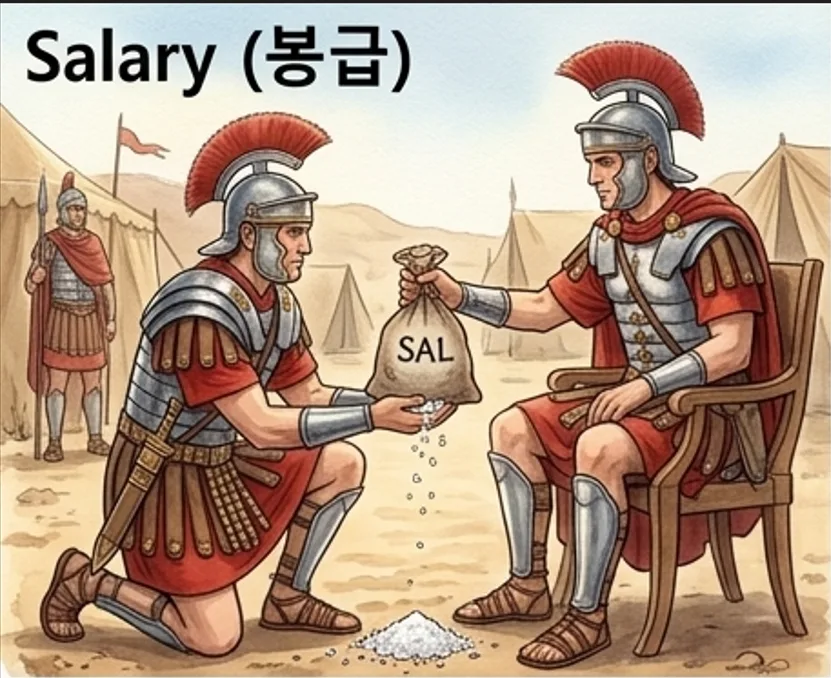
The English language is rich with words that carry deep historical and cultural baggage, making their etymologies a captivating area of study. Take 'Salary,' for instance. Its roots trace back to the Latin word 'Salarium,' which referred to the payment Roman soldiers received to purchase salt (Sal). In ancient times, salt was a precious commodity, often called 'white gold,' making it a vital part of a soldier's compensation. This historical payment evolved into the modern concept of a monthly wage. Similarly, 'Candidate' stems from the Latin word 'Candidus,' meaning 'white.' In ancient Rome, individuals running for office would wear a dazzlingly white toga, symbolizing purity and honesty, to stand out. This practice directly links the word to the idea of an applicant or hopeful.
Delving into word origins offers more than just vocabulary expansion; it provides a window into the past. The word 'Boycott' itself is a relatively modern example, originating in the 19th century from the name of Charles Boycott, an Irish land agent. When local tenants demanded rent reductions and Boycott refused, the community ostracized him, refusing to work with or for him. This collective refusal gave birth to the term 'boycott' as we know it today, illustrating how personal names can become verbs representing social actions.
What Are the Backgrounds of Assassin, Clue, and Companion?
The etymological journeys of words like 'Assassin' and 'Clue' reveal intriguing historical events and cultural practices. The term 'Assassin' is believed to derive from a medieval Nizari Ismaili sect, a secret order active in the Middle East between the 11th and 13th centuries. Legend suggests they consumed hashish before carrying out their missions, leading to their name being associated with political murder. The word 'Clue' has its origins in Greek mythology. It comes from 'Clew,' the ball of thread that Ariadne gave to Theseus to help him navigate the Labyrinth and escape after defeating the Minotaur. This mythological thread became a metaphor for a guiding thread or a hint that helps solve a mystery. 'Companion' is formed from the Latin words 'com' (together) and 'panis' (bread), literally meaning 'one who shares bread.' This emphasizes the deep bond of sharing essential sustenance, akin to the Korean concept of 'sikgu' (식구), meaning family or 'mouths to feed.'

Understanding these origins enriches our grasp of the words, connecting them to narratives and cultural contexts that go far beyond their dictionary definitions.
What Are the Benefits of Learning Word Origins?
Learning the etymology of English words offers significant advantages beyond simple vocabulary building, acting as a powerful motivator for deeper language engagement. When you learn that 'Salary' originated from the Roman practice of paying soldiers with salt, you don't just memorize a word; you visualize an ancient scene and recall a piece of history. Similarly, knowing 'Candidate' relates to wearing white clothes makes the term more vivid and memorable. This historical context transforms English words from abstract symbols into tangible stories, sparking curiosity, especially for younger learners. It shifts the perception of English from a dry subject to a dynamic exploration of culture and history. Furthermore, understanding the origins of words like 'Boycott' or 'Assassin' can simultaneously deepen one's knowledge of the historical events and social movements they represent, offering a dual learning benefit.
What Should You Be Cautious About When Learning English Word Origins?
While exploring word origins is highly beneficial, it's essential to approach it with a critical eye. Firstly, not all words have clear or universally agreed-upon etymologies; some have debated origins or multiple theories, so avoid overly definitive interpretations. Secondly, an overemphasis on etymology can sometimes overshadow a word's current meaning and usage. The origin is a helpful tool, but understanding how a word is actually used in modern English is paramount. Thirdly, be aware that some etymological stories might be embellished for narrative appeal. Always rely on credible sources for accurate information. For instance, the exact role of hashish in the 'Assassin' legend is still debated among historians. Therefore, use etymology as a supplementary tool to enrich your understanding, but prioritize learning the practical application and context of words in contemporary English. A balanced approach, combining etymological insights with practical usage, is key to effective language acquisition.
English crawl path
Next English reads from this pilot cluster
Continue through the category hub, latest English stories, and related posts so this translated article is not an isolated URL.
Tags
💬Frequently Asked Questions
What should I check first in English Word Origins: 6 Fascinating Etymologies (2026)?
Does this Language Learning article link back to the Korean source?
Where can I find similar English stories?
English discovery path
Explore more English K-culture stories
Keep browsing the indexed English pilot cluster so Google and readers can move between this story, the category hub, and fresh discovery pages.
Original Source
Read the Korean original





