Confused about when to use English greetings like Hi, Hello, and How are you? This guide clarifies their usage for 2026, ensuring your greetings are always appropriate for the situation and relationship, setting the stage for natural conversations.
Hi vs. Hello: When and How to Use Them
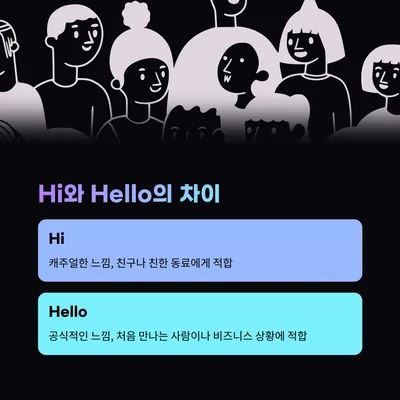
The first greetings many English learners encounter are Hi and Hello. While both are basic greetings, they are used in different contexts. 'Hi' is a very casual greeting, perfect for friends, family, or close colleagues. For instance, a casual 'Hi!' is natural when you bump into someone you know. 'Hello,' on the other hand, is slightly more formal and suitable for initial meetings or business settings. A common example is answering the phone with 'Hello, this is [Your Name].' In my experience teaching English, many learners stick to 'Hello' exclusively, which can sometimes sound a bit distant even with friends. Using 'Hi' and 'Hello' appropriately makes your conversations much smoother and more natural. Native speakers tend to use 'Hi' more frequently, especially in friendly interactions.
The Real Meaning of 'How Are You?' and Natural Responses
Related Articles
Many people assume that 'How are you?' requires a detailed explanation of their well-being. However, in everyday conversation, it's often used as a casual greeting, similar to 'Hello.' Common responses include 'I'm good,' 'I'm fine,' or 'Pretty good.' To keep the conversation flowing naturally, it's best to answer briefly and then ask back, 'How about you?' I recall a time when I first visited an English-speaking country and gave a lengthy answer to 'How are you?', which seemed to catch the other person off guard. This taught me that 'How are you?' is frequently a polite conversational opener rather than a genuine inquiry into your health. So, don't feel pressured to give a long answer; a simple response is perfectly fine.
Exploring Diverse English Greetings: How's It Going?, What's Up?, and More
Beyond the basic Hi, Hello, and How are you?, there are many other English greetings you can use in various situations. 'How's it going?' is similar to 'How are you?' but feels a bit more casual and is commonly used among friends. 'What's up?' is a very informal greeting used among close friends, meaning something like 'What's new?' or 'What are you doing?' For someone you haven't seen in a while, 'How have you been?' is a great way to ask about their well-being since you last met. By using these diverse expressions appropriately based on the context and your relationship with the person, you can move beyond textbook English and sound much more like a native speaker. Learning these phrases will significantly enhance your English conversation skills.
Crafting Varied Responses to English Greetings
Repeating the same answer every time can make conversations monotonous. Having a few variations ready can lead to richer interactions. For example, you can add a brief detail about your current situation, like 'Not bad. Just busy with work.' Or, share a recent experience: 'Pretty good. I had a relaxing weekend.' Expressing gratitude is also a nice touch: 'I’ve been great. Thanks for asking.' As I always emphasize to my students, adding just one more sentence can significantly extend and enrich a conversation. Practice adding a brief personal update after your initial response. Since your situation is unique, feel free to create your own personalized answers.
Discover more English greetings and conversation tips in the original article.





