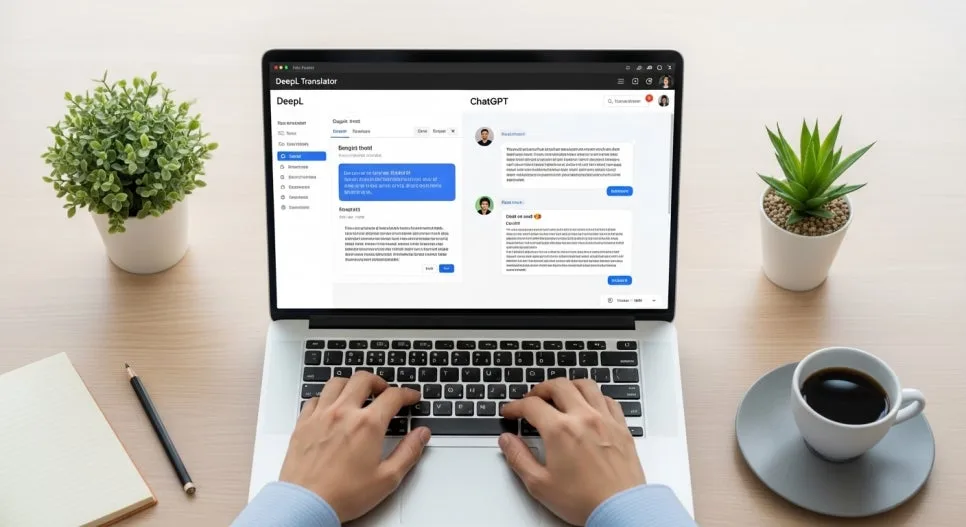
Streamline your business communication by mastering English emails with AI tools. This guide, based on real-world experience, shows you how to craft professional emails in as little as 10 seconds using a powerful combination of DeepL and ChatGPT.
Why is Tone and Manner Crucial in English Emails?
Just as you'd adjust your tone when emailing a boss in Korean, maintaining the right tone and manner is critical for professional English emails. It's not just about grammatical accuracy; it's about conveying respect and avoiding misinterpretations. For instance, instead of a blunt request, using polite phrasing like 'Would it be possible to~' or 'Could you please~' softens the message and fosters better business relationships. AI tools can help you navigate these nuances, ensuring your emails sound professional and considerate, whether you're requesting information, following up on a project, or providing an update. Understanding these subtle differences in business etiquette can significantly impact how your message is received and the overall success of your communication.
How to Combine DeepL and ChatGPT for Superior Email Writing
The true power lies in using DeepL and ChatGPT synergistically. Start by drafting your email in Korean or simple English, focusing on the core message. Then, use DeepL for its highly accurate translation capabilities, especially for technical or industry-specific terms. Once you have a solid draft from DeepL, paste it into ChatGPT. Prompt ChatGPT to refine the tone, check for natural English phrasing, and ensure it aligns with standard business communication practices. You can ask it to make the email sound more formal, more persuasive, or more concise. This iterative process, where DeepL handles the heavy lifting of translation and ChatGPT polishes the language and tone, results in emails that are both accurate and culturally appropriate for an American business context.
Tips for Enhancing DeepL's Translation Quality
While DeepL is renowned for its accuracy, optimizing its output requires a strategic approach. Before inputting your text into DeepL, perform 'pre-editing' on your original Korean or basic English draft. Clarify ambiguous sentences, remove jargon where possible, and ensure your core message is crystal clear. This step is crucial because even the best AI can struggle with unclear source material. Additionally, leverage DeepL's 'alternative translations' feature. If the initial translation doesn't quite hit the mark, explore the different phrasing options DeepL provides for specific words or sentences. This allows you to fine-tune the output and select the most fitting translation for your specific business context, ensuring the final email is both precise and natural-sounding.
The Importance of 'Cushion Phrases' in Business English
In American business culture, politeness and indirectness are often valued in written communication. This is where 'cushion phrases' or 'hedges' come into play. These are phrases that soften a request, soften a disagreement, or generally make your communication more polite and less demanding. Examples include 'Would it be possible to...', 'Could you please...', 'I was wondering if...', and 'Perhaps we could consider...'. When using AI tools, prompt them to incorporate these phrases naturally. For instance, you might ask ChatGPT to 'rephrase this request using polite business English, including appropriate cushion phrases.' This ensures your emails are not only grammatically correct but also culturally sensitive and professional, fostering positive interactions with colleagues and clients.
For more details, check the original source below.





